Environmental Careers That Start With Internships: A Field Guide
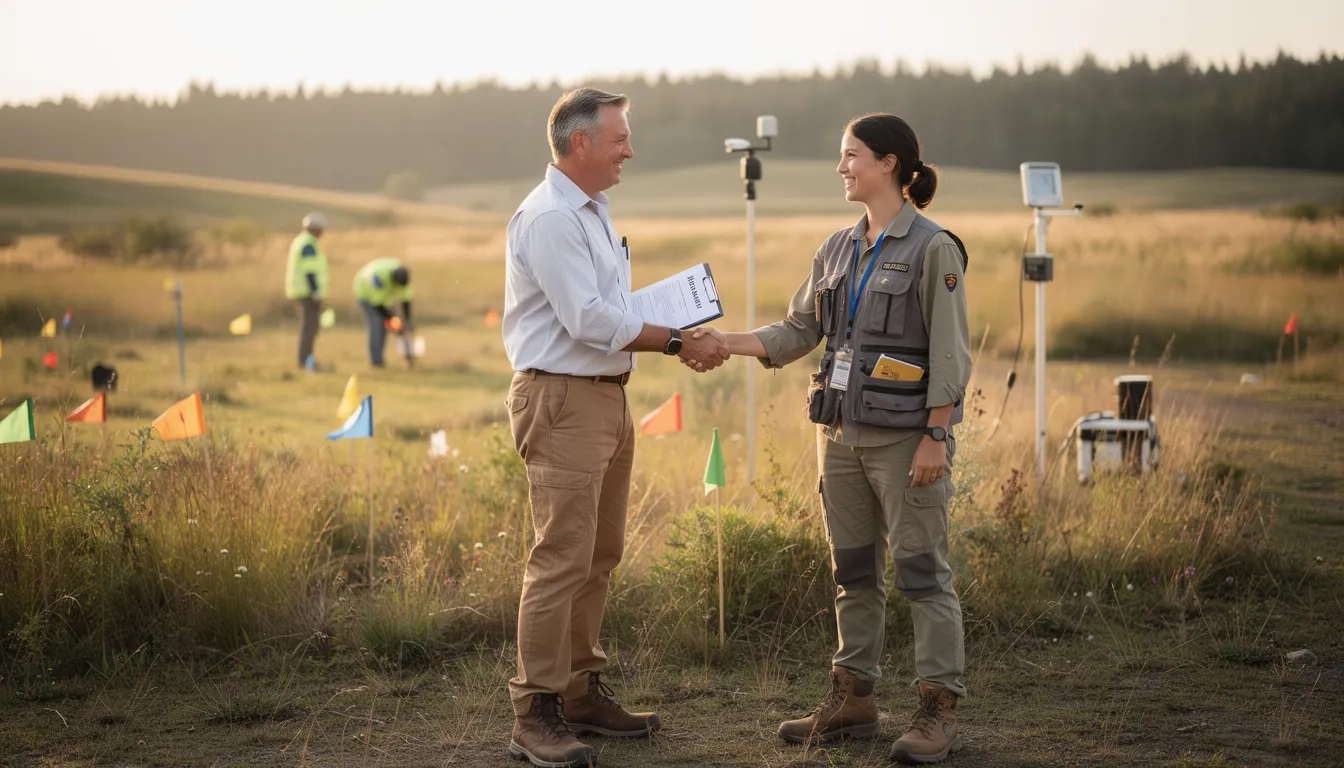
The Student Conservation Association has been placing interns in conservation roles since 1957. Today, roughly 60% of its alumni work professionally in the field. That's not luck — it reflects something specific about how this sector operates. In environmental work, internships aren't preparation for the hiring process. They're often the hiring process itself.
Why Environmental Hiring Works Differently
Environmental jobs don't fill the way corporate jobs do. A formal posting exists, yes, but by the time it appears publicly, the hiring team often has someone in mind. A past intern. Someone a colleague worked alongside at a restoration project two summers back.
This isn't nepotism. It's a practical outcome of how relationship-dense the field is. Environmental work happens across agencies, nonprofits, consulting firms, and utilities that interact constantly on permits, grants, and shared fieldwork. People know each other. Internships are how you join that network before you need a job.
The numbers confirm the pattern. The Bureau of Labor Statistics projects 7% growth in environmental occupations through 2033 — faster than average across all U.S. sectors. Over 87,000 positions are currently open nationwide. But candidates who land those jobs have almost always already worked alongside someone connected to the hiring decision.
Starting early pays off more in environmental fields than in most others. Students who complete a substantive internship by spring of their junior year have real runway before graduation — time to convert relationships into references, or even job offers, before competing on an open market. Waiting until senior year compresses everything into a few anxious months.
The Three Sectors, and Why They Feel Different
Not all environmental internships lead to the same place. The sector you intern in shapes your career culture, advancement timeline, and compensation ceiling.
| Sector | Internship Structure | Full-Time Conversion Path | Typical Pay |
|---|---|---|---|
| Federal (EPA, NOAA, USFS) | Structured, mentored, GS-scale wages | Non-competitive Pathways hiring | $20–$51/hr |
| Nonprofits (SCA, land trusts, conservancies) | Project-based, more autonomy | Alumni networks; partner organization referrals | $15–$25/hr or unpaid |
| Private (consulting, clean energy) | Fast-paced, client-facing | Direct conversion common; firms recruit interns intentionally | $18–$35/hr |
Federal Pathways programs are genuinely underused by students who don't know they exist. EPA's Pathways Internship Program pays on the GS-02 to GS-07 scale and, upon completing required hours and degree requirements, allows supervisors to convert interns to permanent federal employees without a competitive open announcement. NOAA runs an equivalent program. For anyone targeting a long-term government career, that's as efficient a shortcut as federal hiring gets.
Nonprofits operate at their own pace. Smaller organizations hand interns real project ownership fast — you might be running water quality monitoring transects or coordinating volunteer restoration crews within your first few weeks. The Natural Areas Conservancy (which runs urban conservation programs across New York City's parks system) tracks its alumni carefully: 86% are currently employed, with 63% working full-time in STEM-related careers. Their cohort model creates professional communities that generate referrals and introductions for years beyond the internship itself.
Private consulting firms play a deliberate recruiting game. They invest weeks training interns on software, field protocols, and client communication because converting a trained intern is cheaper and faster than hiring from scratch. Firms like Tetra Tech and AECOM run internship programs that function as extended evaluations — which is exactly what they are, and exactly why conversion rates are high.
Environmental Careers That Regularly Start This Way
Some roles in the environmental field actively require prior internship experience before a hiring manager will look at you seriously. Others benefit enormously from one without strictly requiring it. Here's the honest breakdown:
Roles where an internship is close to required:
- Wildlife Biologist — Federal wildlife agencies and state fish-and-game departments expect documented fieldwork hours: species surveys, bird banding, vegetation transects, population monitoring. An internship is the standard way to accumulate those hours before holding a full-time position.
- Environmental Policy Analyst — Deeply relationship-dependent work. Organizations like Western Resource Advocates fill analyst positions heavily from their own intern pools, and their senior roles pay $90,950–$107,000 once you've built a track record through the pipeline.
- Water Quality Specialist — Municipal utilities and watershed councils want candidates who have already operated a multiparameter sonde, collected grab samples, or contributed to a quality assurance project plan. An internship at a watershed authority or state environmental agency provides exactly that baseline.
- GIS/Remote Sensing Analyst — Employers want applied work in your portfolio: maps you built, spatial datasets you processed, analyses you ran on actual environmental monitoring data. Internships at land trusts, conservation districts, and municipal planning departments build that record.
Roles where internships accelerate but don't gatekeep:
- Environmental Engineer — Starting salaries run $65,000–$75,000. You can enter through traditional engineering pipelines, but an internship compresses your learning curve on regulatory frameworks and permit compliance considerably.
- Environmental Data Analyst — One of the fastest-growing environmental niches, with an average annual salary of $82,640 according to BLS data. Python, R, and ArcGIS skills from school transfer decently — but real monitoring datasets are messier than any coursework assignment, and internship experience shows you've handled that messiness before.
- Sustainability Specialist — Corporate sustainability teams hire more directly than most environmental roles, but prior project work from even a university sustainability office internship gives candidates something concrete to discuss in interviews rather than abstract coursework descriptions.
How to Pick an Internship That Actually Converts
Most people pick internships based on name recognition. The writing was on the wall long ago that this approach misses the key variable: does this organization actually hire its interns?
Ask before you accept. Something like: "What happened to your interns from the last couple of years?" Good programs answer without hesitation. A vague or defensive response tells you the organization uses interns for project capacity without any genuine pipeline in mind.
Beyond that, here's a decision framework organized by career target:
If you want federal government work — Choose federal over state when you can. NOAA and EPA Pathways build toward federal service time and enable non-competitive conversion. State programs vary widely; some run excellent internships with real hiring connections, others are one-off budget items with no follow-through.
If you want nonprofit conservation — Prioritize programs with structured alumni networks. The Student Conservation Association and American Conservation Experience (ACE) both maintain national alumni communities that generate referrals and introductions years after the internship ends. A smaller local land trust may be excellent field experience but leaves you with a thin professional network when the summer ends.
If you want environmental consulting — Choose by specialty, not just firm size. Air quality, hazardous waste remediation, stormwater management, and climate risk are distinct verticals with different hiring pools and technical languages. An internship on stormwater inspections won't help much when you apply for air quality modeling roles later.
The geography factor is real and underappreciated. California environmental salaries run approximately 25% above national averages. If you're willing to intern there and build your professional roots there, your early-career compensation ceiling shifts noticeably.
The Skills That Separate Interns Who Get Hired Full-Time
Technical competence gets you in the room. It's rarely what seals the conversion.
Documentation discipline separates candidates in regulated environmental work faster than almost anything else. Permits, monitoring requirements, and chain-of-custody protocols all live and die on careful record-keeping. An intern who maintains clean field logs, never skips the paperwork on water samples, and understands why chain-of-custody matters in a legal context signals real professional readiness. It sounds unglamorous. It is. It also signals that you can operate in a compliance-driven world without needing to be supervised on every step.
"Field data is only as good as the person who recorded it. In environmental science, sloppy notes can invalidate months of monitoring work."
GIS proficiency is the single most transferable skill across environmental subfields. ESRI's ArcGIS Desktop Associate certification requires passing a 63-question proctored exam, and earning it before your first internship signals genuine preparation. Arriving able to produce a working map from raw spatial data — without needing your supervisor to walk you through the process — makes you immediately useful to teams that might otherwise spend hours doing that work themselves.
Writing for non-scientists is the third underrated skill. Environmental professionals write reports for regulators, briefings for elected officials, and grant proposals for funders who care about outcomes rather than methods. Interns who can translate technical findings into readable prose for general audiences tend to get pulled into higher-visibility work, and higher-visibility work is what gets you remembered when a full-time position opens up.
My honest take: most interns overcorrect by trying to impress in the first two weeks and undercorrect on being consistently reliable for the remaining months. Showing up on time, completing what you said you'd complete, flagging problems early rather than covering them up — that's the actual currency in this field.
Career Trajectories Worth Understanding
Internships don't lock you into a single path, but knowing where each track leads helps you choose.
The government track is deliberate and stable. EPA Pathways recent-graduate positions start at GS-05 to GS-11 and can advance to GS-13 with career development. The advancement timeline is slower than consulting, but retirement benefits and job security have real value that's easy to underestimate at 22.
The nonprofit track moves faster early. Program coordinator roles can arrive within 18 months of a strong internship. But senior roles — associate director and above at established conservation organizations — typically require 10+ years of demonstrated policy, legal, or science work. Mid-career salary growth plateaus at smaller nonprofits in ways that surprise people who entered the sector expecting advancement comparable to the private sector.
The consulting track is the most salary-accelerated path in the early years. Project manager titles come within three to five years at active firms. The tradeoff is billable-hour pressure, frequent travel to project sites (capped landfills and industrial brownfields are not the scenic field work brochures imply), and less mission-driven culture than government or nonprofit work.
Programs With Documented Track Records
These aren't just internship resources — these programs have specifically shown career outcomes worth knowing:
- EPA Pathways Internship Program — GS-scale pay, federal service credit, potential non-competitive conversion to permanent positions. Apply through USAJobs.
- NOAA Pathways Internship — Similar structure with an oceanographic and atmospheric research focus; non-competitive conversion eligible upon graduation.
- Student Conservation Association (SCA) — 45,000+ alumni; 60% are now conservation professionals. Applications for summer positions open in January; competition is real, apply early.
- American Conservation Experience (ACE) — Paid 52-week placements embedded with the National Park Service, Bureau of Land Management, and others. Best suited to students ready for a full year of structured field experience.
- Natural Areas Conservancy — NYC-based, with an explicit urban conservation and environmental justice focus and a well-tracked alumni cohort model.
- State Agency Programs — California's Department of Fish and Wildlife, Oregon's DEQ, and Delaware's DNREC all run paid programs with genuine hiring pipelines and considerably less competition than federal programs.
Bottom Line
Environmental careers reward early movers and insiders — which sounds discouraging until you realize that internships are exactly how you become an insider before you need a job.
- Start before senior year. A junior-year internship gives you time to convert relationships into references or offers before graduation crunch sets in.
- Ask the conversion question before accepting any offer. Programs that hire their interns will say so immediately. Vagueness is a red flag.
- Build GIS skills before you apply. ArcGIS or QGIS proficiency is the single credential that opens the widest range of environmental roles.
- Choose your sector deliberately. Government, nonprofit, and consulting lead to genuinely different careers — not just different employers.
The environmental field is expanding, but getting your foot in the door requires strategy. Internships are the door.
Frequently Asked Questions
Do environmental internships usually pay?
It depends on the sector. Federal programs (EPA, NOAA, USFS) pay on the GS pay scale, typically $20–$51/hr depending on education level and location. Private consulting internships generally pay $18–$35/hr. Nonprofit and conservation internships are the most variable — some pay a stipend, others are unpaid but may offer housing or a living allowance, particularly for field positions in remote locations.
Can I get an environmental internship without any prior field experience?
Yes, especially for first internships. Many programs — including the Student Conservation Association and state agency summer positions — are specifically designed for students with no prior professional experience. What matters most at that stage is demonstrated interest, relevant coursework, and a willingness to do physical fieldwork. GIS or data skills are a bonus. Prior volunteer work with a local conservation group can also substitute for formal experience on early applications.
Myth vs. reality: Are most environmental careers in nonprofits?
Mostly a myth. Nonprofits are visible and appealing to students with conservation values, but the largest employers in the environmental sector are actually government agencies (federal, state, and municipal) and private consulting firms. Environmental consulting alone is a multi-billion dollar industry. Nonprofits are a meaningful slice of the sector, but students who only target them miss the majority of available positions.
Is a master's degree necessary for most environmental careers?
Not for most entry-level roles. A bachelor's in environmental science, biology, chemistry, or engineering is sufficient for field technician, analyst, and junior engineer positions. A master's degree helps for advancement into policy, research, or senior scientist roles — and for some federal positions that have educational requirements baked into the GS classification. Many professionals pursue a master's part-time after several years in the field, once they know which direction they want to specialize.
What should I look for on an environmental internship job posting to tell if it's a real pipeline?
Look for language about mentorship, professional development, or alumni outcomes. Check whether the posting mentions possibility of full-time employment. See if the organization has a track record you can verify — search their staff list for people who held intern titles and stayed. Programs that describe intern duties in purely task-based terms ("data entry," "filing," "assisting staff") without mentioning professional development are often lower-value experiences.
How do I transition into environmental work from a different field?
GIS certification and data skills are the fastest on-ramp from non-environmental backgrounds. ESRI offers stackable certifications, and Python/R skills from data roles transfer well to environmental data analyst positions. Volunteering with a local watershed monitoring group or land trust builds field experience and professional references simultaneously. For career changers, state agency programs and consulting firms are often more open to non-traditional backgrounds than federal agencies, which have stricter educational classification requirements.
Sources
- Entry Level Environmental Jobs: 25+ Green Careers for 2026
- Students | US EPA – Pathways and Internship Programs
- 2026 Guide to Green Careers – NovoResume
- Environmental Career Center – EnvironmentalCareer.com
- Pathways Internship | National Oceanic and Atmospheric Administration
- Internships – Natural Areas Conservancy