International students in California grapple with fear of deportation, visa applications
For many international students in California, college life these days is a balancing act between staying on top of homework and exam demands while avoiding Immigration and Customs Enforcement agents and situations that could lead to detention and deportation.
Social media investigations, instances of visa revocations, arbitrary travel delays, and even arrest and deportation because of the Trump administration’s restrictive immigration policies make international students feel vulnerable.
Some question whether they want to continue studying in the U.S. Some practice self-censorship on social media to comply with the administration’s new policies. Some are trying their best to stay away from any political discourse, including in the classroom.
There are about 140,000 international students enrolled in colleges and universities in California, according to the latest figures provided by the U.S. Department of State. Cesar Saavedra Sanchez, a native of Guadalajara, Mexico, is among them and says that he struggles to stay on top of his studies at Cal Poly Pomona, while also staying tuned into social media and news reports about immigration crackdowns and deportations, particularly among international students.
Robi Castaneda, a political science major at UC Davis, admits he is nervous and worried about President Donald Trump’s tough stance against immigrants.
Many experts say that the restrictive policies on international students could impact revenue across California. Higher educational institutions in the state generated over $6 billion in revenue from international students during the 2023-24 academic year, according to the Institute of International Education (IIE).
California had the largest number of international students among all states, with 36% from China, 20% from India and 4% from South Korea, according to the institute. Nationwide, there are more than 1.1 million international students, representing a 7.7% increase compared to the previous school year, according to the IIE.
There are three types of visas for international students: The F-1 visa is used for study at accredited U.S. colleges and universities or to learn English at an English language institute; the J-1 visa is for participation in high school or university exchange programs; and the M-1 visa is for non-academic vocational study in the U.S.
Each visa has separate forms to fill out, and it can take anywhere from a few weeks to several months, depending on differences in processing times, appointment availability and individual cases for students to obtain a visa. An online application and a scheduled interview at a U.S. Embassy or Consulate are also required.
Members of EdSource’s student journalism corps interviewed several international students from California State University and University of California campuses to understand how they are navigating the challenges they face. They come from various countries, including the Philippines, Japan, China, Mexico and Thailand. Some requested to speak anonymously.
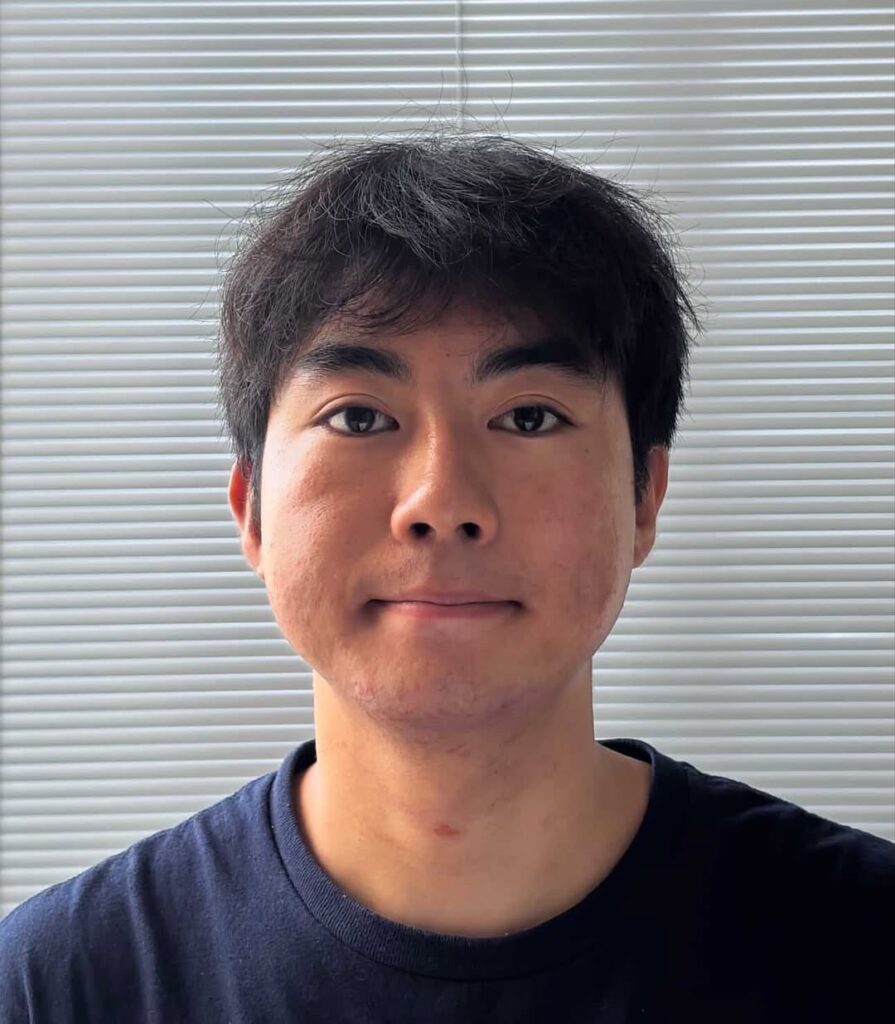
Daigo Sato
UC Santa Barbara, English Literature
Daigo Sato has two big worries in college: passing exams and avoiding being deported.
Sato, 21, studies English Literature at UC Santa Barbara, where he arrived as an exchange student from Meiji Gakuin University in Japan in fall 2024. His sense of security studying abroad stems from sticking to a personal plan — follow all the official immigration processes, don’t get in trouble, hope his campus doesn’t protest against the government, and make it to the end of his study abroad term in June.
Since he was 10 years old, Sato grew up watching American films, such as the “Indiana Jones” and “Star Wars” series — igniting his dream to study in America. At Meiji Gakuin University, he experienced American culture firsthand from Americans studying abroad in Japan, fueling his desire to follow the same path to the United States.
Under the Trump administration, student visas are increasingly under threat of revocations, social media screenings and pauses in visa appointments, Sato said. If these changes occurred at the beginning of his time studying abroad, Sato said he would be “worried.”
After hearing news of President Donald Trump’s suspension of international student visas at Harvard University earlier in the year, Sato felt a loss of a sense of security. On June 4, Trump signed a proclamation restricting several types of student visas at Harvard University; however, a federal judge has since temporarily blocked the effort.
“When I heard the news that Harvard University was suspending the acceptance of international students, I was surprised and worried about what would happen if the same thing happened to us. However, once I looked into it and tried to understand why it had happened, I felt like everything would be OK.”
Sato doesn’t think student protests against the government are bad. As long as UC Santa Barbara doesn’t make any “big protests,” Sato said he would be safe.
“Recently in the U.S., there has been a lot of criticism of the government,” Sato said. “I think it’s somewhat understandable why Trump had a problem with accepting international students and even ordered them to be stopped. I think there was an intention behind it to protect America.”
Sato secured his J-1 visa, which allows people from other countries to study or participate in a work exchange program, in the summer of 2024, before Trump was elected. He recalled navigating the lengthy steps by himself, including a one-hour train trip to the U.S. Embassy in Tokyo, where he turned in the required visa documents and attended an interview.
“When I was doing that kind of process, there were no strict rules and there were no difficulties like recently with Trump’s statements,” Sato said.
Sato said that many of his friends are currently planning to study abroad in the U.S. and are facing difficulties reserving an interview at the U.S. Embassy.
Student appointments at the embassy were canceled in May and June. Before Trump returned to office, Sato said his friends were “100% sure they would go study abroad, but right now it’s all impossible.”
Sato hopes to revisit the U.S. and is debating attending a film-based graduate program in California. He was fond of his time studying abroad and the memories he made while traveling around the U.S. His favorite memory was visiting the filming locations of one of his favorite film series, “Indiana Jones.”
For international students hoping to come to the U.S., Sato said, as long as they follow the proper procedures to come, they shouldn’t have any problems.
“Personally, I think that as an international student, if we just follow the rules and study and live school life,” Sato said, “we can continue to spend a normal studying abroad life as an international student in the U.S.”
— Camelia Heins
Show More
Cesar Saavedra Sanchez
Cal Poly Pomona, Political Science
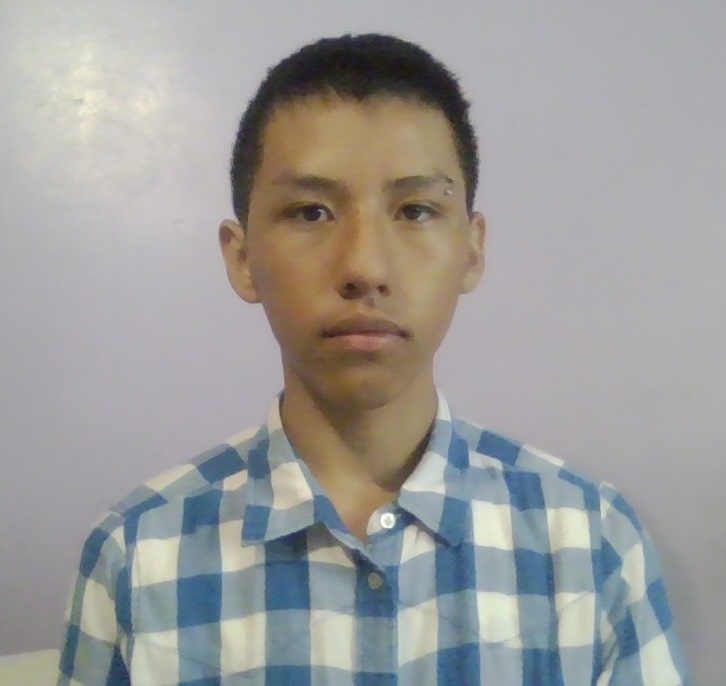
Cesar Saavedra Sanchez has become accustomed to staying tuned into daily news reports about the Trump administration’s policy changes, particularly those impacting international students at Cal Poly Pomona.
Sanchez stays in contact with his lawyer, whom he found through the Central American Resource Center (CARECEN), almost daily via email to plan for legal options, including obtaining a resident visa.
The 18-year-old sophomore studying political science is from Guadalajara, Mexico. He said he became passionate about political science as a child after following the elections in his country.
“So, when I came over here, I knew what I wanted to study,” Sanchez said. “I know I want to make a change, not only in my country, but also in the place that I’m living in now.”
Sanchez is applying for a resident visa, dealing with the costly fees and the large amount of paperwork to fill out. He worries that he might face deportation and said he doesn’t feel secure.
While applying for a visa, he tries his best to be a good citizen by avoiding protests. He monitors his digital footprint by keeping a low profile and avoiding posting anything that would warrant punishment from the government.
Immigrants, he said, “have to keep up an image of being citizens, of not getting into trouble with the law … because everything can come up for us in the moment that we try to apply for a visa, for citizenship, or any other stuff. Then, not only [does it] damage us, but it damages immigrants as a whole.”
Joel Pilco, the director of Binational and International Programs at Southwestern College, spoke about the increasing fears among students about how their social media accounts may impact their visa status.
“Students are asking us every day, ‘What do I do? What does this mean? Do I need to delete?’” Pilco said. “And we don’t have an answer, because we don’t know. They are afraid that any picture, any meme, anything can be the reason for them to be denied a visa. We cannot provide any feedback to the students right now because we don’t have any more details.”
Although Sanchez studies political science, he finds himself unable to attend protests due to the risk of being deported. He said he wished he could have participated in the L.A. protests for immigrant rights that spiked during June.
“I think people who are born here, who have that stability, security that nothing’s going to happen to them about getting deported, I think it’s better for them to be out there than people who face this [concern] like me,” Sanchez said. “That’s why I don’t have to go, I understand [protests] do make change and they open people’s eyes and I wish I could, but I can’t.”
While he frequently consults with his lawyers about the status of his visa, he said he is fortunate to find comfort and moral support from friends and family.
“My family in Mexico, who might not be able to help, but at least like having that, like, someone cheering is really helpful,” Sanchez said.
International students like Sanchez come to the United States to “make a life for our own,” he said. “And for our family to get these opportunities that we don’t have in our countries.”
Sanchez’s advice to fellow international students and supporters of immigrant rights on how they can help during this time is to have a “plan because anything can change for good or for worse.”
“For people that are born here, Chicanos or first-generation American, second-generation, be informed. Try to help your family and educate yourself. As they say in the protests, be the voice of the people who can’t.”
— Dante Estrada
Show More
Robi Casteneda
UC Davis, Political Science
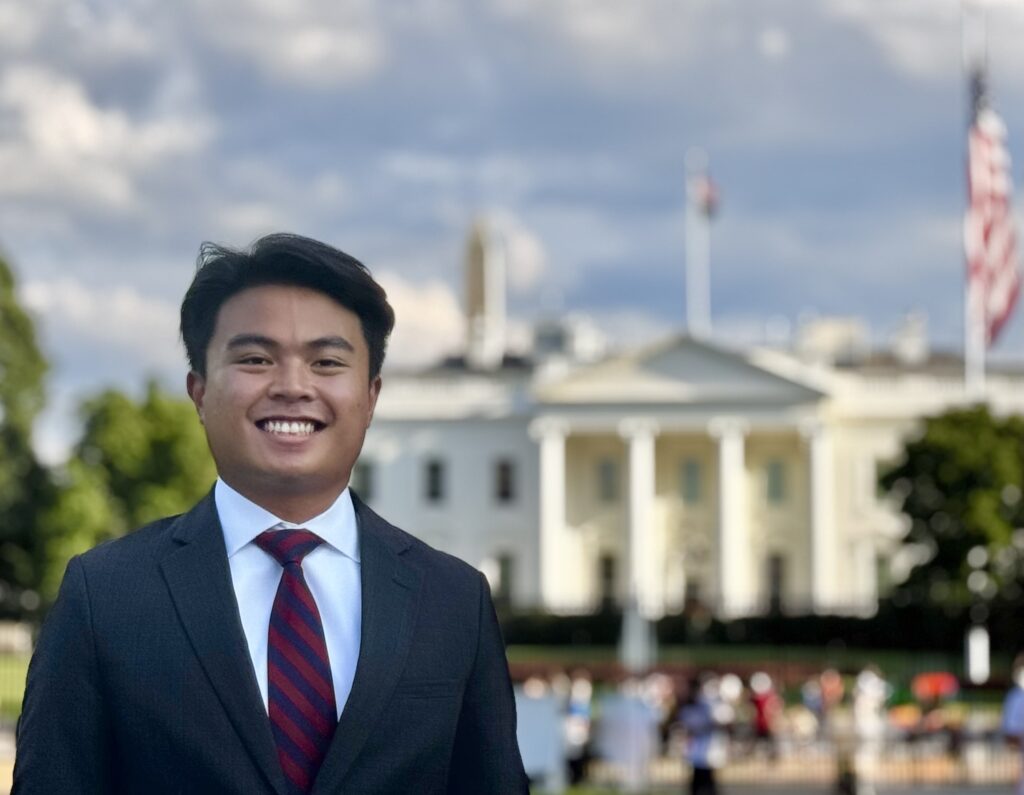
Robi Castaneda was 4 years old when he boarded a plane from his home in the Philippines. At the time, he thought his family would return after a quick visit to see his aunt in Sacramento.
But America became his new home, save for a three-year return to the Philippines to study at the University of the Immaculate Conception in Davao City, his hometown. He still visits the islands occasionally, where he retains citizenship.
Today, Castaneda is a political science and music major and International Student Representative (ISR) for the Associated Students of UC Davis.
Despite growing up in California and Idaho during his childhood and high school years, Castaneda said that he is keenly aware that his status as an international student can be suddenly revoked during the Trump administration, which paused all visa interviews for students coming to the U.S. in May. President Donald Trump also ordered visa revocations of Chinese students across the U.S.
Castaneda, 20, said that the international student community realized these actions were a wake-up call to learn about their legal rights in the U.S.
“Every time there is a brand new incident of someone getting their green card, visa revoked, every time there’s been an arrest, the international student community and I get more worried,” he said.
When it comes to social media, Castaneda posts content that doesn’t raise questions from the authorities.
“I would always double-check my social media to make sure there is nothing on it that would trigger any cause for concern or even catch people’s attention, even though I don’t post anything political,” Castaneda said. “I’ve always made that a standard practice, and that practice continues today, even after the visa changes, but I think in a more stringent sense.”
To be extra safe, Castaneda said that he is careful about what he says in public, too.
“I am just very cautious with the amount of things I try to spew out into the world,” Castenada said. “And a news interview is one of them.”
He worries more each time he reads a news report about a legal resident being arrested and detained, or deported.
“Right now, it seems unpredictable,” Castaneda said. “That’s definitely the reality that most international students are faced with.”
As a campus representative for fellow international students, Castaneda helps steer others to public resources related to immigration, legal services, advocacy, and social and mental health.
“Part of my responsibility is to really vouch for the rights and responsibilities of international students on campus,” he said.
He says that the threat of deportation is an increasing source of stress for students from outside the U.S. who already juggle visa applications, schooling and covering rising college fees.
“Whenever I have a huge amount of stress, I just do something else. Honestly, that’s probably one of my own response mechanisms,” Castaneda said. “Some people like to go take a breather, go outside, take a walk, but I just try to focus on other things as much as possible, because at the end of the day, we’re talking about big federal policy level changes.”
Castaneda often turns his focus to playing the piano. An experienced pianist, in 2022, he was invited to play in the Golden Classical Music Awards competition at Carnegie Hall, where he won first prize.
Castaneda’s advice for international students in the U.S.: “Just keep swimming.”
“It’s a phrase from ‘Finding Nemo,’ but I think (it speaks) for a lot of international students just keeping on track. You are here to study, to get a degree, to obtain an education and keep focus on that. Having this one-track mind will inevitably protect you.”
— Nasai Rivas
Show More
Sofia Gomez-Inowe
UC Irvine, International Studies
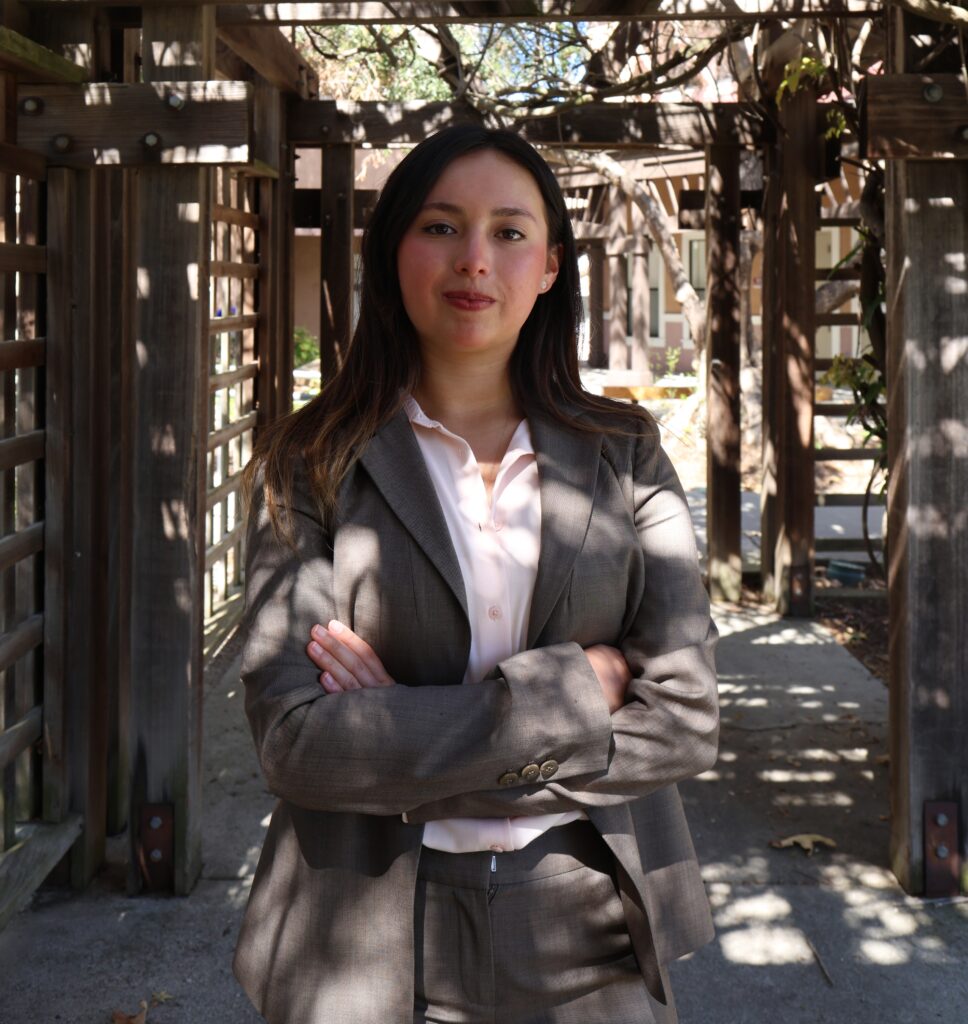
In the spring, Sofia Gomez-Inowe ran for International Senator for the Associated Students of UC Irvine — one of three special-interest student senators responsible for advocating on behalf of international students on campus.
When the second-year international studies major campaigned, she talked to students walking to class, handing out promotional stickers and pamphlets, hoping they would vote for her. She said some students weren’t even aware that the position existed.
Gomez-Inowe, 19, felt motivated to provide international students with informational guidance after hearing that California universities began seeing international student visa terminations in April. She got elected that same quarter.
“The biggest thing that I could do was to get the voice out, or inform others about this and to ask professors or other faculty members about this situation, because it’s unacceptable,” Gomez-Inowe said. “It was initially a shock, then a lot of frustration and an inability to do anything.”
Although Gomez-Inowe was born in San Diego, she lives in Tijuana, Mexico, and has traveled frequently between Southern California and Mexico for most of her life. Gomez-Inowe was drawn to international studies because of her interest in learning about travel regulations.
As a nonresident and dual citizen, she was able to apply for Assembly Bill 540 — a California law that allows nonresidents, including undocumented students, to be exempt from paying out-of-state tuition and fees.
“It’s always been kind of a gamble,” Gomez-Inowe said. “The risks of even crossing the border; I used to do it on a daily basis to go to high school.”
Gomez-Inowe said she does not feel at risk because of her dual citizenship. If anything, she felt more uncertain about her status as an AB 540 student — fearing that support could be revoked.
As Gomez-Inowe positions herself as a representative for international students, her top priorities include setting up information tables on campus and speaking at workshops hosted by UCI’s International Center, which provide international students with tips on job hunting and updates on visa policies.
“Especially right now, international students and being a foreigner in this country right now, a lot of people don’t really want to stand up for them,” Gomez-Inowe said. “But, I can do that.”
Federal legislators introduced a bill to block Immigration and Customs Enforcement from targeting U.S. citizens in response to national reports of U.S. citizens being detained by the agency. This comes after the Associated Press reported that a U.S. citizen was among the 360 people arrested in an ICE immigration operation in Camarillo in early July.
As a precaution while traveling, Gomez-Inowe ensures that all her Mexican documents are up to date and that her U.S. papers and passport are always with her.
Gomez-Inowe said she feels pressure to present herself as American for her safety. As an avid golfer, she recalled many conversations on the field where she found herself hiding details about her life as a nonresident.
“It is more of a fend-for-yourself mentality, like how you present yourself as having an American passport,” Gomez-Inowe said. “Kind of just saying, ‘Oh yeah, I live in Irvine, or I studied in San Diego,’ and not really going into the fact that my permanent residency is in Mexico.”
After President Donald Trump was sworn into office, she found that her online news consumption increased and often fact-checks information she sees on social media, because announcements over immigration policy were rapidly changing. Instead of just reading headlines, she reads articles in detail, including ones from the New York Times and the San Diego Union-Tribune.
And when it comes to social media, Gomez-Inowe said that she uses Instagram to inform her followers of any federal immigration activity in the Orange County area.
“That’s mostly been the advocacy that I’ve done,” Gomez-Inowe said. “Just like doing more research, and also not being scared of reposting stuff in my social media account.”
— Isaiah Mallari
Show More
Anonymous student from Thailand
UC Irvine, Film and Media Studies
Earlier this summer, a freshman from UC Irvine, a Thai native, was clearly tense as they spoke to a reporter by phone from their homeland, sharing deep-seated fears about running afoul of ever-changing laws and rules governing international students in the U.S.
The student chose at the last minute not to return to California, leaving behind their hopes of obtaining a degree in film and media studies at UC Irvine, rather than risk taking chances with Immigration and Customs Enforcement and Homeland Security. The student identifies as “they” and requested anonymity due to fears of getting in trouble.
“Like many other international students, I was very worried when it was announced that visa appointments would be on hold,” the student said. “When I spoke with UCI’s International Center, they explained the announcement wasn’t supposed to be made public and reassured me that appointments would likely resume soon, which they did in my country. I was lucky Thailand wasn’t badly affected, but I have friends from countries on the travel ban list who were much more impacted.”
They were drawn to the U.S. as “the heart of the global media industry,” with many opportunities available for those venturing into film. But they said that making long-term academic plans is difficult under the current administration.
This led them to consider transferring to another country to study, like the United Kingdom. They said their family has been supportive of the idea. Their parents have prioritized their safety and ensured this by taking necessary measures to help them graduate and obtain their degree without any disruptions.
Clay Harmon, executive director of the Association of International Enrollment Management, spoke about an increasing trend of international students choosing other countries other than the U.S. to study in and how current policy shifts are exacerbating that.
“If students who are researching their options right now are starting to take the U.S. off the plate in greater numbers, off the table,” Harmon said. “Then that means, two years from now, we’ll see a negative impact on enrollment rights and those students may turn to other destinations or choose to stay home.”
According to data collected by Studyportals in early 2025, postgraduate enrollment declined by 13% for international students in the U.S., as interest in the United Kingdom increased by 18%. International student interest in studying in the U.S. declined by 52% in May after the government’s pause in issuing visas, according to monthly surveys by the Keystone Education Group.
The student remained in their hometown in Thailand since they felt it was safer after the increase in ICE presence in California. They said many people do not understand the depth and seriousness of the issues that international students are facing.
“Many people express sympathy, but those who don’t have to worry about losing their ability to stay in the country often don’t actually understand how disruptive and frustrating it can be,” they said. “Some students can’t even go home to see their families because they risk being unable to return.”
It’s challenging to plan for with constant unexpected changes, they said.
“Many of us sacrifice so much to study in the U.S., believing in the idea of opportunity and freedom, only to face policies that make us feel unwelcome,” they said. “If I’d known how unpredictable things would become, I would not have chosen to study here. At this point, all we can really do is hope the situation improves, not just for international students, but for everyone affected.”
— Dante Estrada
Show More
Camelia Heins is a fourth-year political science and English student at UC Irvine, Dante Estrada is a fourth-year transfer student majoring in journalism at Long Beach State, Nasai Rivas is a fourth-year journalism major at Long Beach State, Isaiah Mallari is a fourth-year communications journalism student at California State Fullerton. They are members of EdSource’s California Student Journalism Corps.