Out-of-state college students pay high costs. It’s worth it, they say

Who wants to be an out-of-state student in California today?
Tuition costs are skyrocketing. Colleges across the state are working to increase in-state enrollments, which reduces the number of spots available for out-of-state students.
These dual realities most often leave out-of-state students racing to find ways to cover the extra costs, tens of thousands of dollars per year in some cases, from working one to two jobs, tapping tuition-savings programs, scholarships and financial aid, and applying and reapplying for residency, a process filled with red tape and marked by a long, complex set of steps to follow.
Enoch Ashong, a third-year student at UC Davis, desperately wanted to return to their home state of California after a sudden move to Virginia for their father’s job. When they returned to college, they were classified as out-of-state students.
“Life is so unexpected sometimes, and you just have to navigate what you truly want in life,” said Ashong, who uses the pronoun they. “What I truly wanted was to be in California.”
Despite the difficulties, many said they have no regrets and are thankful for the experiences and opportunities they’ve gained. Some discussed with EdSource the different routes they explored, such as studying at a community college first, while others shared how they navigated it all.
Logan Blossom
CSU Northridge, film production
At a young age, Logan Blossom fell in love with photography, first picking up his mother’s camera and finding a passion for film videography as he grew up. Coming from a small town in Clackamas County, Oregon, Blossom wanted to move to Hollywood to pursue a career in the film industry. So, he applied to Cal State Northridge on a whim and got in.
“I was like, you know what? I’m just gonna send it, and hopefully it works out,” Blossom said. “And here I am, two years later, it’s going great.”
The best part? Although Blossom is from Oregon, he benefits from the Western Undergraduate Exchange (WUE) program, allowing him to pay less than the usual out-of-state tuition cost.
The program, which is open to specific schools and degree programs in Western states, reduced his yearly tuition cost from $19,980 a year to $7,125 a year. CSU Northridge is one of 24 colleges in California that participate in WUE, and Blossom was one of the 1,402 out-of-state students attending California colleges to benefit last academic year.
According to data from the Western Interstate Commission for Higher Education, which runs WUE, 49,177 students from 170 institutions benefited from the program, saving students approximately $615 million last academic year. In addition, 18,018 California residents who enrolled in out-of-state colleges saved an estimated $244 million in 2024-2025.
Margo Colalancia, the director of student access programs, said that participation in WUE is expected to keep growing.
“I do think that we are seeing more and more interest, not just in California, but from other, most of our other states,” Colalancia said. “The majority of the public institutions already participate, but in California, we are seeing an increasing number coming on board.”
Colalancia said that projected numbers of high school graduates declining in the West may prompt further institutional interest in WUE as California institutions look for more students to enroll. According to the commission’s “Knocking at the College Door” report, the number of California high school graduates peaked last year and is expected to decline 29% by 2041.
Outside of WUE, Blossom also received scholarships and “a hefty amount of financial aid” to help cover his current costs. On top of being an out-of-state student, Blossom also navigated being an independent student from high school into college.
“I actually lost both of my parents when I was a kid,” Blossom said. “I was emancipated. So I was on my own when I was 16, 17, 18, finished high school, I got into college, and so navigating college as an independent student is much different than what you’d expect from a regular student that has their family helping them out.”
For example, since Blossom can’t fill out the parental information sections on the Free Application for Federal Student Aid form, he chose not to fill out the form each year. Instead, his financial aid and tuition are calculated directly through his school.
“Navigating school as an out-of-state student, especially without parents and without help, it’s been hard, but I’ve been able to do it. It’s not impossible,” he said. “You have to work more, like I’ve always had, minimum two jobs while I’m in school. You have to grind, but you can do it.”
Blossom had various odd jobs throughout college, such as social media management, freelance film contracting, work at an auto body shop and serving at different restaurants. In addition to being a full-time student, he worked full -time and occasionally overtime, he said.
There was a moment during Blossom’s first year when he was ready to leave his Ggolden Sstate dreams behind and move back to Oregon. The challenges of being an out-of-state, independent student, coupled with that yearning for home, led him to months of preparations and applications to transfer to either the University of Oregon or Reed College in Portland, Oregon.
Then, something switched.
“Something clicked in me after I got rejected [from Reed College] and I was like, you know what? Maybe I want to stay, and so I slept on it for a month,” Blossom said. “And after a month, I decided I don’t want to transfer back anymore. I want to stay, and since then I have gotten completely comfortable, and I love California.”
Blossom plans to stay in California after he completes his degree.
“I don’t regret coming to California,” he said. “There could have been a completely different pathway I took, and it would have been interesting and I probably would have been just as successful, maybe in something different, but I chose this other pathway, and here we are.”
Show More
Celia Patterson
UC Santa Cruz, biochemistry, 2025 graduate
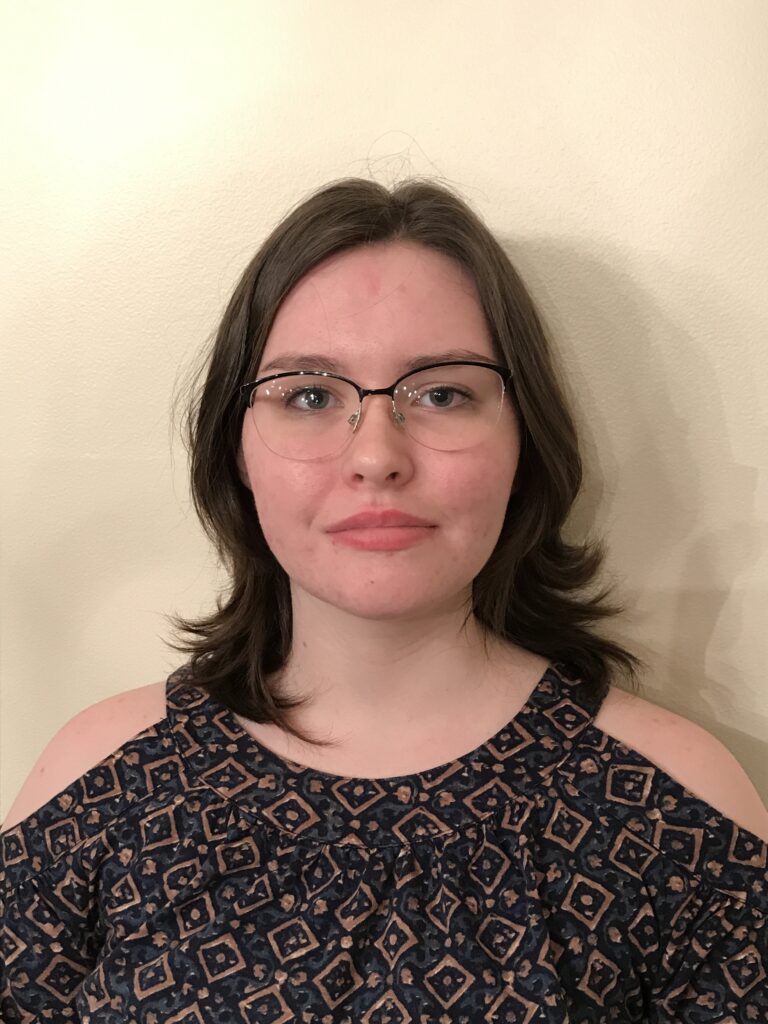
As an out-of-state student from Little Rock, Arkansas, Celia Patterson was drawn to colleges in California for one thing: a biochemistry program.
“Getting down to the molecular level of why diseases happen and how our body works, and I found that interesting,” said Patterson, who uses the pronoun they. “Both my parents are doctors. I grew up in a medical household, no interest in becoming a physician, but still really loved learning about diseases and the human body.”
The closest program Patterson found in Arkansas was a chemistry degree with an emphasis on biochemistry, as opposed to a fully fledged biochemistry program with undergraduate research opportunities.
“I knew I had to go out of state, and University of California, Santa Cruz had a really good program,” Patterson said. “They really focused on getting undergrads into research, which was very important to me.”
Since Patterson was financially dependent on their parents, they didn’t try to establish residency in California to attend UC Santa Cruz. To pay for tuition and living expenses, they received merit-based and outside scholarships, along with savings from their parents and financial help from their grandparents, who sold a business.
“I’m very thankful for my grandparents; they sold their business a few years ago for an insane amount of money and put aside 25 grand for each of their grandkids to use,” Patterson said. “So I was able to use that to cover tuition.”
A Covid-19 era relief program from the University of Arkansas paid a portion of Patterson’s California tuition, and they were also able to pay the difference between their rate and the in-state student rate for their first two years of college. Due to the pandemic, Patterson was living in Arkansas and taking classes remotely.
“That [program] helped me so much, I just paid in-state tuition pretty much,” Patterson said. “My living expenses were very low because I was living here [in Arkansas] with my parents, and so I don’t think I would have been able to continue if that didn’t happen.”
Patterson said that they wished they had completed their first two years of school at a community college in Arkansas to save costs.
“I would be able to attend in-person classes sooner and cheaper,” they said. “Smaller class size, more individualized attention, and for your lower division classes, you learn the same material in the end.”
But, they were still “thankful” to attend UC Santa Cruz and get hands-on lab research experience. Many of their classes were unique to their campus and aren’t usually offered at other universities.
“I love quantum mechanics and spectroscopy; it is exceedingly difficult and hard to understand, but I would come out of the lecture and have a list of questions that I wanted to know more about,” Patterson said. “Just making connections from other class material, it’s a great feeling to have when you’re that engaged and that interested in the class.”
After graduating in June, they decided to move back to Arkansas and work close to home due to the high cost of living in Santa Cruz.
“I realize I am extremely privileged to attend a UC, attend an out-of-state school, have financial support from my parents and to have supportive parents and grandparents,” Patterson said. “To be able to get the scholarships and all the programs that made it possible for me to attend UCSC, because it is a very expensive school in a very high cost-of-living area.”
Show More
Jason Yu
UC Irvine, psychological science, 2025 graduate
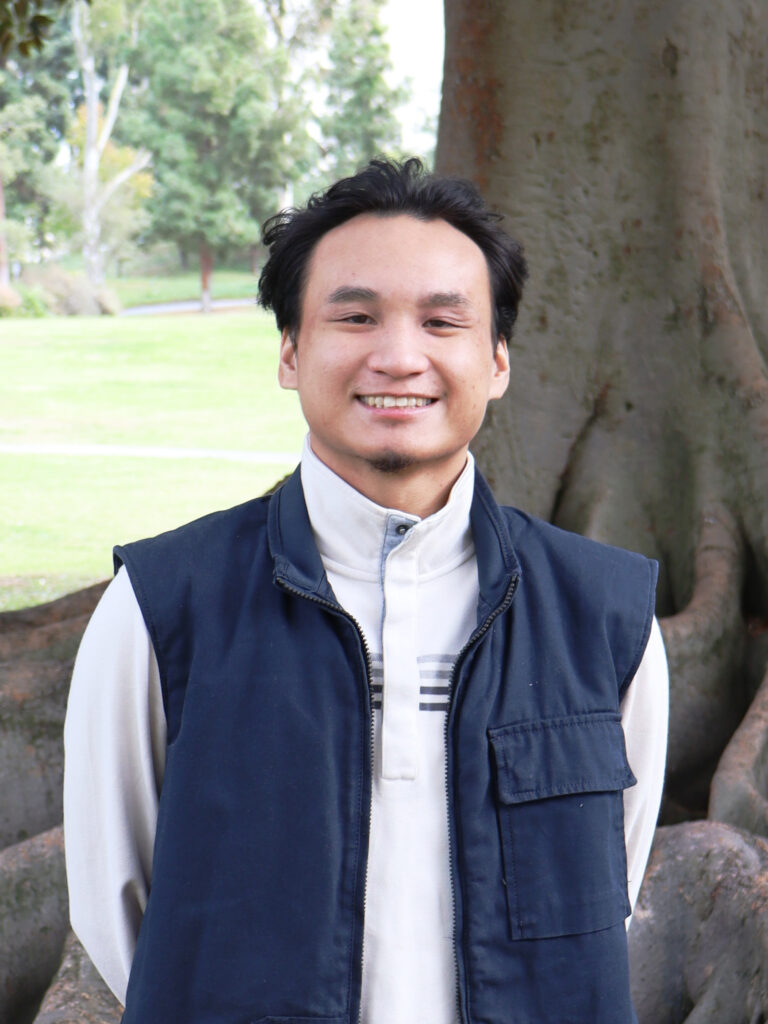
Jason Yu applied for California residency for tuition purposes three years in a row. California said no three years in a row.
Yu, who is from Kirkland, Washington, obtained a California driver’s license and gets benefits from CalFresh and Medi-Cal. Despite establishing a permanent address before his freshman year and meeting with advisers from the University of California at least 10 times, he never quite figured out how to gain resident status.
Yu thought he was doing everything right, but learned much later that when he co-signed for school loans with his mother at age 17, it prevented him from meeting the financial independence guideline set by California.
The summer before his first year at UC Irvine in August 2021, Yu moved from Kirkland and established a permanent address by signing a lease with his brothers in Los Angeles, the first of roughly five addresses he would have in the state. He worked at a restaurant near campus and as an orientation leader at UC Irvine.
Yu fell into homelessness, yet remained persistent in not accepting “gift aid” from family or friends — another stipulation under the financial independence guideline that would disqualify him. He was living with a roommate off campus when he suddenly had to move out.
“I was basically living in my car, couch surfing as well,” he said. “I fortunately had a family friend that was able to lend me his couch to sleep on in Laguna Niguel, so I would be commuting to school, work and I was also doing extracurriculars.”
Yu took advantage of resources from the UCI Basic Needs Center while experiencing homelessness, such as receiving aid for gas and food assistance from CalFresh. He sought out financial help and received the UCI’s Directors’ Scholarship, a distinguished merit award open to nonresidents.
“Working a lot of hours and me doing a lot of the things independently took a lot out of me,” he said. “I had to be very diligent with how I spent my money. I couldn’t go out as much as I could, as I wish I could, and coming from a lower middle- class background definitely [was] a bit harder as well.”
He graduated with a degree in psychological science in June, a diploma he paid for out of his own pocket.
Yu plans to stay and find a job in California. He said he doesn’t regret choosing an out-of-state college and never expected “the friendships, the close bonds and the memories” made during his time at UC Irvine.
“Trying to be an in-state student and the struggles I faced with homelessness, financial insecurity within the last few years because of my homelessness,” Yu said. “Those challenges are not meant to be just a barrier, but an obstacle I made it over.”
Show More
Enoch Ashong
UC Davis, African American and African studies
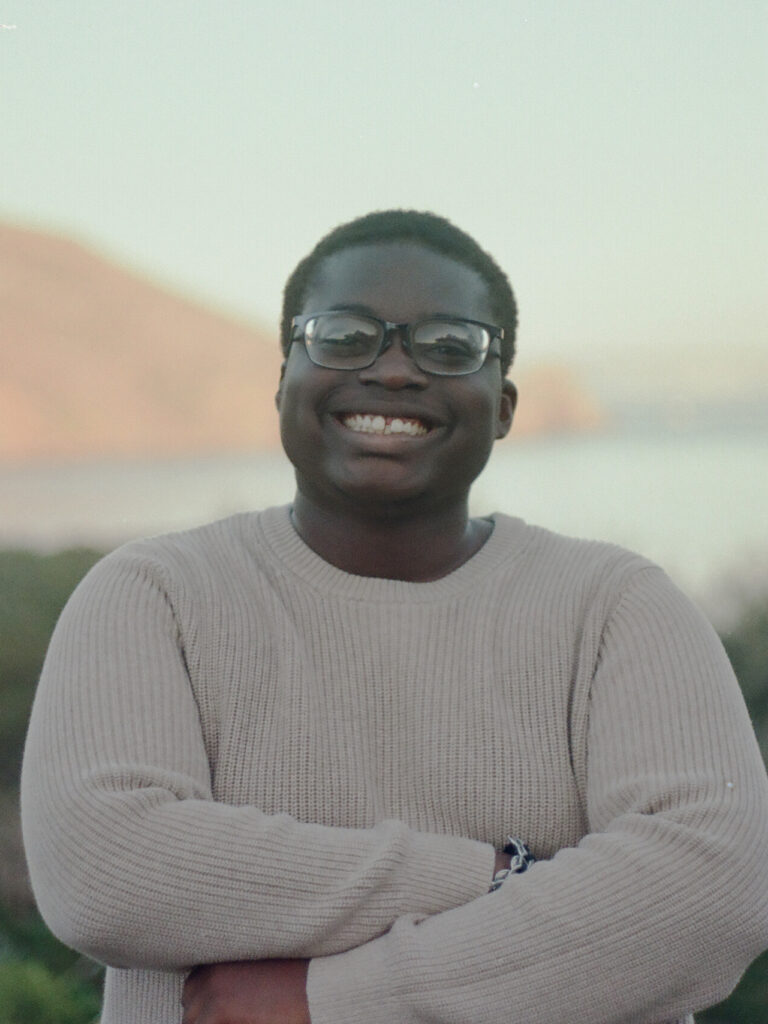
Enoch Ashong, 22, spent the first 17 years of their life growing up in Oxnard. But when their dad got a job opportunity in Washington, D.C., Ashong finished their senior year of high school in Virginia. Desperate to return to California, they applied to UC Davis to study African American and African studies.
They submitted a statement of legal residency after being admitted to UC Davis. Then, during the summer before the school year began, they found out they were classified as an out-of-state student.
“When I first came to Davis, my dad had actually submitted an appeal form to establish residency as a California resident,” said Ashong, who uses the pronoun they. “I had lived in California all my life, and it was weird that they established me as an out-of-state student. I don’t think anything real came out of it, so we had to just really try to pay the out-of-state tuition, which is really stressful.”
As Ashong continued their classes at UC Davis, their dad took out approximately $50,000 in loans to cover tuition and living expenses.
Ashong was diagnosed with depression a few years before starting college, and by the end of their first year at UC Davis, Ashong felt it deeply. The stress of moving to Virginia after living in California caught up to them, plus the strain of the out-of-state tuition costs and health problems their dad suffered from an accident. Ashong was often unable to get out of bed, which impacted their ability to attend class.
“I was really depressed when I came to Davis, which halted a lot of my academic performance,” Ashong said. “Actually, I ended up getting [academically] dismissed after my first year.”
After the academic dismissal, Ashong returned to Virginia and wasn’t sure they would return to UC Davis. The out-of-state costs were a major factor deterring Ashong’s decision.
“I had to write through a contract in order to get back to Davis,” Ashong said. “I kind of threw that out the window once I realized how much out-of-state tuition costs are and I decided just to stay in Virginia for a little while. I thought that was going to be my entire plan, go to school in Virginia, live in Virginia because I would get in-state tuition there.”
As a part of Ashong’s readmission expectations contract, they had to complete a year of community college to catch up on units during the break. When they moved back to Virginia, they enrolled in a community college to stay on track academically.
Ashong’s dad’s health worsened, and he became permanently disabled. Due to his disability, the loans Ashong’s dad had taken out that first year were forgiven since he was physically incapable of paying them back. Ashong’s break from school turned into two years as they figured out whether to stay in Virginia or return to Davis.
After their mental health improved, and promising their mom they would find a job to help with expenses, Ashong returned to Davis.
“One thing that really drove me to come back to California was just the fact that I didn’t get to finish out my time in high school in California,” Ashong said. “I didn’t get to finish up my senior year in California. So, I just really wanted to finish out something.”
After returning to Davis, Ashong worked part -time in the dining hall for a few months but took a step back since they weren’t used to working the maximum allowed 19.5 hours a week alongside classes. They are starting a new position at UC Davis’ Student Recruitment and Retention Center in the fall.
Ashong is still trying to get in-state tuition; they researched the Assembly Bill 540 nonresident tuition exemption — the California law that allows some nonresidents to be exempt from paying nonresident tuition costs — and steps to establishing residency for tuition purposes. But, they don’t meet the degree or unit requirement for the AB 540 exemption, since they didn’t graduate from a California high school. They won’t be able to establish residency either due to financial dependence on their parents.
Fortunately, Ashong’s financial aid package has improved. They were offered multiple grants, including the Pell Grant for this academic year, in part due to their mom now being the primary income earner of their household.
Ashong said California is “where I belong” and hopes to stay, possibly pursuing graduate school and finding a job while establishing residency.
“Life is so unexpected sometimes, and you just have to navigate what you truly want in life,” Ashong said. “What I truly wanted was to be in California.”
Show More
Lori “Sway” Kroh
UC San Diego, psychology, cognitive and behavioral neuroscience, 2025 graduate
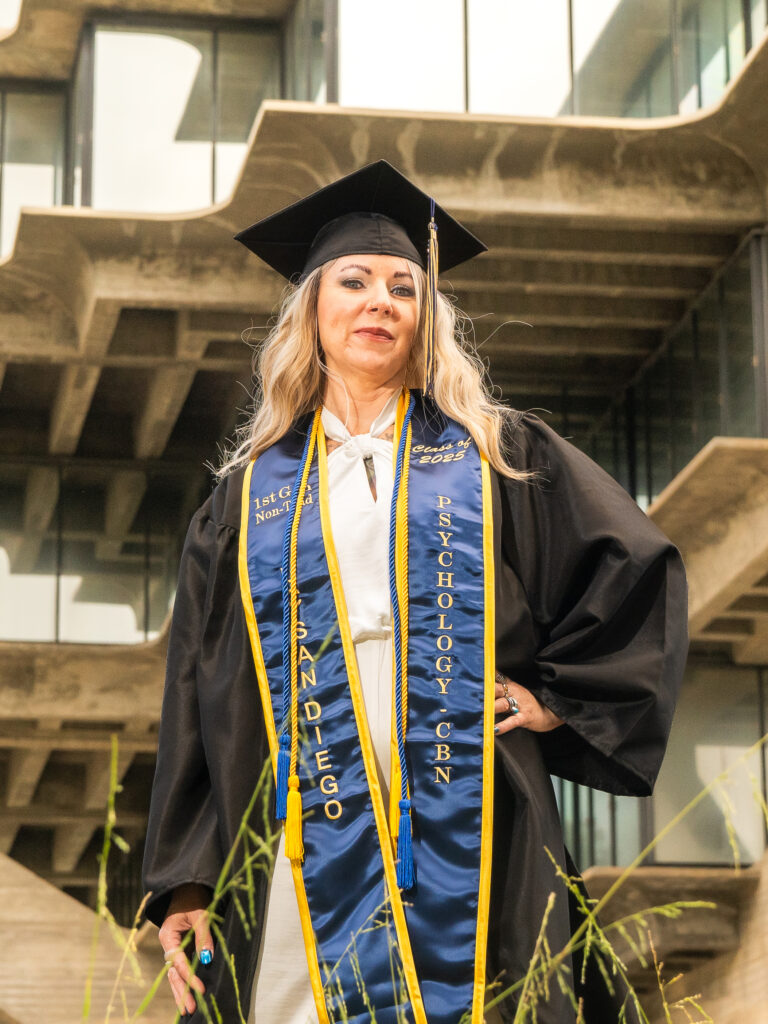
Lori Kroh, a 46-year-old who also goes by the name “Sway,” was a massage therapist in Tacoma, Washington, for 17 years before deciding to return to college.
Kroh said she was “destined to come to California” and UC San Diego was her top choice, partly because of the weather but also the school’s progression in her field of study, psychology and cognitive and behavioral neuroscience.
“I just felt like in my life, I wanted more. I needed more,” Kroh said. “I wanted to learn, expand my knowledge base, and I became more and more fascinated with the brain and the nervous system, especially regarding mental health and overall well-being.”
Kroh was accepted to the program in the fall of 2022 and moved to Chula Vista with her partner and 8-year-old Yorkie-Chihuahua named Ajna. As she was preparing for the incoming school year, she was disappointed by her financial aid package.
“I knew that there was going to be out-of-state tuition when we moved down here,” she said. “I thought there was a way that financial aid would be able to work with me on it. I guess I didn’t get any kind of memo that, no, they don’t. You’re kind of on your own when it comes to any extra tuition costs.”
She debated taking out personal loans to cover the costs, but knew she had to understand all of her options first. After a conversation with UC San Diego’s registrar, Kroh decided to reapply for her program the following year and spend that time establishing residency in California.
“The registrar was very, very kind and without saying it would happen, they said, ‘Why don’t you just reapply for next year and establish residency?’” Kroh said. “As hard as it was to hear that, like setting me back a year, I went ahead and just did it, having that faith. I reapplied. I was accepted once again, which I was relieved about, and I didn’t have to worry about the out-of-state tuition.”
Kroh said attending college a year later “worked out for the better,” especially with finding housing, as she stumbled upon the graduate and family housing communities at UC San Diego that she previously didn’t know about. After joining the waitlist, Kroh, her partner, and her dog, Ajna, were able to move in in July 2023, and they lived there for the duration of her schooling.
After graduating in June, Kroh said she plans to stay in California because it has “so much to offer.” Her goal is to get a research-based job at UC San Diego, and she plans to apply for graduate school within a year or two, either in California or outside of the country, depending on the political climate, Kroh said.
“I just don’t want to go back to Washington state,” she said. “It is really more about the weather than anything, but I’m also making sure that what I’m looking for is going to be beneficial for me.”
Show More
Camelia Heins is a fourth-year political science and English student with a minor in Asian American studies at UC Irvine. Roman Fong is a second-year journalism and sociology major at San Diego State University. They are members of EdSource’s California Student Journalism Corps.