Professional Development Resources for Students: What Actually Works
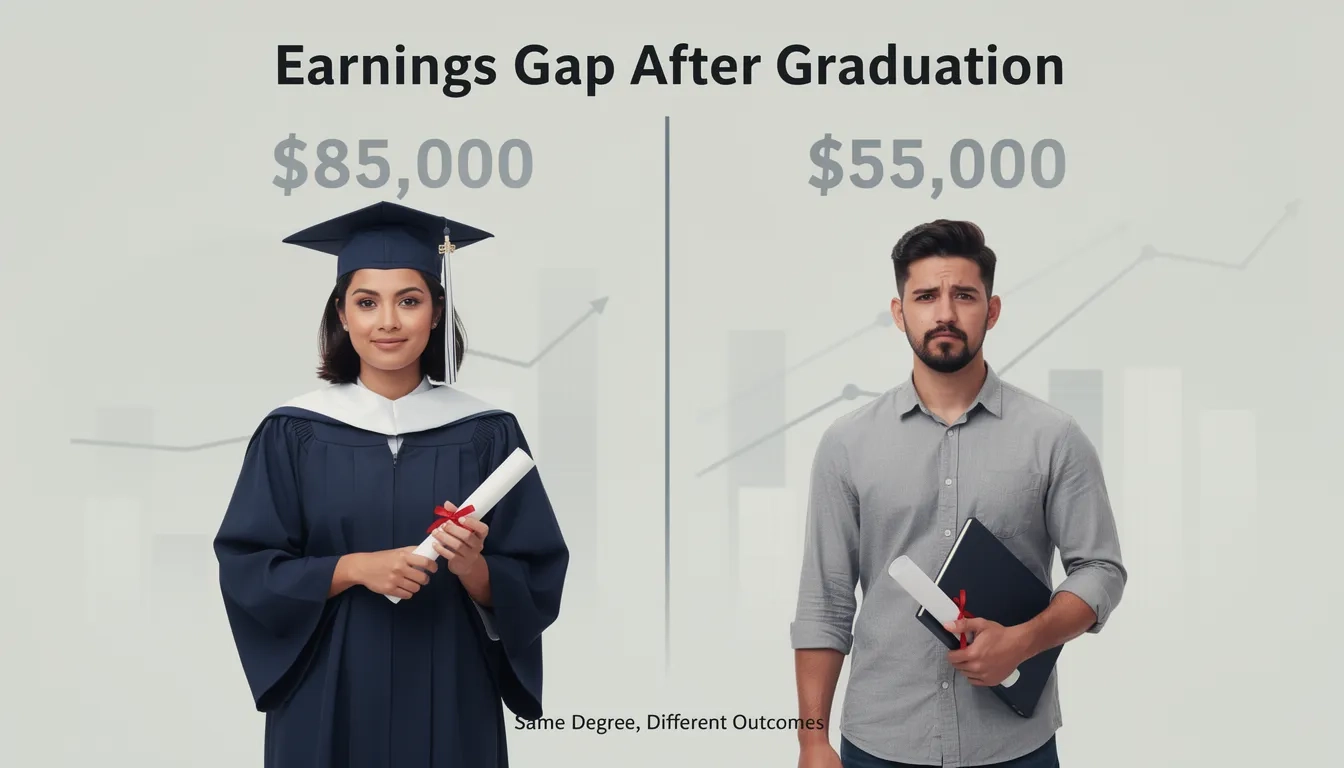
Here's a number worth sitting with: 52% of recent college graduates are underemployed in their first year out. Not unemployed — working, just below their degree level. And the Strada Education Foundation found that 73% of those who start underemployed are still there a decade later. One bad first job can calcify into a career. That's the real stake behind professional development, and most students don't find out until after graduation.
The gap between career-ready and career-uncertain closes faster than most people think, but only if you use the right resources at the right time.
Why the Salary Gap Should Get Your Attention
NACE data from 2025 makes the case bluntly. Graduates who completed an internship or co-op earn an average starting salary of $59,059. Those who didn't? $44,048. That's a $15,011 difference on the first paycheck — before raises, before promotions, before the compounding effect of starting from a higher base.
One internship reduces underemployment odds by 48.5%. A single semester of relevant experience does more for your early career than most elective coursework.
The wrinkle: only 29% of students complete a paid internship before graduation. Most know it matters. Far fewer act on it early enough to have real options.
Professional development isn't one thing. It's a combination of credentials, hands-on experience, strategic networking, and self-directed skill-building — and the students who mix all four tend to show up at the job market with something concrete, not just a GPA.
Your Campus Career Center Is Better Than You Think
Most students treat the career center as a last resort. Somewhere to drop off a resume during senior year panic. That's backwards.
Career centers now offer a surprising range of services, and most students don't know half of what's available. Beyond resume reviews and mock interviews, typical offerings include:
- Access to Handshake (the dominant student job board, with 700,000+ listings)
- Big Interview, a platform for practicing interview responses with AI feedback
- LinkedIn Learning subscriptions, often free through the university
- Professional headshots (many schools offer these at no cost, which most students only discover by accident)
- One-on-one sessions with industry-specific career counselors
- Alumni networking platforms and career fairs with direct employer access
Research from NACE, Gallup, and the Strada Education Foundation shows that students who use at least one career service average 1.24 job offers after graduation. Students who use none average exactly 1.0. Each additional service correlates with about 0.05 additional offers.
That sounds modest until you consider that 31% of students never visit a career center at all — and of those who do, only 36% report being satisfied with the experience. Students who show up passively, attending one workshop and submitting one resume, underuse what's actually available.
"The students who get the most out of career centers treat them like a gym membership. You don't get fit by paying the fee — you get fit by going regularly and doing the hard work."
The recommendation from Making Waves Education Foundation is specific: meet with a career counselor at minimum once per academic year, and attend at least two career center events beyond the career fair (alumni panels, industry nights, and skill workshops all count). That's not a lot of time, and it measurably changes outcomes.
Online Learning: Coursera vs. LinkedIn Learning
Two platforms dominate the conversation for student skill-building. They're genuinely different products serving different goals.
| Coursera | LinkedIn Learning | |
|---|---|---|
| Course library | 7,000+ from 275+ universities | 18,000+ from industry practitioners |
| Course length | 4–6 weeks | 1–5 hours |
| Credential weight | University/employer-backed (Google, IBM, Yale) | Professional, skills-focused |
| Monthly cost | $59 (Coursera Plus) | $29.99 |
| Best for | Certifications with employer name recognition | Rapid skill acquisition, LinkedIn integration |
The World Economic Forum's 2025 Future of Jobs Report found that 59% of the global workforce will need retraining by 2030, and 63% of employers identify skills gaps as a top business obstacle. That context matters. These certificates aren't just resume decoration — they're increasingly how employers verify that a candidate can do the job before meeting them.
The practical strategy most students miss: use LinkedIn Learning first. It's cheaper, faster, and lets you explore without committing to weeks of structured coursework. Once you identify an area where depth matters — data analysis, project management, UX design — move to Coursera for a credential with institutional weight. Google's Data Analytics Professional Certificate on Coursera, for instance, has name recognition that a generic LinkedIn certificate can't replicate.
One honest caveat: neither platform replaces demonstrated experience. A certificate says you completed training. A portfolio, a GitHub repo, or a work sample says you can deliver. Treat online learning as preparation for experiential work, not a substitute for it.
The Internship Math (and How to Actually Land One)
Internships are the highest-return investment a student can make in their professional development. The data above makes that case. But the how matters as much as the why.
A few things the numbers reveal that most internship guides skip:
- In-person internships convert better. NACE's 2025 data shows employers extend full-time offers to 72% of in-person interns. That rate drops to 56% for hybrid programs. If you have a choice, choose in-person — especially for the first one.
- The average hourly wage for bachelor's-level interns is now $23.04, up each year for the past decade. Unpaid internships still exist in some industries (media, nonprofits, arts), but they're hard to justify when paid opportunities are available and the salary gap at graduation is already significant.
- Timing matters more than most students realize. Students who begin building internship applications in spring of junior year can compare multiple offers and make decisions from a position of choice rather than scarcity.
Finding internships beyond your campus Handshake board: LinkedIn's jobs tab filtered by "internship" and your target city, Glassdoor's intern reviews (which tell you whether a position actually develops skills or just makes copies), and direct company career pages. Many employers post openings that never make it to aggregator sites.
Reach out to people doing the job you want. A 20-minute informational interview with someone two years out of your program yields more tactical guidance than any workshop. Most people say yes when the ask is specific and short.
Networking Without Feeling Like a Salesperson
Networking has a branding problem. Students hear the word and picture awkward handshakes at career fairs. The reality is less theatrical.
The most effective networking for students happens in three places:
LinkedIn, used as a research and outreach tool rather than a job board. Connect with alumni, follow companies you want to work for, comment genuinely on industry conversations. A complete profile with real experience, relevant skills, and a professional photo does quiet work while you sleep.
Professional associations, which most students leave on the table entirely. Organizations like the American Marketing Association, Association for Computing Machinery, or Society of Human Resource Management offer student rates (often between $20–$75 per year) with access to job boards, mentorship programs, and regional events where you're one of very few students in a room full of practitioners.
Alumni networks, which are wildly underused. Most universities have dedicated alumni networking platforms alongside LinkedIn. Alumni respond to student outreach at much higher rates than cold contacts — there's a shared identity that opens the door. The ask should be simple: 15 minutes to hear about their career path and ask two questions. Not "can you get me a job."
Skills That Show Up on the Job
Beyond credentials and connections, there's a set of practical skills that employers mention in interview feedback but rarely appear in course catalogs.
According to Fastweb's analysis of what internship supervisors actually value, the gaps they observe most often aren't technical — they're behavioral:
- Professional communication: writing emails that don't read like texts, speaking in meetings with appropriate formality, following up without being prompted
- Project ownership: not waiting to be told what to do next, flagging blockers before they become problems
- Adaptability: adjusting when priorities shift, which they always do
Technical skills get you the interview. These skills determine the offer. The most direct way to build them is to take on one leadership role per year — student organization officer, research assistant, volunteer coordinator — where you're responsible for outcomes, not just tasks. Classroom performance rarely develops ownership. Leading something does.
A Realistic Timeline by Year
Students often ask when they should start. The honest answer is earlier than feels necessary.
- Freshman year: Join two or three student organizations. Explore broadly. Use LinkedIn Learning to try different skill areas. Visit the career center once, just to know what's there.
- Sophomore year: Land a volunteer role, part-time job, or campus research position. Attend one career fair. Start building a LinkedIn profile with real content.
- Junior year: Target at least one paid internship for summer. Complete one Coursera certification in your intended field. Begin informational interviews with alumni.
- Senior year: Leverage your internship into a full-time offer if possible, or use the experience and references for external applications. Apply before December — most major employer hiring cycles open in fall and move fast.
Starting early isn't about anxiety. It's about having options by senior year instead of scrambling.
Bottom Line
Professional development works — but only when you start before you need it. The students who end up with choices at graduation aren't smarter than their peers. They showed up at the career center more than once. They did the internship junior year instead of waiting. They built a LinkedIn profile when it felt premature.
Three things worth doing this month:
- Schedule an appointment with your campus career center — not to drop off a resume, but to ask what resources you're not currently using.
- Start one LinkedIn Learning course in a skill area relevant to your target industry.
- Message one alumnus from your program with a specific, short ask for 15 minutes of their time.
That's the whole playbook in miniature. Repeated over four years, it compounds into something real.
Frequently Asked Questions
Do career centers actually help students find jobs?
Research from NACE, Gallup, and the Strada Education Foundation found that students who use at least one career service average 1.24 job offers compared to 1.0 for students who use none. Career centers aren't magic — one passive workshop won't change much. But students who engage with multiple services consistently see measurable differences in offer rates and starting salaries.
Is a Coursera or LinkedIn Learning certificate worth putting on a resume?
It depends entirely on the certificate. Industry-backed credentials — Google's Data Analytics program, IBM's Cybersecurity certificate, Meta's Marketing certification — carry weight because employers recognize the brand. Generic certificates from unknown providers don't move the needle. The stronger argument for these platforms is the skill development itself; the certificate is a secondary benefit.
What's the difference between an internship and a co-op?
Internships are typically part-time or summer-only, lasting 10–12 weeks. Co-ops are alternating full-time semesters of work integrated into your degree — common in engineering and business at schools like Northeastern University and Drexel University. Co-ops take longer to graduate but produce significantly more work experience. NACE data consistently shows co-op participants earn among the highest starting salaries of any experiential learning format.
I can't afford an unpaid internship. What should I do?
Look for paid internships first — they're the majority of available opportunities, and the average bachelor's-level intern now earns $23.04 per hour. Many universities also offer grants or stipends specifically for students taking unpaid positions in nonprofits or government. FAFSA-eligible students should ask their financial aid office whether professional development funds exist. Some states also run summer internship grant programs for low-income students. Don't assume unpaid is your only option before searching.
When is it too early to start thinking about professional development?
Freshman year is not too early — but it's not the time to stress about landing internships. It's the time to explore: join organizations, talk to upperclassmen about their career paths, try a LinkedIn Learning course on something you're curious about. The compounding effect of early exploration means you arrive at junior year with a clearer direction and stronger profile, rather than building both from scratch under deadline pressure.
Is networking on LinkedIn actually effective for students?
Yes, when the outreach is specific and genuine. "I'm a junior studying marketing at the University of Michigan and saw that you work in brand strategy — I'd love to hear how you got there and any advice for students interested in the same path" gets responded to. "I'm looking for opportunities and would love to connect" does not. Alumni are the easiest starting point because response rates from shared-institution connections are significantly higher than cold outreach.
Sources
- Free Career Resources Every College Student Should Know About
- Do College Career Development Programs Help Students Get Jobs?
- Coursera vs LinkedIn Learning: Pros and Cons for Career-Focused Learners
- NACE: Internships and Experiential Learning Impact Early Career Success
- NACE 2025 Internship & Co-op Report