Scholarships for Homeless and Housing Insecure Students
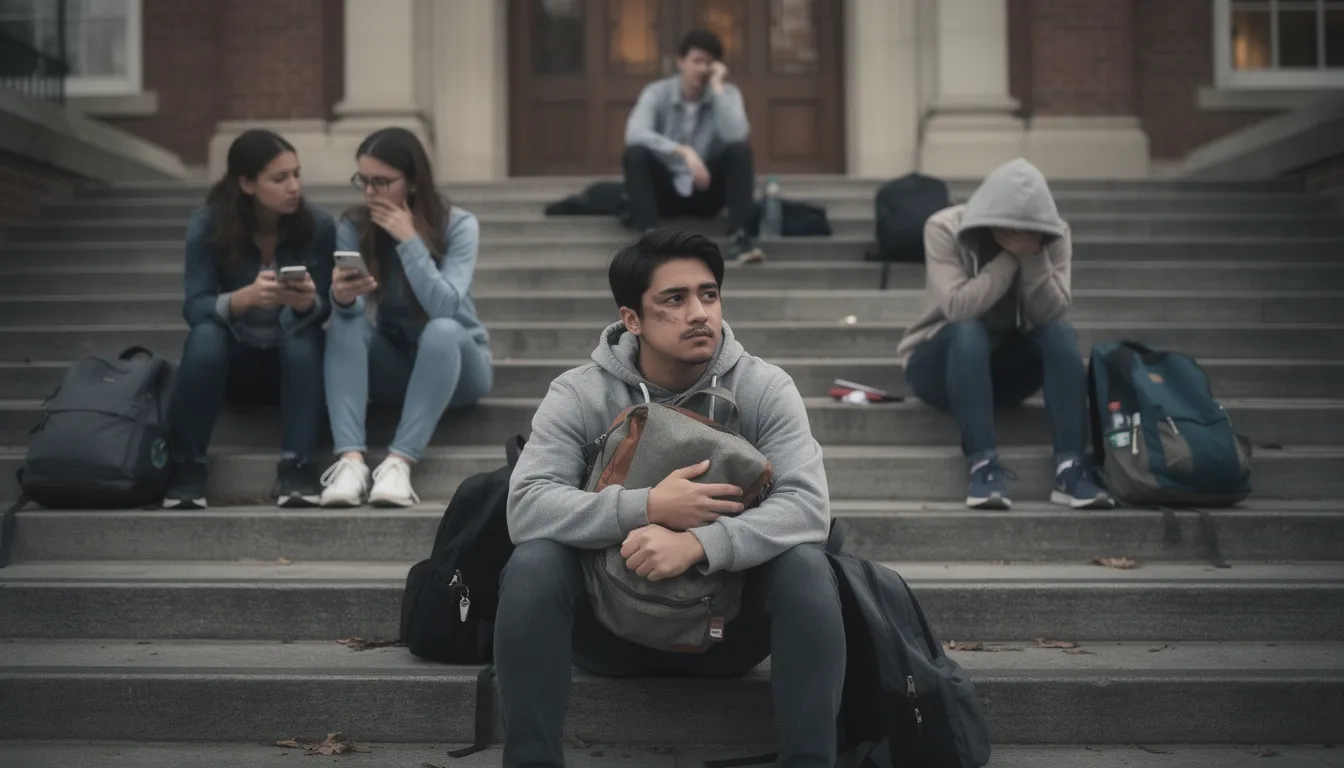
Fourteen percent of college students reported experiencing homelessness in the 2023-2024 academic year, according to the Hope Center for College, Community, and Justice at Temple University. That figure comes from a survey of 74,350 students across 91 institutions in 16 states. Another 48% reported housing insecurity during the same period. The financial aid system, for all its complexity, was largely designed around a student with a stable home address and parents who file taxes together. That mismatch creates real harm.
But money exists for students in this situation. Scholarships, federal grants, campus emergency funds, and state programs are all available. The problem is that most students don't know where to look, or they're unaware they qualify. This guide puts it in one place.
The Numbers Are Worse Than Most People Realize
Federal data collected through the National Postsecondary Student Aid Survey found roughly 1.5 million college students experienced homelessness in a single academic year. Another 4.3 million experienced food insecurity. These are not fringe cases.
The Hope Center's survey data shows who bears the heaviest load. About 75% of Black and Indigenous students reported food or housing insecurity, compared to 55% of White students. One in four Indigenous students specifically experienced homelessness. Students with disabilities (62%), parenting students (67% with housing insecurity), former foster youth, and Pell Grant recipients all show elevated rates across every category.
The academic cost is direct. 79% of students who stopped out or considered leaving cited basic needs insecurity as the reason. Not academic performance. Not a bad major fit. They left because they didn't have stable housing or food. And only 12% of housing-insecure students ever accessed public housing assistance, with 65% unaware of what support was even available to them.
The FAFSA Step Nobody Tells You About
Before searching for a scholarship, fix your FAFSA status. This is the part most students miss entirely, and it's worth more money than almost any scholarship will be.
Homeless students can file FAFSA as independent students. Under the Higher Education Opportunity Act, which amended the McKinney-Vento Homeless Assistance Act to cover higher education, unaccompanied homeless youth can complete the FAFSA without parental income information or a parent signature. The FAFSA asks directly: "At any time on or after July 1 of this award year, were you an unaccompanied youth who was homeless or self-supporting and at risk of being homeless?" A verified "yes" removes the parental data requirement entirely.
Getting that verification right unlocks the full Pell Grant — currently up to $7,395 per year — plus institutional grants, subsidized loans, and work-study funds. That's significantly more than most individual scholarships award.
Four types of officials can verify your status for the FAFSA:
- A McKinney-Vento liaison from your high school or school district
- The director of an emergency or transitional shelter, or a street outreach program
- The director of a federal TRIO or GEAR UP program
- A financial aid administrator at your college (the fallback if no other option exists)
You need only one. If you're out of contact with your high school or it's been several years since you graduated, go straight to the financial aid office and request an "unaccompanied homeless youth determination." SchoolHouse Connection publishes email templates designed for exactly this request — they're worth using because the wording matters.
One important nuance: some students fear that self-identifying as homeless will somehow hurt their application or flag them negatively. It won't. The determination is confidential, the process is federally protected, and identifying correctly is what releases funding you're legally entitled to.
National Scholarship Programs Built for This
Independent student status handles federal aid. Scholarships layer on top of that.
SchoolHouse Connection Youth Leadership and Scholarship Program is one of the few national scholarships designed exclusively for youth who have experienced homelessness (not just "open to" them). Beyond the financial award, recipients get dedicated case management, peer support networks, and structured leadership development — things that matter because college completion rates for formerly homeless students remain stubbornly low without wraparound support. Applications for the 2025-2026 cycle close June 2, 2026.
The Horatio Alger Association awards approximately 1,000 scholarships per year to students who have overcome adversity, with homeless and at-risk students explicitly included. Award amounts range from $2,500 to $20,000 depending on the program tier. The application leans heavily on personal narrative — what you've faced and what you've built despite it.
The Chicago Coalition to End Homelessness Scholarship is local, which makes it worth noting. Local scholarships attract far fewer applicants than national ones, and the Chicago Coalition targets high school seniors graduating from Chicago-area schools, or youth leaders under 24. The 2026-2027 cycle deadline was April 10, 2026, so plan ahead for next year.
| Scholarship | Who It's For | Award Range | Key Deadline |
|---|---|---|---|
| SchoolHouse Connection | Youth who experienced homelessness | Varies | June 2, 2026 |
| Horatio Alger Association | Homeless/at-risk students (adversity-focused) | $2,500–$20,000 | Winter cycle |
| Chicago Coalition | Chicago-area graduates/youth under 24 | Varies | April (annual) |
| WMU Foundation Scholarship | First-time freshmen in foster care, homeless, or undocumented (3.7+ GPA) | Varies | Rolling |
| NH Coalition Hope Starts Here | NH residents who experienced homelessness | Varies | Annual |
The National Center for Homeless Education at nche.ed.gov maintains a regularly updated scholarship database. It's the most reliable public list and covers programs that don't show up in general scholarship search engines.
How to Build a Strong Application
A common mistake is assuming these applications are primarily grade competitions. Most weight circumstances heavily. Your story is your most credible qualification.
Start with documentation before you have a specific application to submit. A letter from a shelter director, a McKinney-Vento determination, or a documented interview with a financial aid counselor creates a paper trail that works across multiple applications. Getting this once is far easier than scrambling to obtain it three times under different deadlines.
The essay is where most applications fall apart. Not because students lack compelling experiences, but because they write around the hardest parts. Scholarship reviewers read thousands of generic adversity essays. Specificity cuts through: the semester you couch-surfed while maintaining your GPA, the specific moment you decided to enroll anyway, the concrete trade-offs you made. Writing into your experience rather than around it is what gets applications funded.
A practical sequence that works:
- Confirm your FAFSA independent status first. Every scholarship evaluator asks about financial situation. Having a formal determination makes your application materially stronger.
- Apply to local and state programs simultaneously with national ones. Regional scholarships have smaller applicant pools. A $1,500 local award is more realistically attainable than competing nationally.
- Contact your college's basic needs coordinator. Most campuses (especially community colleges) now have designated staff for this. They know about emergency funds and micro-grants that never get listed publicly.
- Build your file three to four months before any deadline. Documentation takes time. A McKinney-Vento liaison may need two to three weeks to respond. A shelter director may be hard to reach. Start early.
- Attach documentation even when optional. Reviewers who have eligibility questions often skip incomplete applications rather than follow up.
Campus, State, and Emergency Resources
Scholarships provide a one-time or annual award. Campus basic needs programs can provide ongoing support in a form that compounds over a semester: emergency grants, meal swipes, short-term housing referrals, and utility assistance.
As of 2025, hundreds of institutions operate food pantries and basic needs centers. Many community colleges and urban universities have emergency funds specifically for housing crises, distributed without a competitive application process, often within 24 to 48 hours of a request. (These funds are real and underused — ask for them by name.)
State programs vary significantly:
- California's Cal Grant includes priority processing and supplemental grant funding for students meeting McKinney-Vento criteria, administered through the California Student Aid Commission.
- Maryland's Higher Education Commission publishes dedicated FAFSA guidance for housing-insecure students, and the state's financial aid programs mirror the federal independent student definition.
- New Hampshire's Hope Starts Here Scholarship, run by the NH Coalition to End Homelessness, funds current NH residents who experienced homelessness during their school career.
If your state isn't listed, call the state higher education agency directly and ask whether they honor McKinney-Vento determinations for state grant eligibility. Many do. Most don't advertise it.
The Awareness Gap Is the Real Problem
Here's an honest read on the situation: the funding shortage is real, but the awareness gap is worse. Sixty-five percent of students facing basic needs insecurity didn't know what support was available to them. Just 4% received any housing assistance through their college. Among food-insecure students, only 36% used on-campus food resources.
The infrastructure exists. McKinney-Vento protections, the FAFSA independent student pathway, national scholarships, campus emergency funds, and state programs collectively represent more capacity than most students in this situation realize. What the system lacks is a clear front door.
The most useful intervention for someone in this position isn't a scholarship link. It's a single conversation with the financial aid office, asking specifically about unaccompanied homeless youth determinations. That one step unlocks more money than any scholarship search typically will, and it costs nothing but time.
Bottom Line
- Start with your FAFSA status, not a scholarship search. Getting verified as an unaccompanied homeless youth for independent student status unlocks up to $7,395 per year in Pell Grant funding alone — more than most individual scholarships.
- Apply to SchoolHouse Connection and the Horatio Alger Association for national scholarships; search the National Center for Homeless Education database for programs specific to your state.
- Contact your college's basic needs office and ask explicitly about emergency housing funds. These exist at most institutions and don't require a competitive application.
- Build your documentation file early — one good McKinney-Vento determination letter serves multiple scholarship applications.
- Local and state scholarships have smaller applicant pools. Don't skip regional programs in favor of high-profile national ones.
Frequently Asked Questions
Does being homeless disqualify me from applying to college or receiving financial aid?
No — and the concern is understandable but backwards. Federal law (the McKinney-Vento Act) specifically protects housing-insecure students' access to education and financial aid. Disclosing your housing status unlocks independent student protections on the FAFSA, which can increase your aid significantly rather than reduce it.
What counts as "homeless" for scholarship and FAFSA purposes?
The definition is broader than sleeping on the street. It includes temporarily staying with friends or family because you lost housing (often called "couch surfing"), living in motels, emergency shelters, vehicles, or any place not meant for regular human habitation. If you lack a fixed, regular, and adequate nighttime residence, you likely qualify.
My parents are alive but I'm not in contact with them. Can I still get independent status?
Yes. The unaccompanied homeless youth determination doesn't require that your parents be absent, deceased, or abusive in a documented way. It requires that you lack fixed, regular, and adequate housing and are living without parental support. A financial aid administrator can make that determination based on an interview with you, even with no supporting documentation from anyone else.
Are there scholarships specifically for students who were formerly homeless but are now housed?
Yes. Most of the programs listed here, including SchoolHouse Connection and the Horatio Alger Association, are explicitly open to formerly homeless students, not just those currently without housing. Stability gained recently doesn't disqualify you — many programs actually look favorably on students who've moved from crisis into enrollment.
What if I missed the scholarship deadlines for this cycle?
Use the current period to build your file: get your FAFSA determination, collect documentation, and identify the emergency funds your campus already offers. Most scholarship programs run on annual cycles, so applying next year with a stronger file and established independent student status is a legitimate and often more successful path than rushing an underprepared application.
Can international students or undocumented students access any of these resources?
Federal financial aid (Pell Grant, federal loans) is limited to U.S. citizens and eligible non-citizens, so undocumented students can't access those programs. However, several state-level scholarships and institutional emergency funds don't carry citizenship requirements — California's AB 540 program and many campus basic needs offices serve students regardless of immigration status. Check your state's laws and ask your campus basic needs office directly.
Sources
- 2023-2024 Student Basic Needs Survey Report – Hope Center at Temple University
- Most College Students Lack Sufficient Food, Housing – Inside Higher Ed
- SHC Scholarship Program – SchoolHouse Connection
- FAFSA Independence Guide for Unaccompanied Homeless Youth – SchoolHouse Connection
- Scholarships for Higher Education – National Center for Homeless Education
- FAFSA & Financial Aid for Homeless Students – UnderstandingFAFSA.org