Transborder volunteers: California students make a difference
Political tensions between the U.S. and Mexico may be at a historic high, with both countries squaring off on issues ranging from border security to trade agreements. But that hasn’t stopped California college students from volunteering to provide health care services and to take part in house-building projects in Tijuana.
Many balance volunteer work with academic responsibilities while making regular trips to the Mexican border town amid increased immigration enforcement.
EdSource interviewed several transborder student volunteers, including those from San Diego State and UC San Diego — universities that lie within 20 miles of the Mexican border — and one who volunteered in Zambia, to learn more about their motivations and experiences, successes and challenges, and the impact that volunteering internationally has had on their education and life goals.
Victoria Morison, 21, San Diego State, linguistics
Walking through San Diego State’s campus three years ago as a transfer student from MiraCosta College, Victoria Morison found herself drawn to a student organization along Centennial Walkway.
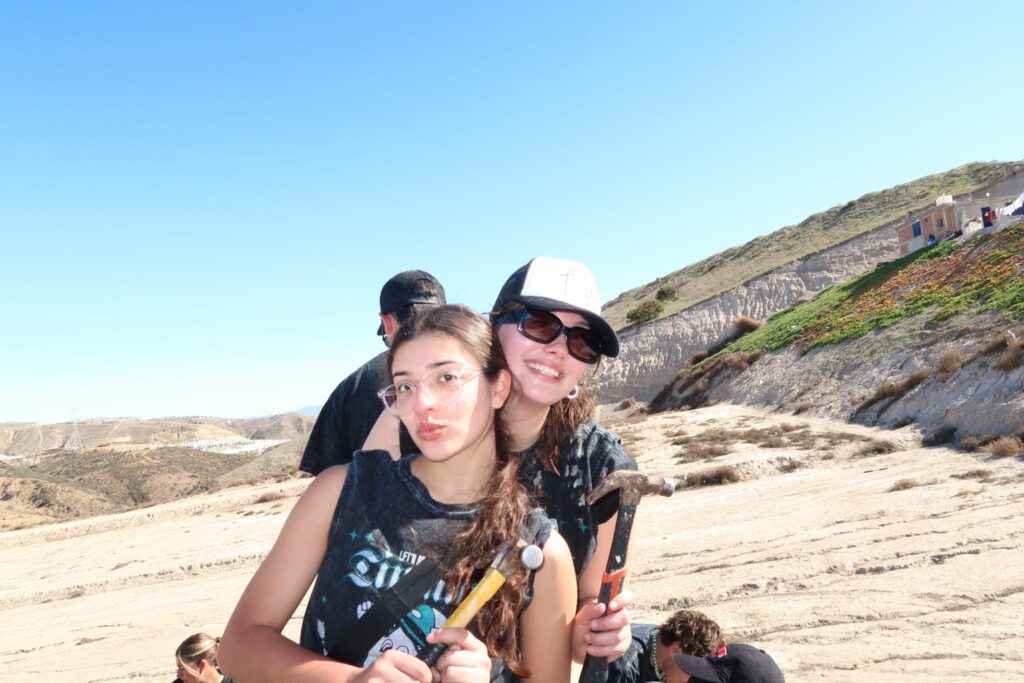
Morison introduced herself to members of Tijuana Home Build (TJHB), a college-sanctioned and student-led group that fundraises and leads an annual trip to Mexico to build a home for a pre-selected family. Because Morrison grew up to be community-service oriented — having volunteered in high school to run food donation drives, to help exchange students, and to work for free at elementary school STEM fairs — she felt TJHB was a perfect fit.
“I get a different experience each year, and I just love it,” Morison said. “I’m so grateful that I found it randomly during one of my first days on campus, and I’ve been with it ever since.”
Today, Morison is beginning her senior year as a linguistics major and, now entering her third year with the club, is serving as the president of TJHB. She said that joining this club not only eased her transition from community college to a four-year university, but has also motivated her to stay involved on campus and to find a better balance between her academics and club activities.
At community college, Morison said she often skipped classes or did not focus on her schoolwork as much as she should have. However, joining TJHB helped her to “feel more motivated” to keep up with her classes, regardless of how busy she gets.
“The more I get involved with this club, the more I’m really proud to be at SDSU,” Morison said. “I love this place and I love the people and I love being involved here. I don’t want my academics to suffer because I’m not taking it seriously.”
Morison said that being a part of TJHB has broadened her perspective on the world. As a linguistics major, she said that her participation in the club has motivated her to learn Spanish and pursue a certification that would allow her to teach English as a second/foreign language abroad.
“I just think it’s so interesting to learn how language works and how it’s used,” Morison said. “So, it’s cool that I can use that to learn Spanish and then learn Spanish to speak it on the build.”
In the year leading up to the house-building trip, club members gather donations for necessities such as food and furniture, run fundraisers to cover travel and construction costs, and meet to learn more about Mexican culture, including Spanish lessons.
On the weekend of the trip, Morison said that a group of around 30 TJHB club members — alongside three to four professional carpenters and the family for whom the home is being built — turned a pre-poured concrete foundation into a single-family home with three to four bedrooms, complete with a kitchen and a communal living space. The volunteers spent two days framing and painting the walls, installing the roof and decorating the interior with secondhand furniture collected by the TJHB club members.

Between the hours of hard work, Morison said a lot of time is spent bonding with fellow club members and forming relationships with the family. Lunches for the crew, which often consist of homemade tamales, are shared, games of tag are played with families that have younger children, and the long days on the build site are filled with conversation.
“We usually develop really strong bonds with [the family],” Morison said. “Especially if they have younger kids. I have so many shirts that have painted handprints on them.”
At the end of the weekend, Morison said that a “key ceremony” is held to welcome the family into their new home, with each club member passing the key around and sending their good wishes to the family with “lots of tears and lots of joy and a lot of bittersweet feelings because the weekend is ending.” For many of the families, this will be their first time owning a home.
“It’s amazing that the family gets such an important and life-changing opportunity,” Morison said. “Being a part of that, getting to know them and getting to build this house for them, is really meaningful for all of us.”
Show More
Dian Murphy, 21, UC San Diego, global health
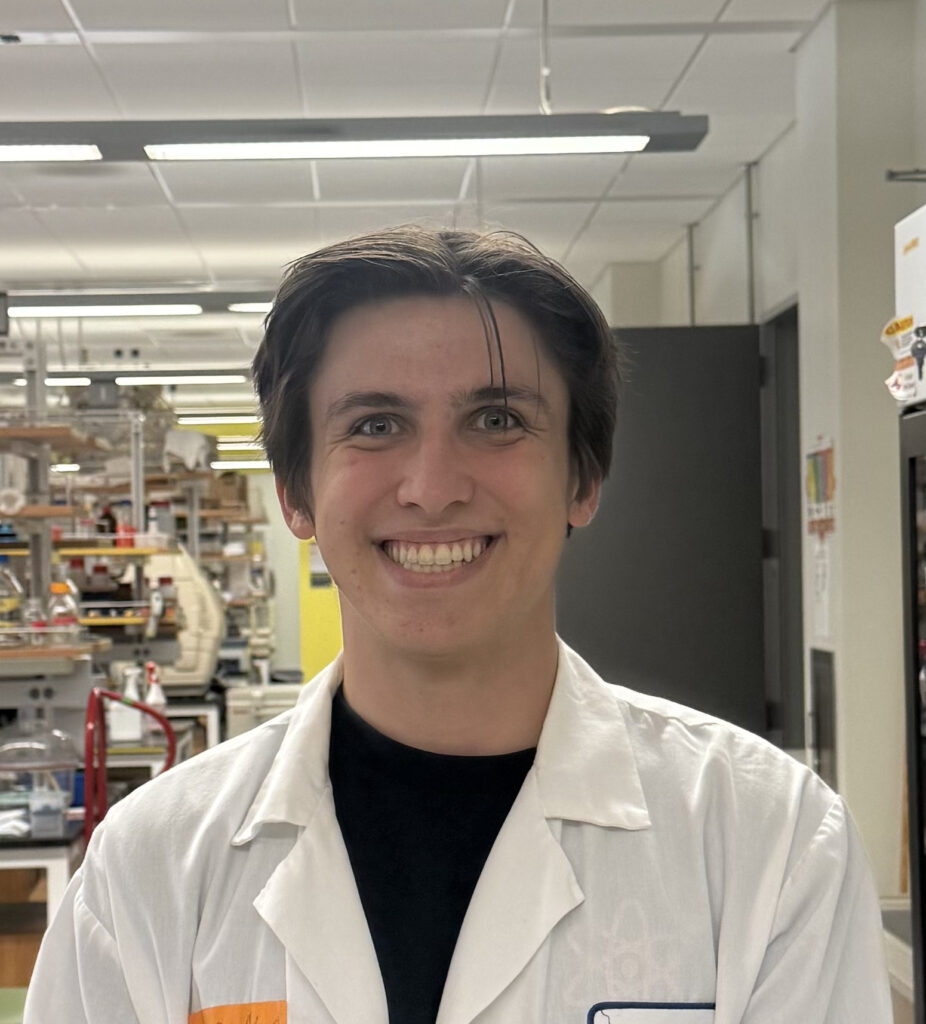
Dian Murphy, who graduated with a degree in global health from UC San Diego this year, participated in various health-related volunteer programs, including the Flying Samaritans, the Asylum Seekers Clinic, and Health Frontiers in Tijuana (HFiT) while a student.
HFiT is a class offered in the Global Health department at UCSD that provides students with hands-on experience working at a health clinic in Tijuana. Murphy said that every Saturday, students cross the San Ysidro border and walk 15 minutes west through populated streets until they arrive at the busy Padre Chava Soup Kitchen just outside of downtown Tijuana, above which the health clinic is operated.
Once they arrive at the clinic, students participate in an hourlong lecture class by the clinic’s physician, Jose Luis Burgos. The lectures cover various topics, including social determinants of health, ultrasound, renal disease, tuberculosis and HIV.
“It’s not some abstract idea that’s being covered in class that you’ll be tested on a couple of weeks later,” Murphy said. “It’s like, these are the actual consequences of what is going on.”
Since graduating in June, Murphy has remained involved with the HFiT program and — through collaboration with UCSD, HFiT doctors and a partner from the Universidad Autónoma de Baja California — he is currently conducting a study to identify barriers to orthopedic care in Tijuana. Every weekend, he crosses the border on foot to survey orthopedic patients at the clinic, which sees up to 20 patients daily.
He said his research involves investigating the most prominent obstacles to accessing health care resources, which encompasses a wide range of population demographics, including people traveling to the U.S., those who have been deported, and Mexican citizens. The barriers he has found most prominent include patients with higher-priority health concerns, those who ignore orthopedic care, a lack of specialized doctors and limited access to health care resources.
Murphy also said that many of the orthopedic injuries they see at the clinic are often minor. Still, some injuries have remained untreated, including broken bones or tissue and joint damage. One particular area of concern is the large number of injuries to lower legs, feet and ankles, “which can be hard to treat given most of the population uses their feet as their primary method of transportation.”
He has been working on this research for about six months, and anticipates the data collection could take up to another six months to complete. Once the data collection is complete, he said that he hopes to have his research published academically so that these barriers can be reduced or eliminated. After that, he said he plans on attending medical school.
Murphy became interested in orthopedics after injuring his knee. Six years ago, he misstepped off a curb and snapped his ACL, which remained untreated, resulting in him using crutches for two years and reducing the range of motion in his knee by 30 degrees.
“If I had not had that care and a really confident surgeon to deal with my complex issue, I would not be able to walk today,” Murphy said. “I’m super grateful for that surgeon and the system that supported it — doctors, health care, all of it — so that I’m able to walk today. So I wanted to pass that on to people who would be in my situation, if not one worse.”
Murphy’s experiences at HFiT have not only enriched his academic experience by providing hands-on practice in his desired career field, but have also provided him with a pathway to accomplish his future career goals through this opportunity to conduct his own research.
“Learning how to navigate those types of barriers — learning how to navigate low-resource settings — will follow me anywhere,” Murphy said. “The humanity and the empathy for people carry over as well.”
Show More
Shawn Wong, 20, San Diego State, kinesiology, and Daniela Cázares, 20, San Diego State, public health
On the third Sunday of every month, a 12-car caravan full of about 60 students from the Flying Samaritans at San Diego State crosses the border into Mexico to operate a free health clinic for the community of La Morita, Tijuana.
Among them are Shawn Wong, a third-year kinesiology major, and Daniela Cázares, a third-year public health major.
Both Wong and Cázares have been involved with the Flying Samaritans since their freshman year. This year, Cázares serves as the external vice president, and Wong is the clinic coordinator.
The Flying Samaritans offers a free health clinic providing various services, including patient registration, lab testing and bloodwork, a physical exam from a licensed physician, and dental and optometry. Additionally, Cázares said there is a public health station where patients can receive food and clothing donations, and view a presentation on a monthly health topic, such as feminine hygiene or dehydration.
“This is all with the end goal of improving that community’s health and reaching as many people as possible to get them on track to improving their well-being,” Cázares said.
Wong said that many of the services provided, especially dental and optometry services, are “scarce and hard to come by” for the community. He added that the Flying Samaritans hope to implement psychological services in their clinics in the future.
“The recurring aspect and the sustainability [of the clinics] is something that is extremely valuable,” Wong said. “Especially with us being so close to Mexico, building a binational relationship with them is something very fruitful as well.”
As the external vice president, Cázares has begun implementing new technologies in the clinic to enhance community outreach. She said she has been able to introduce a new electronic medical system to keep track of patient records and medical history.
“I’ve been working on that for a couple of months now, so seeing it come to life at the last clinic was really fun,” Cázares said. “It’s a very fulfilling experience being able to bring them care and medications that they otherwise wouldn’t have access to.”
While the students are motivated to give patients the best possible experience, they said that they have faced a slight increase in difficulty crossing the border. They have noticed stricter regulations and more Border Patrol agents at the crossings.
“When we are crossing over into Mexico, they are getting more strict with checking all the cars, making sure you have your insurance and making sure you have your registration,” Cázares said.
She also said that stricter inspections have created a “bottleneck effect,” leading to longer wait times at the border. La Morita is a 40-minute drive from the border crossing; however, she said that after the clinic closes at 3 p.m., volunteers often don’t return to San Diego until 5 or 6 p.m.
Wong added that, as members of the executive board, he and Cázares have learned to be more proactive before crossing the border, such as ensuring that all club members have their proper paperwork ready beforehand.
“It is definitely a large task to transport almost 60 people across the border,” Wong said. “It does sometimes become a little stressful; things are bound to happen and not everything is going to go according to plan, as much as we want to keep the caravan in order.”
Nonetheless, the long days spent traveling back and forth across the border and operating the clinic are worth it in the end.
“Being able to give out health care to anyone, or any community, is a very fruitful experience in general,” Wong said. “I’m grateful that, not only me, but everyone in our circle or committee here at SDSU is in the position to do so. It’s a very fulfilling experience.”
Show More
Samuel King, 29, Long Beach State, geography
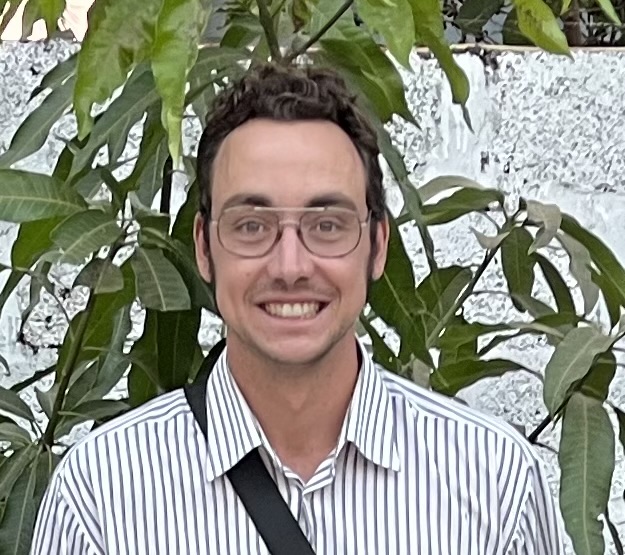
Samuel King said that he vividly remembers a small sticker of the Peace Corps logo that his mom had placed on his childhood desk. Yet, he didn’t realize how influential this sticker would be until he joined the Peace Corps in 2022 and went for his two-year volunteer service in the Eastern Province of Zambia, Africa.
King said he joined the Peace Corps after graduating in 2020 with a bachelor’s degree in geography from Cal Poly Humboldt. However, he wasn’t able to go abroad until two years later due to travel restrictions during the Covid-19 lockdown regulations.
He volunteered through the Peace Corps’ Linking Income, Food and Environment (LIFE) program, focusing on reforestation in Zambia. He added that this work included local tree nursery management and tree planting; teaching classes at local grade schools on topics such as geography, life sciences, climate and weather; and conducting grant-writing courses for residents to obtain agricultural resources.
“Peace Corps service has profoundly impacted my awareness of the world,” King said. “It opened my eyes to a whole new way of life and culture, very different from the United States.”
During his two years in this rural farming community, he said that he lived with a host family in their village, which included eight immediate family members and about 50 extended village family members. He added that he would often help the family with farm chores, such as plowing fields, planting seeds, pulling weeds or helping to watch the younger kids.


He said that the family even gave him a Zambian name, Samuel Banda, which includes a traditional Zambian last name that translates to “Mud Hut.”
“I felt like the warmth and the welcoming of the people really resonated with me and allowed me to thrive,” King said.
King said that his closest neighbors were a 7-mile bike ride away, and so he immersed himself in the local community as much as possible. He even became fluent in Nyanja (also known as Chichewa), one of 72 historical languages spoken in southern Africa.
His fluency was put to use when he performed songs in this local language at an educational concert he hosted for the community, which also doubled as a clinic for free HIV testing through the collaboration of local health ministries. He said that besides performances by local musicians, there were also sketches, testimonies and speeches to raise awareness about HIV/AIDS testing and community resources.
“It was so amazing to see all of these community members work together to make it possible,” King said.
After returning from his volunteer service, King applied for the Peace Corps’ Coverdell Fellowship, which provides financial assistance to returned volunteers pursuing graduate school. He said that he was offered the opportunity to pursue his master’s degree in geography at Long Beach State.
King is in the second year of his graduate program and said he has been living in Zambia for the past month, conducting research for his thesis on the impact of drastic cuts and reductions to USAID funding in the region. He said that many health, climate and governance programs have been dismantled, with some programs eliminated.
King’s research centers on interviews with local program leaders to better understand their sentiments on the issues. He added that many residents are left with unanswered questions and feelings of uncertainty or distrust toward American aid.
“The American partnership is compromised now,” King said. “Either it’s going to change and manifest itself in a different way, or perhaps African nations will abandon America and seek help from other countries.”
King said the field time may take another four to six months to complete, at which point he will return to the U.S. in hopes of writing a “meaningful thesis that can help both nations understand what is happening.”
After graduating, King said he plans to apply to serve as an English teaching assistant in Zambia through the Peace Corps’ Fulbright Scholar Program.
“I want to dedicate myself to international relations and global studies,” King said. “The Peace Corps’ volunteer service was the perfect opportunity for me to gain this awareness and these skills.”
Show More
Mireya Miner is studying journalism at San Diego State University. She is a member of EdSource’s California Student Journalism Corps.