How to Get Into Undergraduate Research Programs at National Labs
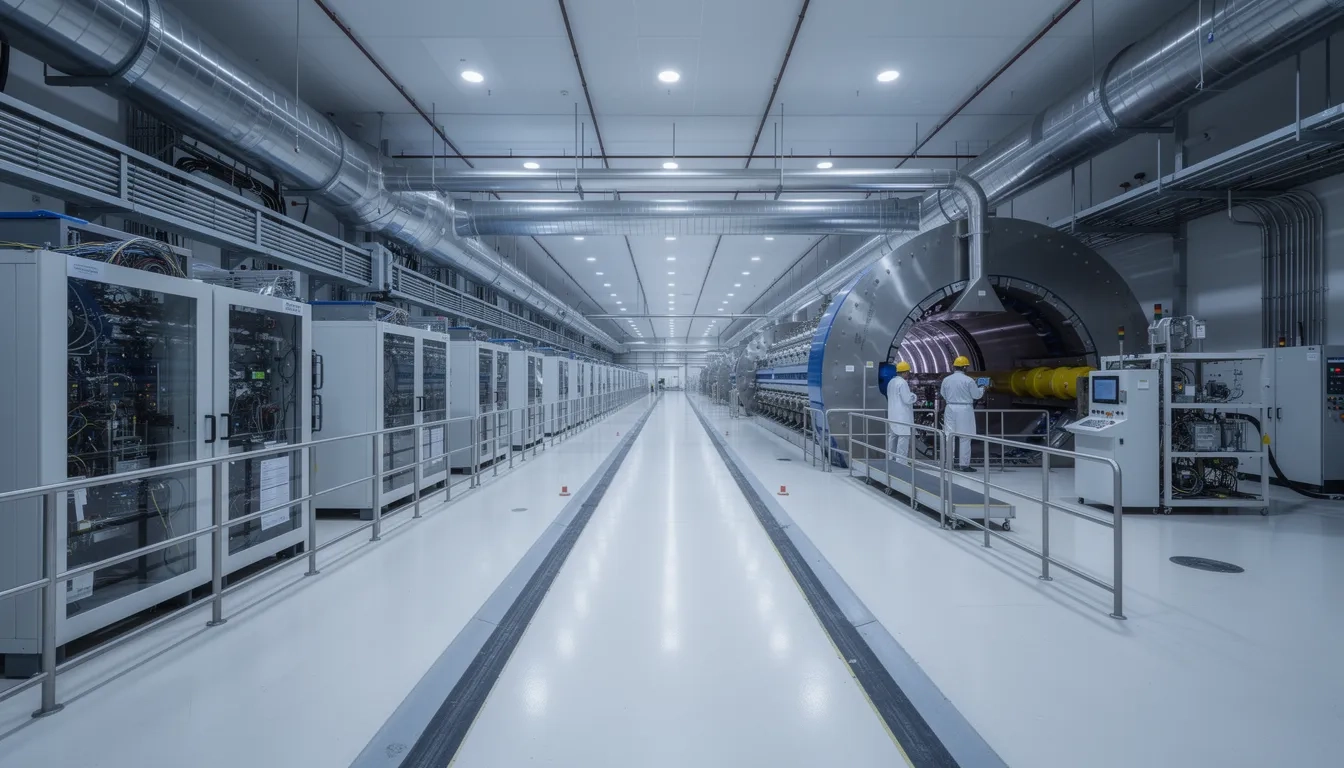
Most physics, chemistry, and CS undergrads spend their summers TAing intro courses or building dashboards at tech companies. Meanwhile, a few thousand of their peers are operating neutron scattering instruments at Oak Ridge, running supercomputer simulations at Argonne, or synthesizing advanced materials at Berkeley Lab — paid $650 a week plus housing to do it. These programs are federally funded, widely available, and genuinely transformative for early research careers. The catch? Most university advising offices barely mention them.
The SULI Program: The Government's Best Research Internship
The flagship entry point is the Science Undergraduate Laboratory Internship (SULI), administered by the DOE's Office of Workforce Development for Teachers and Scientists (WDTS). It places undergrads and recent graduates at 17 national laboratories spanning climate science, quantum computing, nuclear materials, and high-energy physics.
Compensation is better than most students expect. The base stipend is $650 per week, with an additional $250 per week housing allowance. A semester-long placement runs 16 weeks, which works out to $14,400 in combined stipend and housing support — before the travel reimbursement of up to $500 for a domestic round trip.
Eligibility is broader than most assume. You need a 3.0 GPA (a 2.94 does not qualify — this cutoff is applied strictly), U.S. citizenship or lawful permanent resident status, and active undergraduate enrollment or recent graduate status within two years of your degree. Freshmen can apply once they've completed at least 12 total credit hours with at least 6 in STEM.
The program runs three terms: summer (10 weeks), fall (16 weeks), and spring (16 weeks). Summer is the most popular. That also makes it the most competitive — a fact most applicants ignore when planning their timelines.
One feature almost nobody uses: the WARS application system includes a Laboratory Selection Tool showing historical placement rates by lab and term. It tells you the percentage of applicants from each field who were placed at each lab. Students who use this data to calibrate their first and second lab choices meaningfully improve their odds. The data is sitting there in the application portal.
Beyond SULI: The Programs That Fly Under the Radar
SULI gets most of the attention, but DOE runs a parallel track called Community College Internships (CCI) on the exact same application system, with the same labs, same terms, and same deadlines — specifically designed for community college students who get shut out of competitive research pipelines by default. Same quality of experience. Far less competition.
Oak Ridge National Laboratory alone lists eight distinct undergraduate programs. One that deserves more attention: the Pathways to Computing Internship Program (PCIP), a 10-week summer program with no citizenship requirement. That detail matters enormously for international students and DACA recipients who can't access federal programs.
Three other major federal programs cover different research missions:
- NSF Research Experiences for Undergraduates (REU): Groups of roughly 10 students placed at universities and research institutions, 10 weeks, stipends around $500–600/week plus housing. Covers everything from marine biology to materials science to computational social science.
- NIH Summer Internship Program (SIP): Focused on biomedical research at NIH's intramural labs in Bethesda. Highly competitive, skews toward biology and pre-med students.
- NASA/JPL Summer Internship: 10-week programs at NASA centers, including JPL in Pasadena. Summer applications typically close in early March. Strong engineering and aerospace emphasis.
ORISE (Oak Ridge Institute for Science and Education) also administers a separate set of research fellowships across multiple federal agencies — worth checking when DOE-specific programs don't match your area.
The 17 DOE Labs: What Each One Actually Does
The 17 SULI-participating laboratories are not interchangeable. They have distinct research missions, and an application that ignores this distinction reads as generic to reviewers.
| Lab | State | Primary Research Focus |
|---|---|---|
| Argonne National Laboratory | Illinois | Materials science, X-ray science (APS), battery research |
| Oak Ridge National Laboratory | Tennessee | Nuclear science, neutron scattering, supercomputing |
| Lawrence Berkeley National Lab | California | Biosciences, particle physics, climate modeling |
| SLAC National Accelerator Laboratory | California | Particle physics, X-ray free-electron laser |
| Fermilab | Illinois | High-energy physics, neutrino research |
| Pacific Northwest National Lab (PNNL) | Washington | Environmental science, national security, chemistry |
| Sandia National Laboratories | NM / CA | Engineering, nuclear weapons science |
| Los Alamos National Laboratory | New Mexico | Nuclear science, materials, national security |
| National Renewable Energy Lab (NREL) | Colorado | Solar, wind, grid systems, energy storage |
| Brookhaven National Laboratory | New York | Nuclear physics, particle accelerators |
Choosing a lab because it sounds prestigious — rather than because its research matches your background — is the single most common application mistake. A niche interest in nuclear fuel cycle chemistry will land better at Idaho National Lab than at SLAC, regardless of SLAC's reputation.
How Competitive Is This, Really?
The DOE doesn't publish a single acceptance rate, and that's because the range is extreme. A SULI mentor quoted on Physics Forums estimated receiving around 100 applicants per position in high-demand areas like computational physics. In more specialized fields — the same mentor mentioned CFD research in porous media — that pool shrinks to four or five qualified candidates.
Field specificity matters more than GPA. A student with a 3.3 who has hands-on electrochemistry experience and applies to Argonne's battery research group will regularly outcompete a 3.9 student writing generic essays. SULI mentors are explicit about this: they want something unique, something that signals you've read their actual work.
The best SULI applications share a quality that's hard to fake: they show you've done the reading. Generic interest in "energy research" gets you nowhere. Specific curiosity about a research group's recent publications gets you a conversation.
Fall and spring terms see dramatically lower application volumes than summer. Students who treat those terms as real options — not consolation prizes — often find acceptance odds significantly better, and the research experience equally substantive.
You can also apply multiple times. Many interns complete two or three SULI terms across their undergraduate years. Each requires a fresh application through WARS, but mentors frequently re-invite strong interns without going back through the central pool.
Building an Application That Gets You In
The SULI application has four components: transcripts, two recommendation letters, a research interest essay, and a statement of experience. The essay is where most applications win or lose.
Four practices that separate successful applicants:
- Contact the lab before submitting. Oak Ridge explicitly recommends connecting with a mentor before applying. A short email referencing one or two of a researcher's recent papers — asking whether they're hosting SULI interns — converts at a much higher rate than most students expect. It's a foot in the door before review even begins.
- Name the specific research group, not the lab. "I want to work at Argonne" is not an essay. "I'm interested in the battery materials group's recent work on solid electrolyte interfaces" is the beginning of one.
- Use the Laboratory Selection Tool inside WARS. First- and second-choice lab selections determine which reviewers see your application. If historical data shows your first choice places 3% of applicants from your field and your second choice places 17%, that's worth acting on.
- Apply for non-summer terms. Fall 2026 deadline was May 20. Spring deadlines typically fall in October. Thinner applicant pools, same research quality.
Recommendation letters need specific guidance. Give your letter writers the program description, your draft essay, and the exact research area you're targeting. A letter that says "she is a strong student" adds nothing. One that says "she rebuilt our spectroscopy setup from scratch using only the manufacturer documentation" does something.
What the Experience Actually Looks Like
You're embedded in a working research group, assigned a specific project, and expected to produce something tangible. SULI summer terms end with a formal symposium where interns present their work as a poster or short talk — actual research communication, not a slideshow about what you observed.
Some placements are almost entirely computational. Running simulations, writing analysis code, wrangling large datasets from instruments you never touch. Others put you directly on equipment: loading samples into neutron beamlines, running reactions in a glove box, operating electron microscopes. What you get depends almost entirely on your mentor and the nature of the project. Ask about this during any pre-application conversations.
The professional network is the underrated benefit. Most undergrads think of the internship as a resume line. The ones who treat it as an extended audition — for graduate school, for a follow-on placement, for a full-time hire — extract dramatically more value. A significant fraction of permanent positions at national labs trace back to a SULI internship.
One practical note (easy to overlook until you've already accepted): housing is your responsibility to arrange at most labs. The allowance covers costs, not logistics. Argonne sits in suburban Illinois with limited transit; Lawrence Berkeley is accessible from multiple Bay Area neighborhoods by BART. These details matter more than you'd expect when you're living away from home for the first time.
Bottom Line
National lab undergraduate programs are genuinely excellent research experiences that most university advising offices dramatically undermarket. Here's what to actually do:
- Apply for fall or spring terms, not just summer. Smaller pools, same research quality.
- Email a researcher at your target lab before submitting. Reference their actual work. This one step separates the majority of applications from the ones that get placed.
- Use the WARS Laboratory Selection Tool. Historical placement data by lab and field is in the system. Use it to set your first and second choices strategically.
- If you lack U.S. citizenship, ORNL's PCIP and NSF REU sites are your clearest paths into federally funded research settings.
- Start eight weeks before the deadline. Recommendation letters are the longest lead time item and the most commonly rushed.
Most students treat these applications like college applications: polished, safe, generic. The ones who get placed treat them like job applications — targeting specific groups, building relationships with mentors first, and writing essays that prove they've done the reading.
Frequently Asked Questions
Do I need to be a junior or senior to apply for SULI?
No. Freshmen are eligible after completing at least 12 total credit hours, including 6 in STEM. There's no class year requirement. The binding eligibility criteria are the 3.0 GPA floor and citizenship status, not class standing.
What if my GPA is below 3.0?
SULI and CCI both enforce a strict 3.0 minimum — 2.94 does not round up and does not qualify. However, lab-specific programs have different criteria. ORNL's Pathways to Computing Internship Program and several PNNL direct internships set their own eligibility standards. If SULI is out of reach on GPA, look at lab-specific programs and NSF REU sites, which vary by host institution.
Can international students apply?
SULI and CCI require U.S. citizenship or lawful permanent resident status. ORNL's Pathways to Computing Internship Program has no citizenship requirement and is explicitly open to a broader pool. NSF REU eligibility varies by site — some accept international students enrolled at U.S. institutions, some don't. Check each program's eligibility page directly rather than assuming.
Is SULI only for science and engineering majors?
Not exactly. Science policy is explicitly listed as an eligible field, and interdisciplinary majors — computational biology, environmental studies, data science — regularly participate. The key is demonstrating a clear connection between your academic background and the specific research you want to pursue at the lab.
How do I pick between SULI at different labs?
Match your research interests to lab missions first, then use the Laboratory Selection Tool inside the WARS application system to check historical placement rates for your field at each lab. Your first and second choice selections determine which reviewers see your application first, so treat this as a strategic decision, not a prestige ranking.
Can I do SULI more than once?
Yes, there's no cap on the number of terms. Many students do two or three placements across their undergraduate years. Each term requires a new submission through WARS, but strong interns are often re-invited informally by their mentors — bypassing the competitive pool entirely for subsequent terms.
Sources
- Science Undergraduate Laboratory Internships (SULI) — DOE Office of Science
- SULI Frequently Asked Questions — DOE Office of Science
- Undergraduate Opportunities — Oak Ridge National Laboratory
- Internships — Pacific Northwest National Laboratory
- DOE SULI Internships — How Competitive? — Physics Forums
- NSF Research Experiences for Undergraduates