FAFSA vs CSS Profile: Which Schools Require Which Form
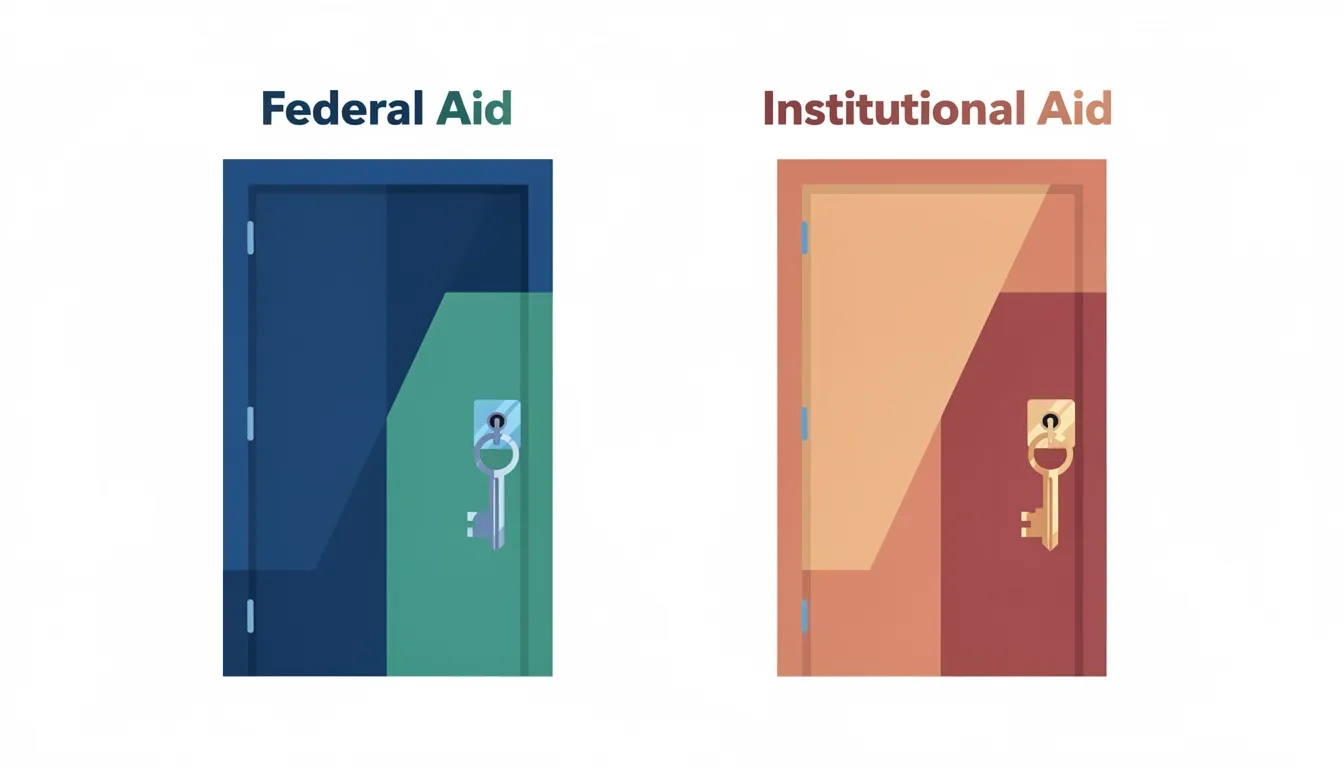
Most families hear "FAFSA" and assume they've taken care of financial aid. At roughly 400 colleges — including every Ivy League school, Stanford, MIT, and most top liberal arts colleges — that assumption quietly costs them. There's a second form that determines access to a school's own endowment money. It charges filing fees, asks questions the FAFSA never considered, and carries earlier deadlines. It's called the CSS Profile, and treating it as an afterthought is one of the most expensive college planning mistakes a family can make.
Two Forms, Two Different Buckets of Money
The FAFSA and the CSS Profile aren't competing forms. They open doors to different sources of funding.
The FAFSA (Free Application for Federal Student Aid) unlocks federal dollars: Pell Grants, subsidized and unsubsidized Stafford loans, and federal work-study programs. Processed by the Department of Education, free to file at studentaid.gov, and required by virtually every accredited U.S. college. It produces your Student Aid Index (SAI), which schools use to determine your federal aid eligibility.
The CSS Profile is a College Board product that unlocks institutional money — funds distributed from a school's own endowment and annual operating budget. About 400 selective institutions use it. They require it because the federal FAFSA formula doesn't give them enough financial detail to make fair decisions about their private dollars.
Think of the FAFSA as your ticket to the federal system. The CSS Profile is your application for the school's own funds — which at places like Princeton or Williams can reach $70,000 or more per year in grants for qualifying families. Both forms. Different rooms.
What the CSS Profile Actually Asks That FAFSA Doesn't
The CSS Profile is longer than the FAFSA. That's intentional. It builds a fuller financial picture, and several categories it examines can substantially shift what a school expects you to pay.
Home equity. The FAFSA doesn't touch it. The CSS Profile does. A family with a paid-down mortgage and meaningful equity could see their assessed contribution rise compared to what the FAFSA calculates — even if their annual income is modest.
Retirement accounts. The FAFSA explicitly protects 401(k)s and IRAs from the need calculation. The CSS Profile treats them differently. Families who've saved well for retirement may look wealthier on the CSS than their take-home pay suggests.
Sibling tuition and medical expenses. Paying private school tuition for a younger child? Carrying significant unreimbursed medical costs? The CSS Profile has fields for both. These factors can reduce what a school expects you to contribute.
The form also asks about vehicles, business assets, and future income projections. Here's how the key differences stack up:
- FAFSA ignores home equity; CSS Profile counts it
- FAFSA protects retirement savings; CSS Profile may evaluate them
- FAFSA uses income only from the custodial parent (in most divorce cases); CSS Profile often requires both parents
- FAFSA is free; CSS Profile charges $25 for the first school and $16 per additional school
- FAFSA is federal-formula-driven; CSS Profile leaves room for context and explanation
One financial aid director captured the difference well:
"The FAFSA is pretty black and white. The CSS Profile is about telling a story."
That space for storytelling matters. A family with a high income but also a chronically ill dependent, a struggling small business, or significant debt has more room to explain their actual situation than the FAFSA's rigid formula allows.
Which Schools Require Which Form
The pattern is clear once you see it: public universities almost never require the CSS Profile. Selective private colleges almost always do.
All eight Ivy League schools require it — Harvard, Yale, Princeton, Columbia, Penn, Dartmouth, Brown, Cornell. So do Stanford, MIT, Northwestern, and Duke. Most highly-ranked liberal arts colleges require it too: Williams, Amherst, Swarthmore, Pomona, Bowdoin, Middlebury, Haverford, and Carleton, among others.
A few public universities also use it. UNC-Chapel Hill requires the CSS Profile for need-based institutional aid. The University of Michigan requires it for certain scholarship programs. These are exceptions, not the rule — but they're worth knowing.
| School Category | FAFSA Required? | CSS Profile Required? |
|---|---|---|
| Public universities (most) | Yes | No |
| Community colleges | Yes | No |
| UNC-Chapel Hill, U-Michigan (some aid) | Yes | Yes (selected programs) |
| Private liberal arts colleges | Yes | Usually yes |
| Ivy League + elite research universities | Yes | Always |
| Religious-affiliated colleges | Yes | Varies by school |
The College Board maintains a searchable database of all participating institutions at cssprofile.collegeboard.org. Check every school on your list against it before paying application fees. The list changes, schools occasionally join or leave, and assuming a school requires or doesn't require the CSS Profile without checking is an easy mistake to make.
The Divorced Family Complication
For families with divorced or separated parents, the gap between FAFSA and CSS Profile is significant enough to change an entire financial aid calculation.
The FAFSA's post-2024 reforms base the need calculation on whichever parent provided more financial support over the past 12 months (with some nuances). The noncustodial parent's finances largely stay out of the federal calculation. That can work in a student's favor when the custodial parent has significantly lower income.
The CSS Profile closes that gap. Most schools that use it also require the noncustodial parent to file a separate CSS Profile, disclosing their own income and assets independently. That information remains confidential — the student and custodial parent can't see it — but the financial aid office reviews both sets together. A student living primarily with a lower-income parent might expect strong aid, only to learn the other parent's income meaningfully reduces the offer.
Waivers to skip the noncustodial parent form do exist, but the bar is high: documented abuse, a court order restricting contact, or a genuine and complete absence of any relationship or financial support. "We don't get along" doesn't qualify, and "my parent refuses to fill it out" will typically result in the application being considered incomplete.
The practical takeaway: if your parents are divorced, check immediately whether each target school requires a noncustodial form. The other parent needs time to gather their documents. Telling them in mid-January that they need to complete a detailed financial disclosure form — with a February 1 deadline — creates family tension and missed deadlines at the same time.
Deadlines, Costs, and Fee Waivers
Both forms open October 1 for the upcoming academic year. That's where the calendar similarities end.
Filing costs. FAFSA is free, always. The CSS Profile charges $25 for the first school and $16 for each additional one. Apply to 10 CSS Profile schools and you're spending $169 in filing fees before you've received a single acceptance.
Fee waivers are automatic and generous. The College Board waives all CSS Profile fees (including reports to additional schools) for domestic students whose family adjusted gross income is under $100,000. Students who qualified for an SAT fee waiver or are orphans/wards of the court under 24 also qualify. The system checks eligibility automatically during the application process — no separate form needed.
On timing: CSS Profile deadlines tend to run earlier than FAFSA deadlines. Early decision and early action applicants often face November CSS deadlines. Regular decision applicants usually have until early February, but this varies by school. Many FAFSA deadlines run later — sometimes as far as June for state aid — but treating that later date as a target is a mistake.
Financial aid at many schools is first-come, first-served. Schools budget institutional grant money each year, and students who file in October get considered before the pool shrinks. A student who waits until February and files on the last possible day may find the most attractive grant packages already gone, replaced by a heavier loan component. Filing early is one of the few genuinely risk-free financial aid moves available.
The Special Circumstances Section
Near the end of the CSS Profile, there's a free-response section specifically for explaining financial situations that don't fit the standard boxes. It's the most underused part of the entire form.
Lost a job since last year's taxes? Write it down. Caring for an elderly parent? Mention it. Had a one-time income spike from a retirement account withdrawal that won't recur? Explain that clearly.
The FAFSA handles these situations through a separate appeal process after filing — you submit, then contact the financial aid office to explain unusual circumstances. The CSS Profile builds the explanation into the original submission. The officer reviewing your file sees the full picture from day one, not after a follow-up conversation three weeks later.
A thoughtful two-paragraph explanation of why your tax return overstates your available resources can shift a financial aid package. It doesn't always work. But a blank special circumstances section is a guaranteed missed opportunity.
A Filing Strategy That Actually Works
My honest view: most families treat the CSS Profile as a secondary task — something to handle after the FAFSA is done, usually in January when deadlines are closing in. That's backwards. For any student applying to selective private schools, the CSS Profile deserves the same priority as the FAFSA from October 1 onward.
Here's a step-by-step approach:
- Before October 1: Check every school on your college list against the College Board's participating institutions database. Note which ones require the noncustodial parent form if parents are divorced.
- Early October: Gather documents for both forms simultaneously — prior-year tax returns, W-2s, bank statements, investment account statements, mortgage balance and home value estimates.
- File FAFSA first (it's faster and free), then submit the CSS Profile within the same week — not weeks later.
- If parents are divorced: Notify the noncustodial parent immediately. They need their own financial documents ready.
- Complete the special circumstances section if anything about your financial picture differs from what the raw numbers suggest.
A family applying to eight schools, five of which require the CSS Profile, spends $89 in total CSS filing fees (one $25 base plus four $16 additional reports). That's a trivial cost relative to the institutional grant money those five schools might offer. The real cost of getting this wrong isn't the filing fee. It's missing the deadline entirely, or filing so late that the best packages are off the table.
Bottom Line
- Check the CSS Profile school list first. Before October 1, verify which schools on your list use cssprofile.collegeboard.org. Don't assume — check.
- Treat both forms as October tasks. FAFSA first (it's faster), CSS Profile within days. First-come, first-served aid is real, and waiting until January costs you options.
- Divorced families need a plan. Most CSS Profile schools require the noncustodial parent to file separately. The sooner that parent knows, the better.
- Don't leave money behind. If your family income is under $100,000, CSS Profile filing fees are automatically waived. If your financial situation is unusual in any way, use the special circumstances section.
The FAFSA matters. But for families applying to selective schools, the CSS Profile is where the bigger financial decisions actually get made.
Frequently Asked Questions
Do I need to file both the FAFSA and the CSS Profile?
If any school on your list requires the CSS Profile (check the College Board's database), then yes — you need both. The FAFSA covers federal aid and is required by nearly every accredited college. The CSS Profile covers institutional aid at the approximately 400 schools that use it. Filing only the FAFSA at a CSS Profile school means the school can't consider you for their own grant money.
Does the CSS Profile hurt your financial aid chances compared to FAFSA?
Not exactly — but it can result in a higher expected family contribution than the FAFSA alone suggests, because it counts assets like home equity and retirement accounts that FAFSA ignores. The flip side is that it also captures expenses (medical costs, sibling tuition) that can reduce what you're expected to pay. Families with unusual financial circumstances often find the CSS Profile works in their favor once the special circumstances section is filled out honestly.
What if my divorced parent refuses to complete the noncustodial CSS Profile?
Schools generally treat an incomplete noncustodial form the same as an incomplete application — institutional aid consideration gets put on hold or denied. Waivers are available in documented cases of abuse, court-ordered no-contact, or total absence of the parent from the student's life, but "unwillingness" is not a qualifying reason. If this is a concern, contact each school's financial aid office early to understand your options before the deadline.
Can I use last year's income for the CSS Profile if my financial situation changed this year?
Yes, but document it. The CSS Profile uses prior-year tax information (same as the FAFSA), but the special circumstances section is specifically designed for families whose current financial situation differs materially from last year's reported income — a job loss, a one-time distribution, a business closure. Explain clearly and specifically; vague explanations carry less weight than concrete ones.
Which schools only require FAFSA and not the CSS Profile?
Most public universities, community colleges, and many smaller private colleges that don't maintain large endowments rely solely on the FAFSA for aid decisions. State flagship schools like the University of Texas, Ohio State, and Penn State, for example, generally don't require the CSS Profile. If a school isn't on the College Board's participating institutions list, FAFSA is all you need for that school.
Is there a deadline for the CSS Profile if I'm applying early decision or early action?
Yes, and it's earlier than most families expect. Many schools set their CSS Profile deadline for early applicants in early-to-mid November — sometimes as early as November 1. The specific date varies by school. Check each school's financial aid page directly, not just the general CSS Profile calendar, since missing an early action CSS deadline can delay or reduce your institutional aid offer even if you're admitted.
Sources
- About CSS Profile – College Board
- Fee Waivers – CSS Profile | College Board
- Custodial Parent Rules for Financial Aid: How FAFSA and CSS Profile Differ | College Coach Blog
- How to Complete the CSS Profile – Scholarships360
- FAFSA & CSS Profile: A Straightforward Guide | Scoir
- CSS Profile 2026: Complete Guide | The College Monk