How Many Scholarships Should You Apply For Each Month?
Most students either apply to three scholarships and give up, or blast out fifty applications in a single month and burn out before spring. Neither works. And the data is pretty clear on why.
Here's the number worth anchoring to: 10 to 15 targeted scholarships per month, selected for genuine fit, outperforms a spray-and-pray approach of 40+ generic applications. According to Kollegio AI's analysis of student application patterns, applicants who apply to fewer, well-matched scholarships have 3x higher success rates than those chasing pure volume. That's not intuition — that's what happens when fit matters more than quantity.
But the "right" monthly number isn't universal. It shifts based on your time, your profile, and the types of scholarships you're pursuing. Let's get specific.
The Baseline: What the Numbers Actually Say
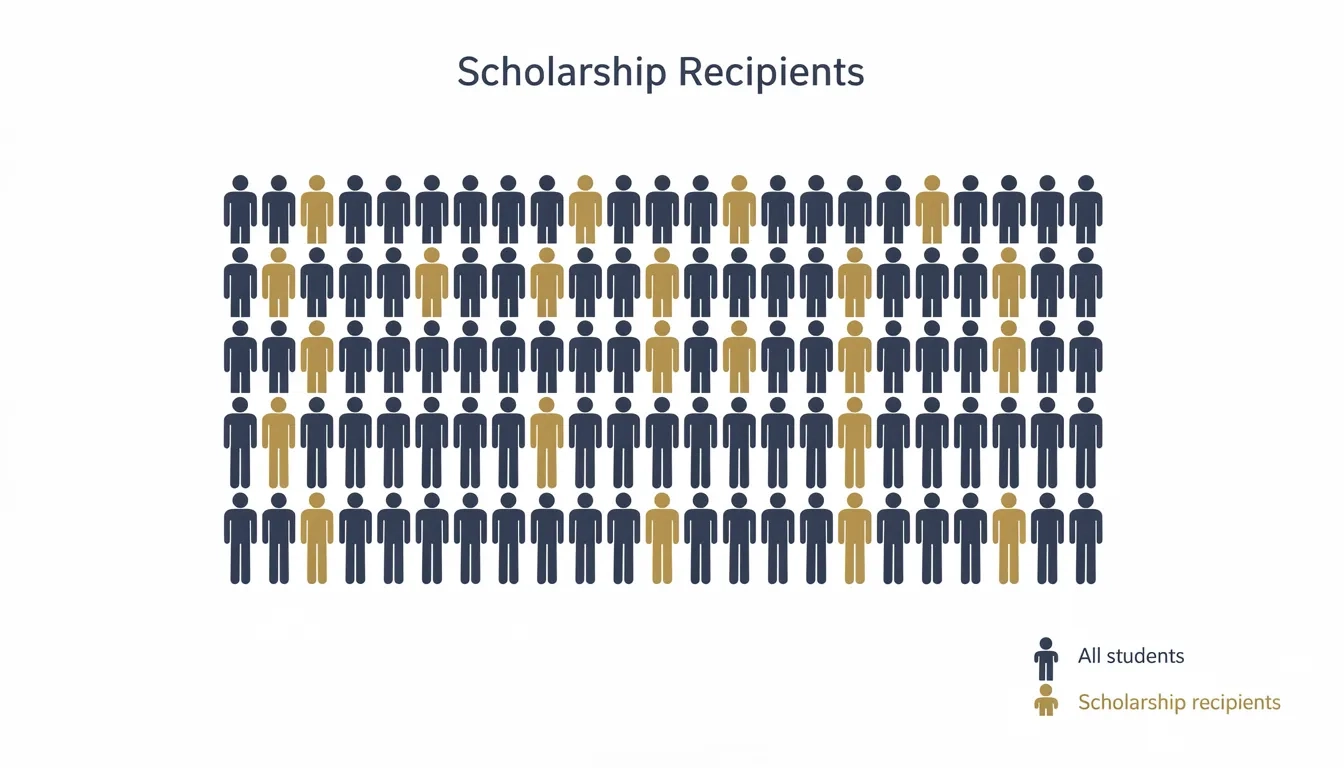
The scholarship pool is tighter than most people assume. Only 1 in 8 college students receives any scholarship funding at all — roughly 12.5%, according to search logistics data tracking federal award distributions. Of those who do win something, 97% get less than $2,500 per award. Full rides go to 0.1% of students.
So the question isn't just how many to apply for. It's how many you can apply for well.
Financial aid advisors broadly agree: for every 10 scholarship applications you submit, expect to win about 1. Landing three or four awards in a single academic year means 30 to 40 total submissions. Spread across eight or nine months of the academic calendar, that's 4 to 5 per month as a bare minimum — though most serious applicants aim for 10 to 15.
Consistency beats any single frantic month. Every time.
Why Targeted Applications Win More Often
Here's the part most scholarship guides skip over: applying to more doesn't automatically mean winning more.
Students who submit a carefully matched list of 10 to 15 applications per month have 3x better success rates than those submitting 50+ (per Kollegio AI's research). The mechanism is simple — scholarship committees can tell when an essay was recycled. Generic submissions that don't address the specific mission of the award get filtered out fast, no matter how impressive the applicant's transcript looks on paper.
Consider two students:
- Student A submits 45 applications in January, reusing the same 500-word essay with a tweaked opening line each time.
- Student B submits 12 applications selected because she's a first-generation college student studying nursing in rural Ohio — and each essay speaks directly to what that specific committee funds.
Student B wins. Consistently.
My take: the volume-first approach feels productive but is mostly wasted effort. Ten well-aimed applications beat forty scattered ones, and you won't end March exhausted and bitter about the whole process (which is how most students quit).
A Monthly Scholarship Calendar
Scholarship deadlines cluster in predictable seasonal patterns, and knowing when to ramp up prevents the January scramble that burns most applicants out.
| Month | Focus | Realistic Target |
|---|---|---|
| September | Local and school-based scholarships open | 8–10 applications |
| October | Major private awards (Coca-Cola Scholars, Gates Scholarship) | 10–12 applications |
| November | Essay-heavy deadlines; refine your materials | 6–8 applications |
| December | Rolling and lottery-style quick-apply scholarships | 10–15 applications |
| January | Peak season — deadlines cluster heavily | 12–15 applications |
| February | Merit-based and STEM-focused scholarships | 10–12 applications |
| March | Community foundation and local deadlines | 8–10 applications |
| April | Final push; start building next year's list | 6–8 applications |
| May–August | Rolling scholarships; summer opportunities | 4–6 per month |
January is the busiest month by a wide margin. Don't wait until then to start. Students who begin building their list in September have already submitted 50+ applications before most peers open a scholarship search tool for the first time.
Two Types of Scholarships, Two Volume Rules
Not all applications cost the same amount of time. Once you understand the difference, calibrating a monthly target gets a lot cleaner.
Quick-apply scholarships — lottery-style entries, simple form submissions, no essay required — take 5 to 15 minutes each. Platforms like Scholly and Fastweb list hundreds of these. For this category, volume makes sense. Submitting 10 to 15 per month is reasonable and doesn't hurt quality because there's nothing to customize.
Essay-based scholarships are a completely different calculation. A strong, tailored essay takes 3 to 6 hours to draft, revise, and align with the scholarship committee's specific values. For most students balancing coursework and part-time jobs, 4 to 6 high-quality essay applications per month is the realistic ceiling before quality starts to slip.
The practical approach: blend both. Target a monthly total of 10 to 15, where 4 to 6 are essay-based and 6 to 10 are quick-apply.
The goal isn't to maximize application count. It's to maximize genuine fit per application — and those two things pull in opposite directions at high volume.
The Unclaimed Money Problem
You've probably heard that millions in scholarship dollars go unclaimed each year. Conservative estimates put the figure at over $100 million annually, with poor applicant-to-scholarship matching as the primary cause — students either don't know the money exists or talk themselves out of applying.
Here's why niche scholarships matter so much: a scholarship for descendants of Norwegian immigrants in a specific Minnesota county might receive 31 applications total. If you qualify and apply with a competent essay, your odds aren't the national 12.5% baseline. They're something closer to 40 or 50%.
This is the core argument for building a personalized list rather than working from a generic compilation. Fastweb, Bold.org, and Scholly all let you filter by demographic criteria, major, state, religion, and employer affiliation. Spend 45 minutes building a filter-based list of scholarships where you're a strong match. Local scholarships from Rotary clubs, community foundations, church organizations, and employer programs often receive 5 to 30 applications total for awards worth $500 to $5,000. The odds at that scale are incomparably better than any national search with 10,000 applicants.
Don't leave money on the table because a scholarship seemed too small or too niche. That's exactly where the better odds live.
Common Mistakes That Break Your Monthly Rhythm
Most students who abandon scholarship applications cite the same three frustrations: too time-consuming, too few results, too confusing. All three usually trace back to fixable process errors.
No tracking system is the single most common problem. Once you're submitting 10+ applications per month, managing deadlines and required documents in your head fails (usually at the worst possible moment). A spreadsheet with columns for scholarship name, amount, deadline, required documents, submission date, and status takes 20 minutes to set up and prevents hours of scrambling later.
Other mistakes worth flagging:
- Ignoring local scholarships in favor of flashier national competitions
- Reusing essays without tailoring them to each committee's stated values
- Applying only in January rather than running a year-round cadence
- Skipping scholarships that seem "too small" — $750 from a local Rotary club is real money that compounds
- Not reading full eligibility requirements before spending hours on an application
Students with GPAs between 3.0 and 3.5 (not the top of the class, but solidly good) often win more scholarships than classmates with 4.0s because they apply to a wider range of awards rather than aiming only at the most competitive merit scholarships. Profile-fit matters more than raw academic standing.
Building a Sustainable Monthly Pipeline
The students who win the most scholarship funding over four years aren't the most talented. They're the most systematic — treating applications like a part-time job with a predictable weekly structure.
Here's a pipeline that keeps volume manageable without taking over your life:
- Monthly list refresh (30 minutes): Add 15 to 20 new scholarships to your tracking spreadsheet, filtered for genuine fit before anything else.
- Weekly quick-apply batch (30 minutes): Submit all no-essay and simple-form applications in one sitting. Low effort, meaningful volume.
- Essay applications (2 to 3 sessions per week, 2 to 3 hours each): One scholarship at a time, fully customized.
- Monthly review (15 minutes): Check upcoming deadlines, note what's pending, prune any opportunities you no longer qualify for.
Running this system across 8 to 9 months produces 80 to 120 total applications per year. At a 10% win rate — realistic if your targeting is solid — that's 8 to 12 awards annually. Federal student aid data puts the average student loan balance at graduation around $37,013. Even small wins of $750 to $2,000 per award start chipping away at that number in ways that add up semester by semester.
The math works if you work the math.
Bottom Line
- Target 10 to 15 applications per month, mixing 4 to 6 essay-based scholarships with 6 to 10 quick-apply opportunities.
- Start in September, not January. The academic year's best opportunities open early; don't wait until deadlines cluster.
- Prioritize fit over volume. Three well-matched essay scholarships are worth more effort than fifteen generic ones.
- Build a tracking spreadsheet before you apply to anything. You cannot manage 10+ monthly applications in your head.
- Don't overlook local and niche scholarships. They have smaller applicant pools and significantly better odds — and that's exactly where the real opportunity is.
Frequently Asked Questions
Is it a myth that applying to more scholarships always means winning more?
Yes, largely. Applying to more scholarships where you're a strong fit does increase your odds — but applying to more scholarships indiscriminately tends to lower your win rate. Kollegio AI found that students who apply to fewer, well-matched scholarships win at 3x the rate of those who mass-apply without filtering for fit. The key word is targeted volume, not raw volume.
When is the best time to start applying for scholarships?
The summer before your senior year of high school is the ideal starting point — many major awards open in August and September. But if you're already in college, start now. Many private scholarships are open to current college students, not just high school seniors, and rolling scholarships accept applications year-round. Platforms like Bold.org even allow students as young as 14 to create profiles and begin building their list early.
How many scholarships can I actually receive at once?
There's no legal cap on how many scholarships you can hold simultaneously. The one firm rule is that your total financial aid package (scholarships, grants, loans) cannot exceed your school's official cost of attendance for the year. If you win more than you need, your school's financial aid office will typically reduce other aid components, like subsidized loans, first.
What's a realistic win rate if I apply consistently each month?
Expect roughly a 10% win rate if your applications are well-targeted to scholarships where you genuinely qualify. That means submitting 80 to 100 applications across an academic year should yield 8 to 10 awards. Students with strong fit-matching — niche demographics, specific majors, local community ties — often see win rates closer to 15 to 20% because the competition pools are smaller.
Should I apply for scholarships if my GPA is below 3.0?
Absolutely. Many scholarships don't require a minimum GPA at all, and many others set the bar at 2.5 or are need-based rather than merit-based. Students with lower GPAs should skew their applications toward need-based awards, community scholarships, and profession-specific scholarships in their intended field — rather than competing for purely academic merit awards. The $100+ million in unclaimed scholarship money each year exists partly because eligible students self-select out before they even apply.
How do I know which scholarships are worth my essay-writing time?
Ask three questions before committing to an essay: Does my profile closely match what this committee funds? Is the award amount worth the time investment? How many people typically apply? A $500 local award with 20 applicants is often a better use of two hours than a $5,000 national scholarship where 15,000 students compete. Check if the scholarship organization publishes past winner profiles — it's the fastest way to calibrate whether you're a genuine fit.
Sources
- How Many Scholarships Should I Apply For? A Smart Plan — Kollegio AI
- U.S. Scholarship Statistics: The Latest Data, Facts And Costs — Search Logistics
- How Many Scholarships and Grants Can I Receive? — Bold.org
- What Are My Chances of Winning a Scholarship? — Bridges Education
- How Many Scholarships Should You Aim to Apply For? — CollegeVine