MassGrant Eligibility and Award Amounts: What Massachusetts Students Need to Know
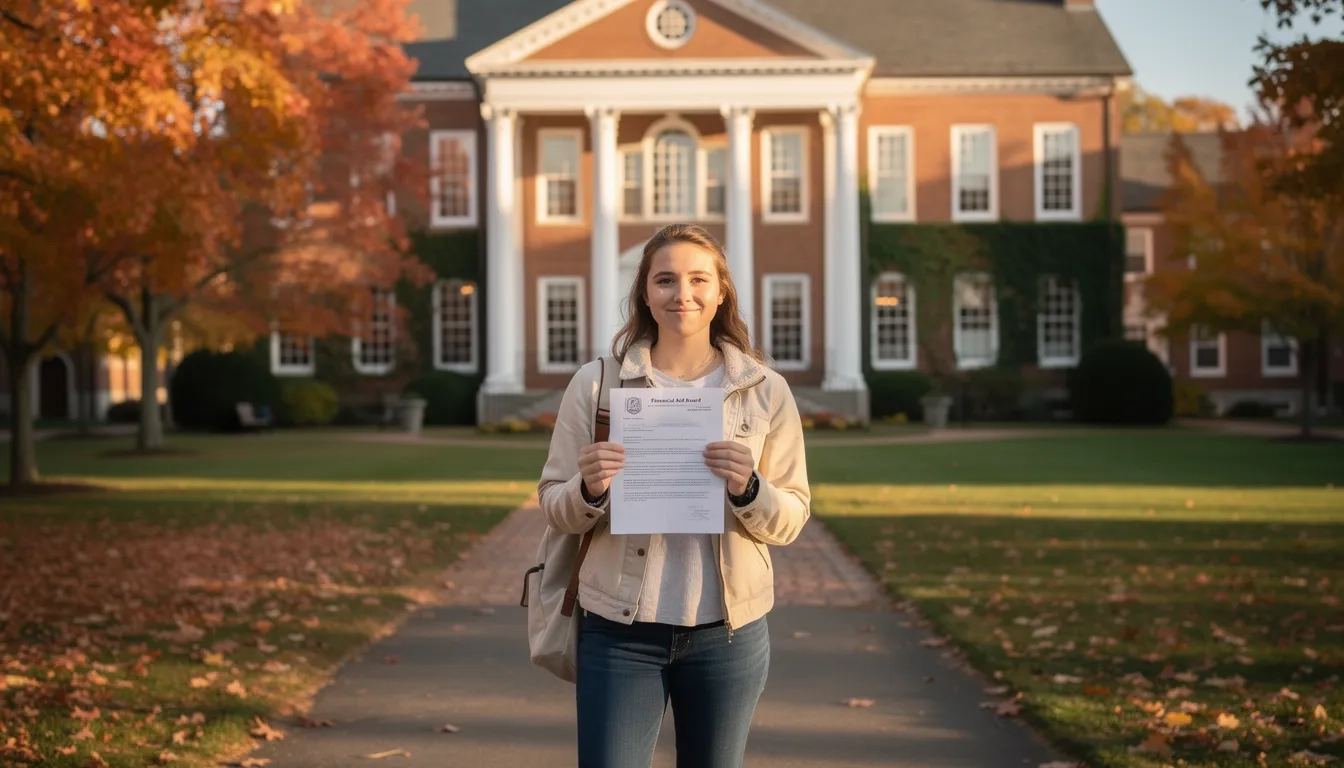
Most Massachusetts families assume the MassGrant covers a real chunk of college costs. When the financial aid letter arrives showing a $600 award, the confusion hits fast. The state's flagship need-based grant has a legal maximum of $1,600 — but the median student receives less than half that. Then there's MassGrant Plus, which can cover an entire year of tuition at a public university, and MassGrant Plus Expansion for families who thought they earned too much to qualify for anything.
Three different programs. One application. Wildly different outcomes depending on your income, school choice, and credit load.
MassGrant, MassGrant Plus, or Plus Expansion — Which One Are You Getting?
Massachusetts runs three distinct grant programs under the same brand name, and the differences between them are enormous. Getting clear on which one applies to you changes the math entirely.
MassGrant is the original. Oldest, most limited, most widely available. Maximum award: $1,600 per year. It works at private colleges, community colleges, four-year public institutions, and even select schools in Vermont, Pennsylvania, and Washington D.C. through reciprocal agreements. But for most families, the award barely moves the needle on a real college bill.
MassGrant Plus is the serious upgrade. It targets students at Massachusetts' 28 public institutions — 9 state universities, 4 UMass campuses, and select community colleges — and promises to cover full in-state tuition and fees for families earning under approximately $85,000. That's a completely different proposition from a $600 check.
MassGrant Plus Expansion covers middle-income students: families with Adjusted Gross Income between $73,000 and $100,000. Instead of full coverage, it reduces out-of-pocket tuition costs by up to 50%.
You don't apply separately for each. One FAFSA determines which program you qualify for, and your school's financial aid office handles the sorting.
Core Eligibility Requirements
All three MassGrant programs share a set of baseline requirements. Fail any one of them and you're out before the income math even starts.
Massachusetts residency is the first gate. You must have physically lived in Massachusetts for at least 12 months before the academic year begins, with intent to remain. Students who moved to Massachusetts specifically to attend college don't qualify.
Prior degree status is a hard disqualifier. If you already hold a bachelor's degree, none of these programs will fund a second undergraduate run, regardless of income or financial need.
Enrollment minimums matter more than most people realize. Here's how they break down:
| Requirement | MassGrant | MassGrant Plus (under $85K) | MassGrant Plus Expansion |
|---|---|---|---|
| Min. credit load | 12 credits | 6 credits | 12 credits (6 at community college) |
| School type | Public + private + reciprocal | Public only | Public only |
| Income ceiling | ~$85,000 | ~$85,000 full / $100,000 partial | $73,000–$100,000 AGI |
| Prior bachelor's | Disqualifies | Disqualifies | Disqualifies |
| MA residency | 12 months | 12 months | 12 months |
Beyond those gates, you also need to:
- Be a U.S. citizen, lawful permanent resident, or Title IV-eligible non-citizen (or qualify under Chapter 28 of the Acts of 2024 via MASFA for some undocumented students)
- Not be in default on any federal or Massachusetts state student loans
- Not owe a refund from prior financial aid awards
- Maintain satisfactory academic progress as defined by your institution
What MassGrant Actually Pays (The Honest Version)
Here's where the program gets uncomfortable. The Hildreth Institute, a Massachusetts higher education think tank, analyzed MassGrant's purchasing power and found a collapse over time. In 1988, MassGrant covered roughly 80% of average in-state tuition. By 2013, that figure had fallen to just 9%.
The current maximum award is $1,600. But the median student receives closer to $600. That gap exists because awards are calculated based on your Student Aid Index (SAI) — the number FAFSA produces to measure expected family contribution — and institution type. Students with higher SAIs get smaller awards, even if they technically qualify.
State funding per MassGrant student dropped 32% between 2001 and 2013, while tuition at public universities climbed steadily. The grant never caught up.
Massachusetts ranks 48th among all states for average need-based grant amounts. The national average sits around $2,405 per student. Massachusetts' average doesn't approach that. And even with all aid combined, Massachusetts students still face significant unmet need: 44% of costs uncovered at community colleges, 47% at state universities, and 55% at UMass campuses on average.
This isn't a reason to skip applying. Even $600 reduces your loan burden. But it explains exactly why MassGrant Plus exists and why, if you're attending a public institution, you should focus on Plus eligibility specifically.
MassGrant Plus: Full Tuition at Public Colleges
MassGrant Plus works differently from the start. Rather than handing you a fixed dollar amount, it functions as a gap-fill: it covers whatever unmet tuition-and-fees need remains after your Pell Grant, institutional aid, and other scholarships are applied.
For families earning under approximately $85,000, MassGrant Plus covers 100% of in-state tuition and mandatory fees at eligible public institutions. Not a contribution toward tuition. All of it. A student enrolled full-time at UMass Amherst could walk away with a zero tuition bill if their family income qualifies. The program also includes a books and supplies allowance of up to $1,200 per year (a real help when a single textbook can run $200 or more).
For families earning between $85,000 and $100,000, the math changes. Full-time enrollment (12+ credits) is required, and the program reduces out-of-pocket tuition and fees by up to 50%, not the full amount.
What MassGrant Plus does NOT cover:
- Room and board (housing and food)
- Parking permits and other optional charges
- Study abroad credits
- Off-campus enrollment
For students living in campus housing, room and board at a state university can easily run $13,000+ per year — and none of that is touched by this program. Worth building into your budget from day one.
MassGrant Plus Expansion: The Middle-Income Bridge
MassGrant Plus Expansion was designed for families who earned too much for traditional aid but still genuinely struggled with college costs. The income band targets families with Adjusted Gross Income between $73,000 and $100,000.
The award is proportional, not full coverage. Eligible students see their out-of-pocket tuition and fees reduced by up to 50%. At a state university charging $10,000 in tuition and fees, a 50% reduction means $5,000 you don't have to borrow. That's meaningful.
For community college students under the Expansion, the credit requirement drops to just 6 credits (half-time enrollment). That makes it accessible to students working full-time who can only take two classes per semester.
One thing worth knowing: the Expansion uses Adjusted Gross Income from your FAFSA, which relies on "prior-prior year" data (your 2023 tax return informs your 2025-26 eligibility). If your family's income dropped significantly due to job loss or medical expenses, a special circumstances appeal through your financial aid office may help adjust your aid eligibility to reflect your current situation.
How to Apply (and the Mistakes That Cost Students Money)
The application process is simpler than most people expect. There's no separate MassGrant form. Everything flows from two possible applications.
Step 1: File your FAFSA at fafsa.gov. Aim to file as early as October 1 when the form opens for the upcoming year. Massachusetts' priority deadline is May 1, and the absolute cutoff for 2025-26 is June 30, 2025.
Step 2: If FAFSA isn't an option, use the MASFA (Massachusetts Application for State Financial Aid). This opened wider access under state legislation for students who cannot complete FAFSA due to citizenship status.
Step 3: Your school calculates the award. Massachusetts' Office of Student Financial Assistance sends eligibility data to your institution, and your financial aid office calculates the actual award based on your SAI, cost of attendance, and other aid already in place.
Common mistakes that cost students real money:
- Filing FAFSA after May 1 (state-specific programs may be underfunded or closed by then)
- Dropping below the credit minimum mid-semester without checking award terms first
- Not notifying your school when transferring (award amounts vary by institution type and will change)
- Assuming the award renews automatically — it does not; you must refile FAFSA every year
The eligibility period has a hard cap: 8 semesters for a four-year degree, 6 for a three-year program, 4 for a two-year program, and 2 for a one-year certificate. Those semesters count even in years you received nothing.
The Private College Question
MassGrant (the original, smaller program) can be used at private Massachusetts colleges. MassGrant Plus cannot — it's restricted to the 28 public institutions.
This is a real tradeoff when choosing between schools. A private college with strong institutional aid might still produce a comparable or better net price than a public university with MassGrant Plus. Run the numbers on both official aid offers before deciding. My take: for families under $85,000, MassGrant Plus at a qualifying public school is usually the stronger financial position, because combining it with Pell Grant eligibility often produces a near-zero net tuition bill. Private school aid is more generous — until it isn't, and institutional grant policies can shift after freshman year.
Bottom Line
- File FAFSA early — October 1 when it opens, and definitely before May 1. Missing the deadline means losing the grant.
- Know your program. MassGrant is the limited one (median award around $600, usable at public and private schools). MassGrant Plus is the powerful one (full tuition at 28 public institutions for families under $85,000). MassGrant Plus Expansion is for the $73,000–$100,000 income band at up to 50% tuition reduction.
- Watch the credit minimum before dropping a class. Falling from 12 to 9 credits can change your award category entirely mid-semester.
- Refile every single year. One missed FAFSA costs you a full year of state aid with no appeal path.
- If your family earns between $75,000 and $100,000 and you're attending a public college, check specifically for Plus Expansion eligibility. Many families in that range assume they don't qualify for anything and leave real money unclaimed.
Frequently Asked Questions
Can graduate students receive MassGrant?
No. All three programs — MassGrant, MassGrant Plus, and MassGrant Plus Expansion — are restricted to undergraduate students. If you've completed a bachelor's degree and are pursuing graduate work, none of these grants apply, regardless of income.
What if my family income is above $100,000?
You're outside all three programs. The $100,000 AGI ceiling is the maximum across the entire MassGrant family. File FAFSA anyway — you'll still qualify for federal unsubsidized loans, and your school may have its own institutional grants based on merit or other criteria.
Is MassGrant money taxable?
Grant funds used for qualified education expenses — tuition, required fees, and course-required supplies — are generally not taxable income. If any portion covers non-qualified expenses (like room and board), that portion may be taxable. Worth a quick check with a tax advisor if your total aid package is large.
My family had a rough financial year. Can I appeal my Student Aid Index?
Yes, and this option is widely underused. If your 2023 income (used for 2025-26 eligibility) doesn't reflect your current situation — job loss, divorce, significant medical bills — most financial aid offices have a professional judgment process. Document the change, submit it in writing, and ask specifically about a special circumstances review. Schools have real discretion to adjust your SAI.
Does MassGrant Plus cover community colleges?
Some community colleges are participating institutions under MassGrant Plus. Under the Expansion program, community college students qualify at half-time enrollment (6 credits). Contact your specific community college's financial aid office to confirm participation, since not all 15 Massachusetts community colleges are included in every program tier.
What's the difference between a mandatory fee and an optional fee for MassGrant Plus purposes?
MassGrant Plus covers mandatory instructional fees — charges your school requires from all enrolled students, such as technology or student activity fees. Optional fees like parking permits or gym memberships aren't covered. Some schools bundle fees together in billing, so ask your financial aid office which specific fees count toward your grant calculation.
Sources
- MASSGrant Program — Mass.edu Office of Student Financial Assistance
- MASSGrant Plus — Mass.edu Office of Student Financial Assistance
- MASSGrant & MASSGrant Plus — Mass.gov
- Massachusetts' Largest Need-Based Grant Is So Small — Hildreth Institute
- MassGrant Plus Program — UMass Lowell Solution Center
- All About Massachusetts State Financial Aid — MEFA