Best Scholarships for Deaf and Hard of Hearing Students 2026
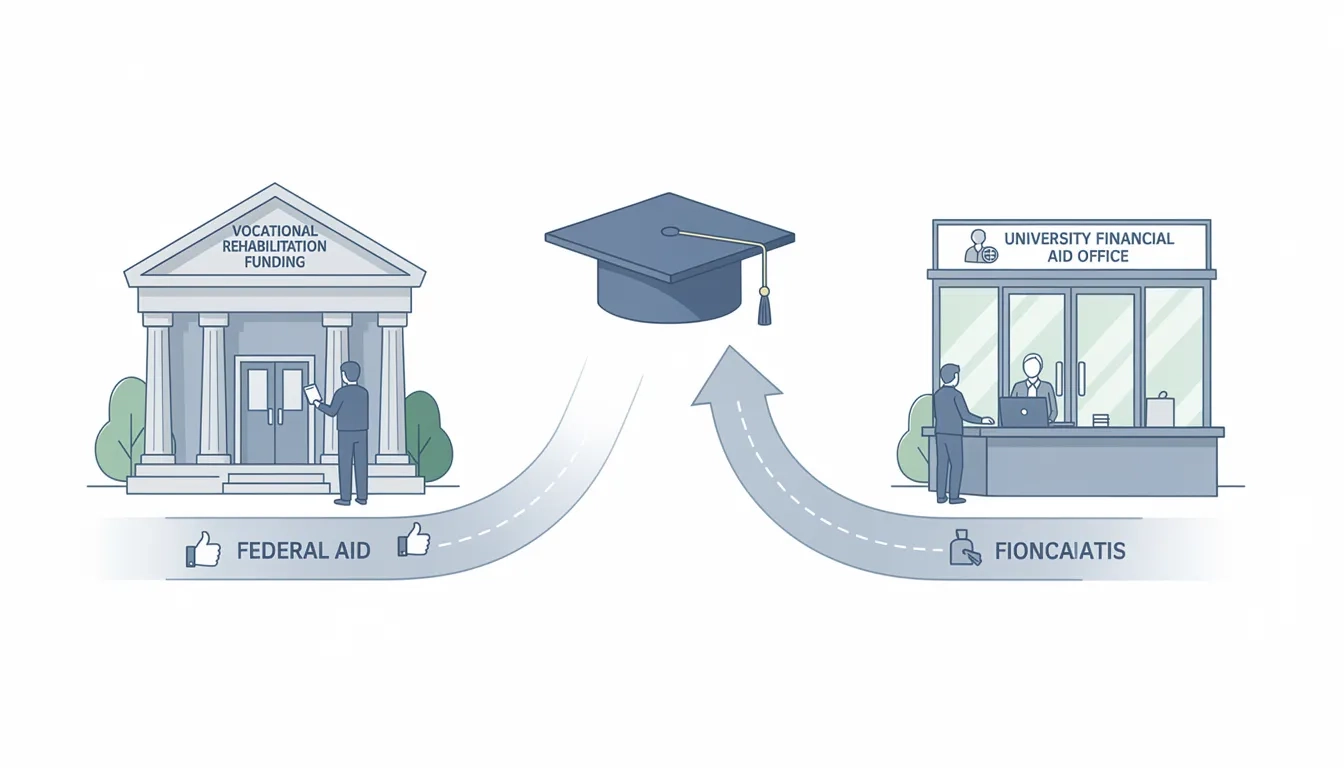
Here's a number most high school counselors never mention: Vocational Rehabilitation programs across the United States collectively fund millions in college tuition for deaf and hard of hearing students every year — and the majority of eligible students never apply. Not because they don't qualify. Because nobody told them it existed.
That's the elephant in the room for deaf and hard of hearing students navigating financial aid. Dozens of scholarships are out there, but the system is fragmented, requirements vary wildly, and some of the biggest opportunities sit entirely outside traditional scholarship databases.
Here's what the research shows: the students who fund college most effectively don't rely on one big award. They stack. Institutional aid, state VR funding, a national scholarship, and a local award. That combination — not a single windfall — is what actually covers a degree.
The Two Biggest Sources Most Students Miss
Before the named scholarship programs, two funding paths deserve attention because they're either automatic or badly underused.
Gallaudet University and RIT/NTID offer built-in cost advantages no outside scholarship can replicate at scale. At RIT's National Technical Institute for the Deaf, deaf and hard of hearing undergraduates pay less than half of RIT's standard tuition because of dedicated federal support the institution receives. Gallaudet automatically considers every newly admitted student for merit-based scholarships, renewable up to four years for incoming freshmen. Neither path requires a separate scholarship application. You get considered by enrolling.
For students still deciding on a school, that's real money worth factoring into a cost comparison before signing anything.
Vocational Rehabilitation is the second overlooked source. Every U.S. state runs a VR office that can fund college, vocational training, counseling, transportation, and sometimes equipment for people with hearing loss. RIT/NTID explicitly tells all deaf and hard of hearing students to apply for VR as part of their financial aid process. Gallaudet does the same.
VR isn't a guarantee — you apply, they assess your situation — but it covers gaps that scholarships don't. Contact your home state's VR office before your first semester. The process takes several months.
High-Value Scholarships ($4,000 and Up)
These programs offer the largest individual awards. More competitive, more specific eligibility.
| Scholarship | Award | Who Qualifies | Deadline |
|---|---|---|---|
| AG Bell George H. Nofer Scholarship | $5,000 (up to 3 awards) | Grad students in law or public policy, moderate-severe to profound loss, LSL users | April |
| Dorothy E. Ann (D.E.A.F.) Fund | Up to $10,000 | Ohio high school seniors | December |
| Help America Hear (Colleen Scarisbrick) | $4,000 + ReSound hearing aids | High school seniors with hearing loss | February |
| Cochlear Graeme Clark Scholarship | $2,000/year × 4 years | Graduating seniors, Cochlear Nucleus implant recipients | September 30 |
| Microsoft disAbility Scholarship | $5,000/year (up to $20,000 total) | HS seniors with disabilities, STEM/law/business, financial need | March |
The AG Bell Nofer Scholarship has an eligibility filter many applicants miss. It requires using "Listening and Spoken Language" (LSL) as your primary communication mode. AG Bell's institutional focus centers on oral communication methods. Students who primarily use ASL will not qualify for AG Bell programs. Worth knowing before investing time in the application.
The Cochlear Graeme Clark Scholarship is almost invisible in general search results because it's technology-specific. If you're a Cochlear Nucleus implant recipient, this is effectively $8,000 spread over four years, and the competition pool is smaller than any open-enrollment program.
Help America Hear stands apart because it pairs $4,000 in educational funding with a professionally fitted pair of ReSound prescription hearing aids (custom-fitted to each recipient's specific audiogram). Professional-grade hearing aids retail for $3,000 to $7,000 at most audiologists. The total package value exceeds the listed award number by a meaningful margin.
Mid-Range Scholarships ($500–$2,500)
These are often the most accessible: lower barriers, real money, and consistent annual cycles.
Sertoma Hard of Hearing or Deaf Scholarship — $1,000 per award, multiple given annually. Requires a 3.2 GPA, an audiogram showing clinically significant bilateral hearing loss (40dB or greater in the better ear), two recommendation letters, and a transcript. Deadline: March 31 each year. Sertoma has run this program long enough that it's one of the more predictable sources at this tier.
Wells Fargo Scholarship for People with Disabilities — $1,250 to $2,500, available to both high school seniors and current college students. Financial need factors into selection. Deadline typically in February.
National Cued Speech Association — Two awards: the Carol Shuler Memorial Scholarship ($500, West region students) and the R. Orin Cornett Memorial Scholarship ($1,000, national). These fly under the radar entirely. If you use Cued Speech and qualify by region, the applicant pool shrinks significantly.
Millie Brother / CODA Scholarship — Roughly two $3,000 scholarships per year for hearing children of deaf adults. If you grew up in a deaf household but aren't deaf yourself, this is the program designed for you. The scholarship specifically values the bilingual, bicultural experience CODAs carry.
Travelers Protective Association Scholarship Trust — $100 to $1,000 with rolling quarterly deadlines (March 31, June 30, September 30, December 31). Awards support deaf or hearing-impaired individuals needing help with medical, mechanical, or educational expenses. The rolling deadline removes the annual bottleneck that most scholarships have.
State-Specific Programs Worth Your Attention
A lot of the best scholarship money is geographically limited — which means lower competition by default.
The Dorothy E. Ann (D.E.A.F.) Fund caps at $10,000 but serves only Ohio high school seniors. For a student in Ohio, that's one of the largest deaf-specific awards in the country, and it barely circulates outside the state.
Wisconsin's Hearing/Visually Impaired Student Grant provides $250 to $1,800 for Wisconsin residents in college with severe or profound hearing impairment. Small dollars, but the competition pool is limited to in-state students with documented loss.
TAPED scholarships in Texas — announced by the Texas School for the Deaf — offer four $1,000 awards to graduating Texas seniors who are deaf or hard of hearing and enrolling in college or a trade program for 2025-26.
The pattern repeats across states: advocacy organizations and state rehabilitation bureaus fund programs that show up in state-level searches rather than national databases. Before you spend time on national applications, run a search for your specific state combined with "deaf scholarship" or "hearing loss grant."
How to Apply Strategically
Get a current audiogram before application season opens. It's required documentation for the Sertoma scholarship and commonly requested across the field. Having one ready eliminates a last-minute bottleneck when March deadlines stack up.
A few decision frameworks worth keeping in mind:
Match your communication method before applying. AG Bell programs require LSL. Programs through organizations affiliated with the National Association of the Deaf or Gallaudet don't carry that filter. Mismatched applications waste your time and reviewers'.
Layer multiple funding sources. The realistic full-funding picture combines: institutional aid (Gallaudet or NTID), state VR funding, one or two national scholarships, and a local or regional award. No single scholarship covers a four-year degree alone.
Apply to rolling-deadline programs first. Programs like the Travelers Protective Association accept applications year-round. That's good practice without deadline pressure, and an early win reduces financial stress when the bigger March/April windows open.
Write to a specific moment, not a general theme. Scholarship reviewers read hundreds of "I overcame adversity" narratives. The applications that stand out describe a named accommodation that changed how you learned, a specific moment in a hearing classroom, a concrete decision about how to communicate in a particular situation. Specificity signals genuine reflection in a way that general statements never do.
The Gallaudet Graduate Fellowship Fund deserves a separate mention for graduate students: it's open to deaf and hard of hearing students in any accredited graduate program, with preference for doctoral candidates. It gets far less attention than undergrad-focused programs and the competition reflects that.
Bottom Line
- Apply for Vocational Rehabilitation before you enroll. Your home state's VR office may cover tuition, fees, and equipment. It's the most underused funding source for deaf and hard of hearing students, and most guidance counselors never bring it up.
- If Gallaudet or RIT/NTID are on your list, run the actual cost comparison — the federal support baked into both schools means your net cost may be lower there than at a program that looks cheaper on paper.
- Match eligibility before investing application time. The AG Bell Nofer Scholarship requires LSL; the Cochlear Graeme Clark requires Nucleus implant use. Mismatched applications hurt your odds and waste time on both sides.
- Stack your funding sources. One national scholarship plus one state grant plus VR plus institutional aid is a realistic full-funding picture. One award alone isn't.
- Get a current audiogram on file now. You'll need it for Sertoma, likely for others, and having it ready removes a deadline-crunch bottleneck when everything hits in March.
Frequently Asked Questions
Do I need to be profoundly deaf to qualify for most scholarships?
No. Most programs specify clinically significant bilateral hearing loss at a documented threshold — the Sertoma scholarship uses 40dB or greater in the better ear as its benchmark. Moderate to severe loss qualifies for the majority of programs on this list. Profound loss is required for some institutional programs but is not a standard bar for most named scholarships.
What's the difference between AG Bell's undergraduate aid and the Nofer Scholarship?
The George H. Nofer Scholarship is exclusively for graduate students enrolled in law school or a master's/doctoral program in public policy or public administration. AG Bell also runs the School-Age Financial Aid Program for K-12 private school students ($400 to $4,000). All AG Bell programs require applicants to use Listening and Spoken Language as their primary communication method — students who primarily communicate in ASL will not qualify for any of them.
Can I combine Vocational Rehabilitation funding with a private scholarship?
Generally yes, though your VR office may adjust their contribution based on other aid you receive. Standard practice is to disclose all other funding sources to your VR counselor upfront. Don't layer them quietly — VR offices coordinate with other aid sources, and transparency keeps your eligibility intact across all programs.
Is there a scholarship specifically for cochlear implant users?
Yes. The Cochlear Graeme Clark Scholarship awards $2,000 per year for up to four years to graduating seniors who are Cochlear Nucleus implant recipients. The September 30 annual deadline is earlier than most scholarship cycles, so mark it before fall chaos sets in. AG Bell programs also skew toward students using hearing technology given the LSL requirement, though they don't mandate implants.
Are there scholarships for hearing students with deaf parents?
The Millie Brother CODA Scholarship awards approximately two $3,000 scholarships per year to hearing children of deaf adults. It's one of the only programs in this space designed for someone who isn't deaf themselves, and it explicitly recognizes the bilingual, bicultural upbringing that CODAs bring to their applications.
What's the most common mistake applicants make?
Writing a generic narrative about perseverance. Reviewers read hundreds of them and the structure becomes invisible. The applications that land describe a specific moment — a named accommodation that changed how you learned, a concrete challenge in a particular classroom, a real decision about communication in a real situation. General statements about "facing challenges" don't differentiate anyone. Specific ones do.
Sources
- How to Get Scholarships for Hearing Impairment - Scholarships360
- Colleen Scarisbrick Help America Hear Scholarship Program
- Financial Aid Archive - DeafandHoH
- Tuition & Financial Aid - RIT/NTID
- Vocational Rehabilitation - Gallaudet University
- Scholarship Opportunities - Gallaudet University
- Sertoma Hard of Hearing or Deaf Scholarship - Scholarships.com
- TAPED Announces 2025 Scholarships for Deaf Students - Texas School for the Deaf