Top Scholarships for Anthropology Majors in 2026
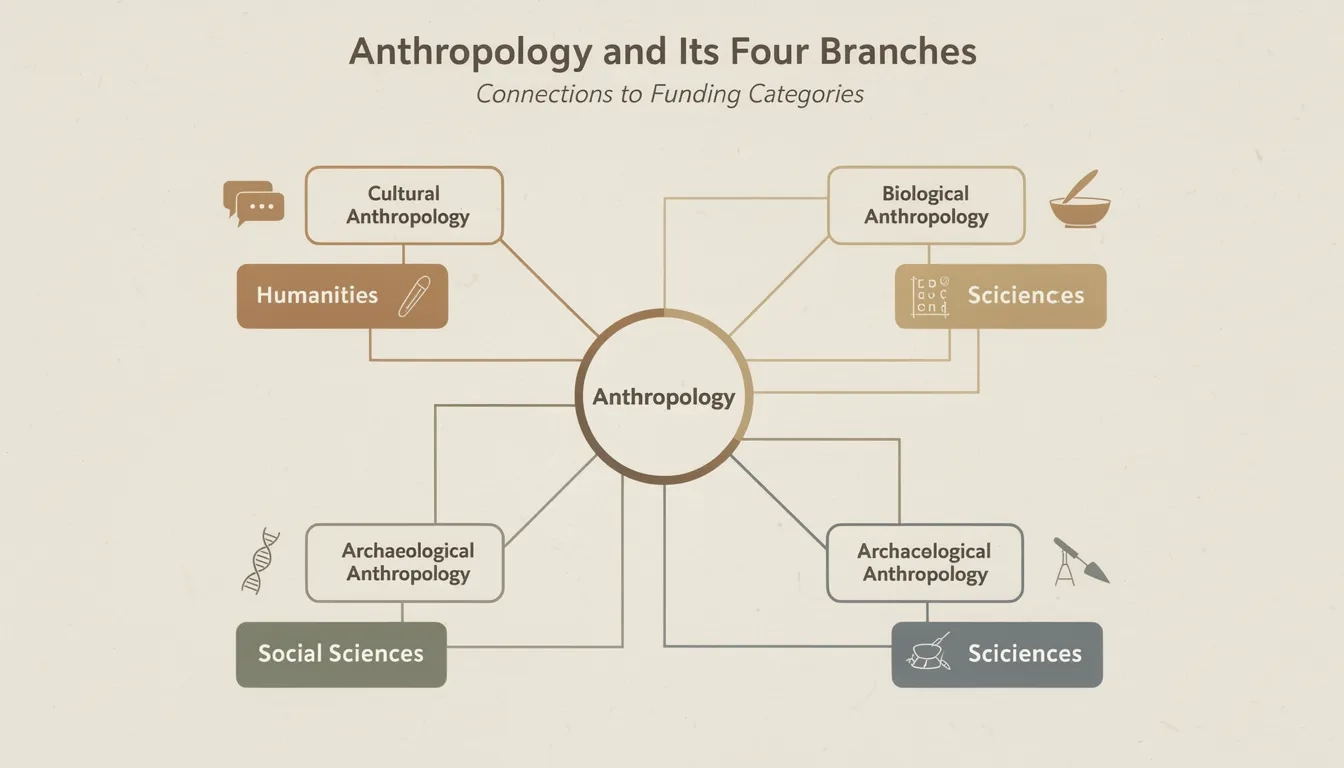
Most students write off anthropology as "underfunded." That assumption costs real money. The Wenner-Gren Foundation, the National Science Foundation, the Fulbright Program, and the American Anthropological Association all maintain awards built specifically for this field. The Beinecke Scholarship hands junior-year social science students $35,000 to fund graduate education. Because anthropology spans biological science, cultural research, archaeology, and linguistics, students can draw from funding pools that rarely coexist for any other single major. The challenge isn't finding money. It's knowing which programs match your career stage and your research focus.
The Funding Map: How Anthropology's Structure Works in Your Favor
Anthropology benefits from disciplinary ambiguity in a way most majors simply don't. History students compete for humanities grants. Biology students compete for science grants. Anthropology students can legitimately compete for both, plus international research programs on top of that.
Three primary funding pipelines serve anthropology students specifically:
- Foundation grants: Wenner-Gren Foundation, L.S.B. Leakey Foundation, Mellon Foundation
- Federal programs: NSF DDRIG, Fulbright U.S. Student Program, NEH fellowships
- Professional association awards: American Anthropological Association (AAA), American Association of Biological Anthropologists (AABA), Archaeological Institute of America (AIA)
Each pipeline targets a different career stage. Fulbright reaches undergraduates and recent graduates. Wenner-Gren grants open at the doctoral level. Professional association awards span from $500 student travel grants to $10,000 dissertation fellowships.
Here's something most applicants miss: a single student can hold applications at multiple pipelines simultaneously. A doctoral student doing cultural fieldwork in Southeast Asia can have live Wenner-Gren, Fulbright, and NSF DDRIG applications at once. The programs fund different budget lines — living costs versus research equipment versus travel — so overlap isn't automatically disqualifying. Always read each award's terms to confirm.
The majority of the most prestigious awards target graduate-level research. Undergrads who understand this landscape in their sophomore or junior year have time to shape their research interests before doctoral applications, which itself becomes a competitive edge when grad programs evaluate your fit.
Wenner-Gren Foundation: The Field's Gold Standard
If there is one grant every anthropology student should know by name, it's the Wenner-Gren Foundation's Dissertation Fieldwork Grant — worth up to $25,000 for doctoral students conducting original fieldwork anywhere in the world. The foundation accepts applications across all four subfields, which makes it the most broadly applicable major award in the discipline.
Two annual deadlines: May 1 and November 1. Missing May isn't fatal; November exists as a real second chance. But the foundation expects applications before fieldwork begins, not after. Retrospective applications fail reliably, and the program officers will tell you this directly if you ask.
Beyond the flagship grant, Wenner-Gren runs several other programs worth tracking:
- Wadsworth International Fellowships ($20,000): for doctoral students from countries where anthropology programs are historically underrepresented, intended to build global capacity in the field
- Post-PhD Research Grants (up to $25,000): for researchers within eight years of receiving their doctorate who need support for a new project
- Conference and Workshop Grants: fund groups of researchers rather than individuals, but principal investigators can include advanced doctoral students as participants
Wenner-Gren reviewers are practicing anthropologists with active research programs. Vague claims about "contributing to human knowledge" read immediately as filler. What works: a bounded research question, a realistic fieldwork plan with specific sites and communities named, demonstrated language proficiency if relevant, and clear engagement with existing scholarship. The narrative section is where applications win or lose — not the budget page.
Build in two full rounds of advisor feedback before submitting. The foundation's portal typically opens six months before each deadline, which gives you enough runway to revise properly.
NSF and Federal Grants: Bigger Money, More Infrastructure
The National Science Foundation funds anthropology through four separate Doctoral Dissertation Research Improvement Grant (DDRIG) programs: Cultural Anthropology, Biological Anthropology, Archaeology, and Linguistics. Each has its own program officer and its own review panel, which matters when you're deciding how to frame an interdisciplinary project — frame it wrong and it lands in front of reviewers who don't consider it their domain.
NSF DDRIGs don't pay your stipend. They fund the research itself: equipment, travel, participant compensation, archival access fees. Budget accordingly, and budget specifically.
Cultural anthropology DDRIGs have historically averaged around $13,000–$15,000. Biological anthropology awards skew higher when laboratory analysis or field equipment is required. Applications must include a faculty co-PI — typically your dissertation advisor — so institutional buy-in is a prerequisite, not an afterthought.
The Fulbright U.S. Student Program is worth applying for across a wider range of projects than most students assume. Anthropology researchers have a strong track record in regions including Sub-Saharan Africa, Southeast Asia, Central America, and the Pacific Islands. Campus deadlines typically fall in September or October, a full academic year before the grant period, so planning in your second year of graduate school is not premature.
The Ford Foundation Predoctoral Fellowship, administered through the National Academies of Sciences, Engineering, and Medicine, awards $27,000 annual stipends to graduate students from underrepresented groups pursuing research careers in academia. Past recipients include anthropologists working across medical, linguistic, cultural, and archaeological subfields. The fellowship also provides access to an alumni network that has meaningfully supported early-career scholars navigating the academic job market.
One thing many applicants overlook: NSF program officers answer pre-submission inquiries by email. A brief message asking whether a project fits within a program's scope can save months of misdirected effort. They won't tell you your odds, but they will tell you whether you're applying to the right program.
AAA and Professional Association Awards
The American Anthropological Association administers several awards that rarely receive the attention they deserve, particularly among students who aren't yet active members of the organization.
The AAA Dissertation Fellowship for Historically Underrepresented Persons in Anthropology awards $10,000 annually to minority doctoral candidates who have already had their dissertation proposal formally approved by their committee. Applicants must be AAA members for at least one month before submitting. At roughly $85 per year for student membership, the fee is modest relative to the access it unlocks across multiple award programs.
The American Association of Biological Anthropologists (AABA) runs student awards separately from the AAA, targeting biological and physical anthropology specifically through travel grants, presentation awards, and the IDEAS Program (Increasing Diversity in Evolutionary Anthropological Sciences), which provides travel funding for undergraduate and graduate student scholars attending the annual meeting. Amounts are smaller than foundation grants but the acceptance rates are meaningfully higher.
For archaeology-focused students, the Archaeological Institute of America administers several named fellowships with distinct eligibility windows:
- Helen M. Woodruff Fellowship: $10,000 for U.S. permanent residents pursuing classical archaeology
- Harriet and Leon Pomerance Fellowship: $5,000 for researchers focused on Aegean Bronze Age archaeology
- Cotsen Excavation Grants: $25,000 for AIA members conducting doctoral-level excavation projects
- Jane C. Waldbaum Archaeological Field School Scholarship: $1,000 for students attending their first archaeological field school
The Waldbaum scholarship is worth applying for as an undergrad even though the amount is modest. Field school attendance costs can run from $3,847 to upward of $7,000 for a six-week session depending on the site and sponsoring institution, so every offset counts. More importantly, field school experience becomes table stakes for admission to strong archaeology doctoral programs, and this award signals that you're serious.
Undergraduate Scholarships: Where to Start Before Grad School
The most reliable undergraduate funding comes from institution-specific departmental awards. Money set aside in named endowments at your own university is often undersubscribed — not because students aren't eligible, but because they don't know to ask. Walking into your department administrator's office and directly requesting a list of available scholarships is not aggressive; it's expected. Some of these awards sit unclaimed for years because the information never reaches students through formal channels.
Beyond your own campus, two programs stand out:
The Beinecke Scholarship awards $5,000 during the year before graduate school and $30,000 across the first two years of graduate study — $35,000 in total, administered by the Sperry Fund. It's open to college juniors in arts, humanities, and social sciences who demonstrate financial need alongside exceptional academic records. About 100 institutions participate and each must have an internal Beinecke campus representative, so check early whether your school qualifies before investing significant time in an application.
The LAGRANT Foundation Undergraduate Scholarship ($2,500) targets students from underrepresented ethnic backgrounds who are pursuing careers in communications and adjacent social science fields. For anthropology students focused on public advocacy, ethnographic media, or applied cross-cultural work, it's a practical fit that many overlook simply because the foundation's name doesn't signal anthropology directly.
State-based programs filter out most national competition. California graduate students can apply to the Henning Graduate Fellowship in Labor Culture and History ($5,000). The New England Regional Fellowship Consortium distributes at least 24 awards of $5,000 each for eight or more weeks of archival research at participating institutions in the Northeast. Geographic eligibility alone makes these far more winnable than nationally competitive grants.
| Scholarship | Amount | Level | Key Deadline |
|---|---|---|---|
| Wenner-Gren Dissertation Fieldwork Grant | Up to $25,000 | Doctoral | May 1 / Nov 1 |
| Beinecke Scholarship | $35,000 total | College juniors | Varies by school |
| Ford Foundation Predoctoral Fellowship | $27,000/year | Graduate | December–January |
| AAA Dissertation Fellowship | $10,000 | Doctoral | Varies |
| NSF DDRIG (Cultural Anthropology) | ~$13,000–$15,000 | Doctoral | Varies by cycle |
| Helen M. Woodruff Fellowship (AIA) | $10,000 | Graduate | November |
| Wenner-Gren Wadsworth Fellowship | $20,000 | Doctoral | May 1 / Nov 1 |
| Waldbaum Field School Scholarship | $1,000 | Undergraduate | March |
Building an Application That Actually Wins
Most rejected applications fail for the same reason: the research statement tries to speak to everyone and ends up persuading no one. Wenner-Gren and NSF reviewers are working anthropologists. They recognize immediately when an applicant is writing for a general audience rather than a scholarly one.
Three things that separate competitive applications from the pile:
Name your theoretical framework in the opening paragraph. "I will study food insecurity in rural Guatemala" is weak. "Using a political ecology framework, I examine how USAID crop-replacement programs restructure subsistence agriculture in highland Mayan communities" tells reviewers exactly where your work sits in the literature.
Show methodological specificity. If you're conducting ethnographic research, how many months? Which communities? What access have you already established? Reviewers want evidence that the proposed fieldwork is feasible, not aspirational.
Budget with granular precision. An application requesting $18,347 with itemized line justifications reads as credible. An application requesting "$20,000 for fieldwork costs" does not. Odd-looking numbers signal that you've actually priced the research.
Applying to multiple programs simultaneously is standard practice, not a sign of disorganization. Build a strong core research narrative, then adapt it for each program's framing. The overlap in required documents is substantial once you've written one complete application.
One position worth stating clearly: letters of recommendation carry more weight in anthropology funding than in almost any other field. A lukewarm endorsement from a famous scholar often loses to a specific, enthusiastic letter from a mid-career professor who genuinely knows your work. Choose recommenders who have read your writing and can speak to your research instincts, not just your grades.
Bottom Line
- Start with Wenner-Gren if you're a doctoral student. It's the most discipline-specific major grant in anthropology, covers all subfields, and offers two chances per year to apply.
- Join the AAA as a student member before you need the fellowship — the membership cost is negligible compared to what it unlocks.
- Don't overlook the Beinecke if you're a junior. It's the best-paying pre-graduate scholarship open to social science undergrads and it's far less competitive than its dollar amounts suggest.
- Check your department's internal awards before anything national. Endowed scholarships at your own institution go unclaimed every year.
- Write like an anthropologist, not a grant-writer. Reviewers in this field have sharp detectors for generic language. Specificity — in your research question, your methods, your budget — is what wins.
Frequently Asked Questions
Can undergraduates apply for Wenner-Gren grants?
No. Wenner-Gren's dissertation and research grants require doctoral enrollment. Undergrads interested in Wenner-Gren funding should focus on building a research record that positions them for a competitive doctoral application, then apply to the foundation once they reach the dissertation phase.
Do I need a 4.0 GPA to win major anthropology fellowships?
Not typically. Wenner-Gren, the AAA dissertation fellowship, and NSF DDRIGs all evaluate the quality of your research proposal first. A methodologically sound, theoretically grounded proposal from a student with a 3.5 GPA will routinely beat a vague proposal from a 4.0 student. The GPA floor that matters is usually set by your graduate program, not the funding agency.
Is the myth true that anthropology has fewer funding opportunities than STEM fields?
Mostly a myth. Anthropology has fewer high-dollar NSF infrastructure grants than lab-based sciences, but the field has a robust ecosystem of foundation, federal, and professional-association funding that STEM fields simply don't have access to. Cultural anthropologists can apply to Wenner-Gren and Fulbright simultaneously — an option not available to most chemistry PhD students.
Can I hold multiple fellowships at the same time?
It depends on each award's terms. Many programs prohibit receiving two awards of the same type simultaneously, but combining a Fulbright (which covers living expenses) with an NSF DDRIG (which covers research costs) is often permitted because the awards cover different budget categories. Contact each program officer directly when you're unsure — they'd rather answer the question before you accept than after.
What's the best funding option for biological anthropology students?
The NSF Biological Anthropology DDRIG is the primary federal grant for this subfield. The AABA's annual student awards and the IDEAS Program provide smaller amounts with higher acceptance rates. Students bridging biological anthropology and public health should also look at the Social Science Research Council, which funds interdisciplinary work that doesn't fit neatly into a single disciplinary bucket.
How early should undergrads start thinking about graduate anthropology funding?
Second year, at the latest. Not because you'll be applying that early, but because major fellowships like the Beinecke and the Fulbright require you to demonstrate a coherent research agenda. Students who begin defining their research interests by sophomore year can build field experience, language skills, and faculty relationships that make those applications genuinely competitive by junior year.
Sources
- Prizes and Awards - American Anthropological Association
- Top 19 Anthropology Scholarships - Scholarships360
- 19 Scholarships for Anthropology Majors - SmartScholar
- External Funding Opportunities for Anthropologists - Indiana University Bloomington
- Awards and Funding Opportunities - American Association of Biological Anthropologists
- Grants - Wenner-Gren Foundation for Anthropological Research