Top Scholarships for Art Majors in 2026: The Complete Guide
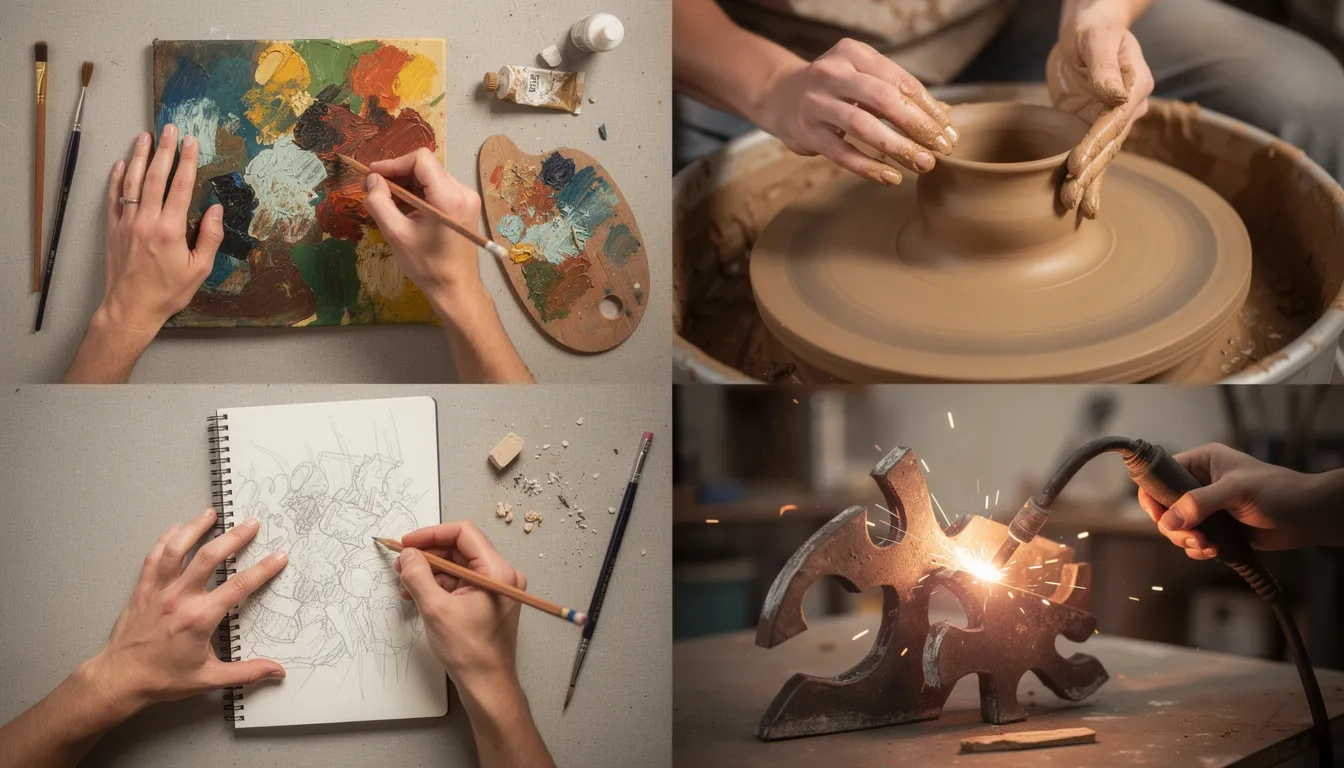
Most art students apply to three to five scholarships. Usually the same familiar ones: school merit awards, a generic creative writing prize, maybe one foundation grant their advisor mentioned in passing. The rest — and there is a lot of rest — goes unclaimed. Scholarships360 lists more than 160 active art scholarships for 2026 alone, ranging from $500 to $55,000. Most students have no idea most of them exist.
This guide covers what's actually worth applying to, how the awards differ structurally, and what separates applications that win from ones that don't.
Why Art Scholarships Work Differently Than General Aid
Art-specific funding comes from entirely different sources than academic scholarships. Foundations started by working artists, guilds protecting disciplines, corporations recruiting design talent, memorial funds from families honoring a creative loved one — these organizations operate on their own calendars and their own criteria, and they're not in most FAFSA guides.
The structural differences matter. Some awards are pure merit: you submit a portfolio and the committee picks the strongest work. Others are need-based and ask for FAFSA data. Many are both. A few are contest-style awards where the public votes or a panel judges a submitted piece, not your academic record at all.
Because these pools are fragmented, the competition for individual awards is often surprisingly thin. A $5,000 art scholarship with a niche focus (say, watercolor specifically, or instrument-making, or game art for women and minorities) might get 50 applicants where a general merit scholarship of the same size gets 5,000. That math should reshape how you think about where to spend application energy.
The Big Awards: $10,000 and Up
The Google Doodle Scholarship is the most famous art award for students in the country, offering up to $55,000 for college tuition. High school students submit a custom Doodle around an annual theme. One national winner takes the top prize; 54 state-level finalists each win $1,000. What judges consistently reward isn't the most technically polished submission — it's concept clarity. Students who have a sharp, specific idea and execute it simply tend to beat students with technically impressive work that doesn't communicate a clear point.
The WCEJ Thornton Foundation Music & Art Scholarship awards $30,000 to high school and undergraduate students with, as their language puts it, "big aspirations for an artistic career." Vague criteria, yes. In practice, the awards go to students with visible track records — completed projects, community arts involvement, or early professional work. Apply even if you feel underqualified. The applicant pool is smaller than you'd expect for an award this size.
The Virginia Museum of Fine Arts (VMFA) Visual Arts Fellowship is one of the most distinctive awards on this list because it covers both studio artists and art history students. The total fellowship value reaches up to $23,000, with categories for undergraduates and graduates. Deadline: November 4, 2026. If you're going into curatorial work, art history, or museum studies, this is worth building an application around.
The Create-A-Greeting-Card Scholarship Contest, run by The Gallery Collection, awards $10,000. Yes, the name sounds unassuming. But it's open to anyone 14 or older currently enrolled in school and historically draws far fewer applicants than its prize size would suggest. Expected to open in July 2026. Submit original artwork for a holiday or greeting card design — straightforward brief, real money.
Mid-Range Awards Worth Your Time ($3,000–$9,999)
| Scholarship | Amount | Deadline | Best For |
|---|---|---|---|
| Plumbworld Design Scholarship | $7,500 | Nov 30, 2026 | Product/industrial design students |
| John F. & Anna Lee Stacey Fund | $5,000 | Jan 31, 2026 | Students pursuing fine art careers |
| AIGA Worldstudio DxD Scholarships | $2,500–$5,000 | April 2026 | Graphic design, illustration, photography |
| Mary Bowman Arts in Activism Award | Up to $5,000 (4 awards) | Jul 1, 2026 | Visual/performing arts with social focus |
| CBC Spouses Visual Arts Scholarship | $3,000 | Apr 29, 2026 | U.S. citizens in visual/decorative arts |
| ESA Foundation Scholarship | $3,000 | Apr 1, 2026 | Women and minorities in game arts |
The AIGA Worldstudio DxD Scholarships (offered by the American Institute of Graphic Arts) are among the most credible awards in design education. They require a 3.0 GPA, completed FAFSA, a self-portrait, and 5–10 examples of your work. What sets this one apart: the selection panel evaluates how well applicants can articulate a design philosophy, not just showcase aesthetically pleasing work. If you can't explain why your design decisions matter, this application will expose that gap — which is actually useful feedback regardless of the outcome.
The Kress Foundation Interpretive Fellowships are more specialized, targeting museum professionals and advanced students in art history, curatorial studies, and museum education. At $30,000, this is the most significant award available to students on that track. Deadline: April 1, 2026.
The John F. & Anna Lee Stacey Fund has been running since 1931, which makes it one of the oldest fine art scholarships in the country. It awards $5,000 split among two or more recipients pursuing careers in classical fine arts. January 31, 2026 deadline makes it an early-year application.
Niche and Specialty Scholarships: Where the Money Is Thinner
Here's where most art students leave money on the table. Awards targeted at specific disciplines, demographics, or regions see dramatically fewer applications than general awards of equivalent size.
- Christian 'Myles' Pratt Foundation Scholarship ($1,300, deadline September 11, 2026): For BIPOC students specifically in ceramics, animation, or design. The intersection of discipline and demographic focus narrows the field.
- ESA Foundation Scholarship ($3,000, April 1, 2026): Women and minorities pursuing computer and video game arts. This discipline is underrepresented in traditional art scholarship databases, meaning many eligible students never find it.
- Amos Hargrave Memorial Scholarship ($3,963): This one targets violin making and instrument craft specifically. The oddly precise dollar amount (not $4,000 — $3,963) reflects a memorial fund structure. If you're in lutherie or instrument-making programs, this is likely the most targeted award available to you.
- Gold Grant Scholarship Award ($2,000, March 31, 2026): Focused exclusively on watercolor as a medium. If watercolor is your discipline, this is a better use of application time than a general painting award.
- Pamela Branchini Memorial Scholarship ($2,000, November 5, 2026): Fine arts majors only, which already filters out a large chunk of would-be applicants.
The Scholastic Art & Writing Awards (run by the Alliance for Young Artists & Writers) are worth mentioning separately. They award $500–$2,000, primarily to high school students. The monetary value is modest. But Scholastic recognition is a known signal to art school admissions officers — past recipients include Andy Warhol and Truman Capote — and it functions as much as a credential as it does as financial aid.
Building a Competitive Application
Most art scholarship rejections come down to one of three fixable problems: a portfolio that's too broad, an essay that doesn't connect artistic practice to concrete goals, or a deadline that got missed because the student was tracking only fall applications.
Portfolio curation is the single most underrated factor in art scholarship applications. Students almost always over-submit. A 12-piece portfolio covering five different media and three different conceptual directions signals unfocused practice. A 5-piece portfolio showing clear aesthetic development and a point of view wins more awards. When you're applying, read the scholarship's stated criteria and lead with work that speaks to those values — don't send your favorite pieces, send your most relevant ones.
The essay trap for art students: Many write artist statements instead of personal narratives. Scholarship committees aren't gallery curators. They want to know who you are, why art matters to your life specifically, and what you plan to do with the education you're asking them to fund. Concrete answers beat abstract ones every time.
For recommendation letters, specificity is what separates strong references from generic ones. A professor who can describe how your approach to screen-printing changed between sophomore and junior year is far more useful than a department chair who can confirm you're a good student. Give your recommenders the scholarship's criteria and ask them to speak to those points directly.
One more thing: apply to need-based and merit-based awards simultaneously. Many students self-select into one category and ignore the other. A lot of art foundations care about both talent and financial circumstances, so check whether applications allow you to address need even when the scholarship doesn't formally require FAFSA completion.
Your 2026 Art Scholarship Calendar
Treating scholarship applications like a single fall push is the biggest strategic mistake I see. Art awards run year-round.
| Quarter | Key Deadlines |
|---|---|
| Q1 (Jan–Mar) | John F. & Anna Lee Stacey Fund (Jan 31), Gold Grant Scholarship Award (Mar 31) |
| Q2 (Apr–Jun) | ESA Foundation (Apr 1), Kress Foundation (Apr 1), CBC Spouses Visual Arts (Apr 29) |
| Q3 (Jul–Sep) | Mary Bowman Arts in Activism (Jul 1), Create-A-Greeting-Card opens (Jul), Christian 'Myles' Pratt (Sep 11) |
| Q4 (Oct–Dec) | VMFA Fellowship (Nov 4), Pamela Branchini Memorial (Nov 5), Plumbworld Design (Nov 30), Amos Hargrave Memorial (Dec 1) |
Start building your application materials in the late summer before each academic year. A portfolio refresh, an updated artist statement, and three current recommendation contacts put you in position to hit any deadline in any quarter without scrambling.
Bottom Line
- Start by searching for discipline-specific awards, not just general "art scholarships." Watercolor, animation, game design, instrument-making — the more targeted the award, the less competition you're facing.
- Apply year-round. At least half the scholarships worth applying to have deadlines outside the traditional fall window.
- Curate your portfolio for each application. Smaller, focused submissions outperform larger general ones with scholarship committees.
- The largest awards don't always draw the most applicants. The WCEJ Thornton Foundation gives $30,000 and most eligible students have never heard of it.
If you do nothing else: pull up Scholarships360 and Listsofscholarships.com, filter by your specific discipline, and mark every deadline in your calendar for the next 12 months. Then apply to at least eight. Most people apply to three.
Frequently Asked Questions
Do art scholarships require a portfolio?
Not all of them. Some awards, like the AIGA Worldstudio DxD Scholarships and the Virginia Museum of Fine Arts fellowship, do require portfolio submissions with 5–10 examples of work. Others are essay-only or contest-based (like the Google Doodle Scholarship, which asks for a single original piece). Read the requirements carefully before you start gathering materials.
Can graphic design and animation students apply for fine arts scholarships?
Often yes, but not always. Scholarships that specify "visual arts" or "studio arts" typically include graphic design and digital media. Awards focused on "fine arts" more narrowly sometimes exclude commercial design disciplines. Always check the eligibility language. The ESA Foundation Scholarship and the Christian 'Myles' Pratt Foundation award are specifically designed for design and digital media students.
Is it a myth that art scholarships are more competitive than other scholarships?
Largely, yes. The assumption is that thousands of creative students are applying for the same awards. In practice, niche art scholarships — especially those targeting a specific medium, region, or demographic — often see fewer than a few hundred applicants even for awards worth several thousand dollars. The more specific the eligibility criteria, the thinner the competition tends to be.
How early should I start applying for art scholarships?
For Q1 deadlines (January and February), you should have your portfolio and materials ready by November of the prior year. For Q4 deadlines, summer preparation is realistic. In general, plan to spend six to eight weeks building each application — longer if you need new portfolio pieces or a fresh body of work.
What if I don't have a strong GPA — are there art scholarships I can still qualify for?
Yes. Several awards on this list don't require minimum GPA at all, including the Google Doodle Scholarship, the Create-A-Greeting-Card contest, and the WCEJ Thornton Foundation award. Contest-style and portfolio-based scholarships evaluate creative work, not academic records. Need-based awards like the Palette & Purpose Scholarship (2.4 GPA minimum) also set lower academic thresholds than standard merit scholarships.
Are there scholarships specifically for art history students (not studio art)?
Yes, though fewer. The Virginia Museum of Fine Arts Visual Arts Fellowship explicitly includes art history students, and the Kress Foundation Interpretive Fellowships target students going into museum studies, curatorial work, and art history research. These tend to have fewer applicants than studio art awards because many art history students assume the field doesn't have dedicated scholarship support.