Scholarships for Students Who Stutter: Every Opportunity Listed
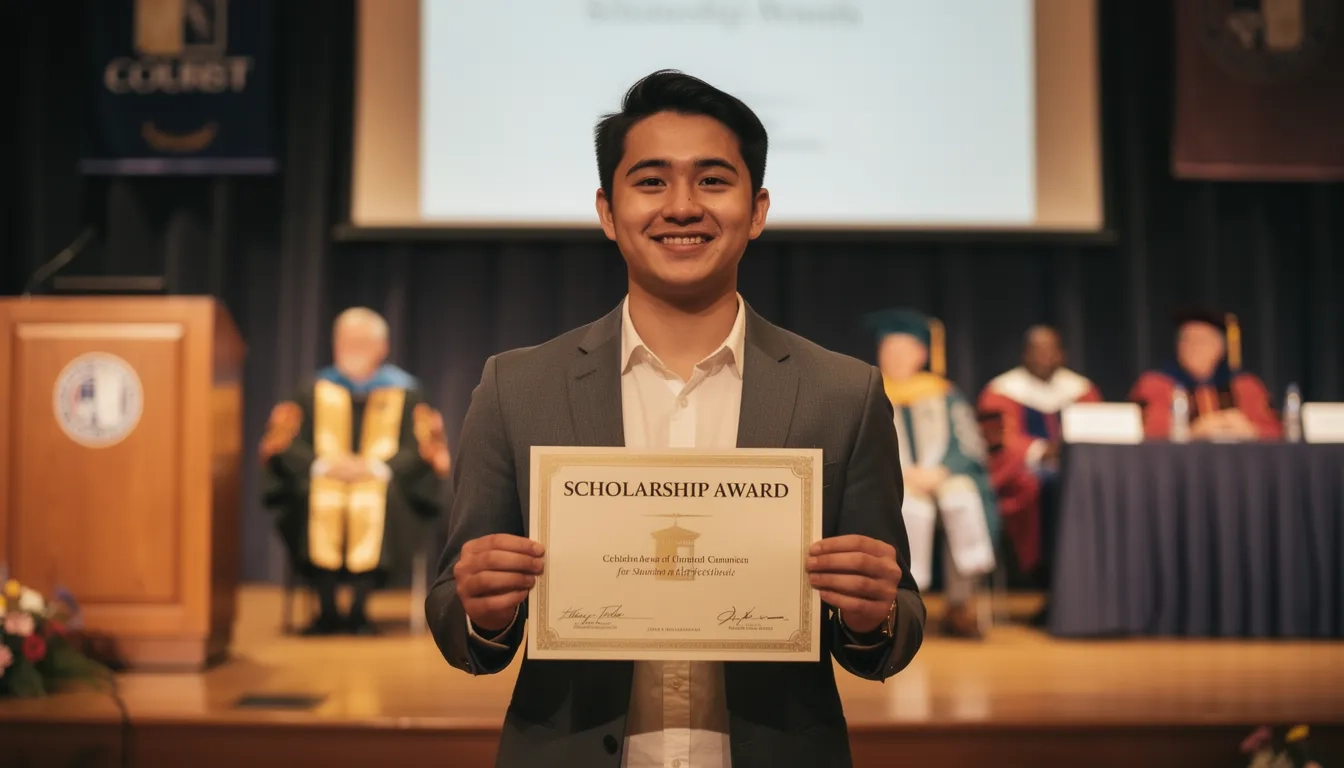
Michael Kidd-Gilchrist spent seven seasons playing in the NBA. He also stutters. When his playing career wound down, he didn't write a memoir or launch a motivational speaking tour. He founded the Change & Impact Scholarship Program and created something nobody in the stuttering community had done before: a full four-year academic scholarship covering tuition, room and board, books, and meal plans for high school seniors who stutter. That's potentially $160,000 over four years. Real, life-changing money.
Most students who could qualify for this and similar opportunities never apply. They don't know these programs exist, or they assume their stutter isn't "severe enough" to merit financial recognition. Both assumptions are wrong. This guide covers every major scholarship specifically for students who stutter, plus the broader disability funding most people never think to pursue.
The NSA Krishnan and Yegneswaran Family College Scholarship
The National Stuttering Association's flagship scholarship for college students is the Krishnan and Yegneswaran Family College Scholarship, abbreviated as KYFCS on the NSA's website at westutter.org.
This is the most established and widely recognized program in the space. The NSA evaluates applicants on academic commitment, leadership potential, and demonstrated connection to the stuttering community. That last criterion does real work in the selection process. A student who has been involved with NSA chapters, stuttering advocacy groups, or peer support networks brings something to an application that grades alone can't.
Applications open annually through westutter.org/kyfcs-application. The NSA also runs a separate conference scholarship through the Liben Family Fund, which provides partial funding for individuals and families to attend the NSA Annual Conference. These are two distinct programs with separate applications. Don't assume applying for one enters you into the other.
One thing most applicants miss: NSA local chapter leaders often know about regional scholarship funds that never appear in a Google search. Connecting with your nearest chapter is worth the time investment for the information access alone.
Change & Impact: The Full Scholarship Almost Nobody Knows About
Michael Kidd-Gilchrist's Change & Impact Scholarship is, by any measure, the most generous program in this category. A full ride covering tuition, room and board, books, and meal plans across four years is rare in any scholarship segment. In the stuttering scholarship world, nothing else comes close.
Eligibility requirements are specific:
- Must be a high school senior at time of application
- Requires a stuttering diagnosis from a healthcare provider
- Needs a recommendation letter from a teacher or guidance counselor
- Must submit a personal statement essay and pass a background check
The "high school senior" requirement is a hard gate. If you've already enrolled in college, this program is no longer accessible. Apply during your senior year or you miss it entirely.
What makes this scholarship worth featuring prominently is the philosophy behind it. Kidd-Gilchrist has spoken publicly about how stuttering shaped his identity and built resilience that most people develop more slowly. The scholarship treats that experience as a credential, not a limitation.
Spero Stuttering: Three Programs Worth Knowing
Spero Stuttering runs multiple distinct funding programs through sperostuttering.org, and they're easy to conflate at a glance.
| Scholarship | Amount | Who It's For |
|---|---|---|
| Connect Scholarship | Up to $150 (5 awarded annually) | CSD students attending professional conferences |
| Genaro Souza Memorial Scholarship | $500 annually | Minority students or those with financial need doing stuttering research |
| STEAR Circle Stipend | $100 upon completion | Graduate students completing the stuttering enrichment program |
The Genaro Souza Memorial Scholarship is the standout here for graduate students. The $500 award applies toward tuition, books, fees, or direct research expenses for projects involving stuttering or cluttering. Applications come as a PDF form through the Spero website.
The Connect Scholarship is smaller but targets a specific situation: getting Communication Sciences and Disorders students to conferences where fluency disorder knowledge gets built. If you're studying to become a speech-language pathologist, this is directly relevant to your career path.
Spero doesn't publish fixed application deadlines. Check sperostuttering.org regularly and apply well before any listed cycles close.
The Arthur M. Blank Center for Stuttering Education
The Arthur M. Blank Center for Stuttering Education (with campuses in Austin and Atlanta) awards more than 75 scholarships annually. That volume suggests a program with genuine scale, not a single prestige award going to one exceptional candidate per year.
Recipients span a wide range: students, families, individuals who stutter, practicing clinicians, researchers, and stuttering organizations worldwide. The breadth of that list is unusual and worth paying attention to. A graduate student doing a capstone project on fluency disorders could qualify alongside a high schooler navigating college applications.
Specific dollar amounts aren't displayed prominently on the website. If you're serious about applying, calling directly at 512-475-6174 (Austin) or 470-693-4226 (Atlanta) gets you faster and more specific information than browsing their FAQ pages will.
American Institute for Stuttering: Funding the Therapy Itself
The American Institute for Stuttering takes a different approach. Their "Freeing Voices, Changing Lives Scholarship Fund" doesn't fund tuition. It funds speech therapy directly, with award amounts determined on a case-by-case basis according to financial need.
The application starts with a short online form. AIS then sends instructions for submitting financial documentation and a personal statement. Their website notes that many applicants are "pleasantly surprised" to receive assistance, which suggests a higher approval rate than applicants expect going in.
This matters practically: intensive stuttering therapy can run well over $3,000 for a short treatment course. Funding the therapy through a scholarship frees up personal money for tuition, housing, and other educational costs. If your college years are when you want to invest in treatment, and there's a strong case for doing so during a period of concentrated personal development, the AIS route deserves serious consideration.
AIS is also registered with multiple state vocational rehabilitation programs across the country, which connects to one of the most underused funding categories available.
Vocational Rehabilitation and Federal Aid: The Overlooked Category
Here's where most students leave money on the table. Stuttering is recognized as a disability under the Americans with Disabilities Act. That one fact opens access to federal and state programs that exist entirely outside the stuttering-specific scholarship world.
State vocational rehabilitation (VR) programs are funded specifically to help people with disabilities access education and employment. They can cover tuition, speech therapy, assistive technology, and related costs. Every state runs one. In New York it's ACCES-VR. In California, the Department of Rehabilitation. In Georgia, GVRA. The entry point is your state's VR agency website; AIS is an active vendor in many state VR systems, which means they can often coordinate services directly.
Stuttering is a documented disability under the ADA. That single fact unlocks federal and state programs that most students who stutter never think to access.
FAFSA is also worth filing regardless of what you assume about eligibility. The maximum Pell Grant for 2025-26 is $7,395, based on financial need rather than disability status specifically. Many students who stutter have never connected their diagnosis to the full range of FAFSA-adjacent options, including disability-related institutional grants some universities award separately.
Broader disability scholarship databases are also fair game. A student who stutters can legitimately apply for scholarships targeting students with disabilities generally, not just ones naming stuttering by condition.
MySpeech Hub: Therapy Sessions as a Scholarship Award
MySpeech Hub offers a model that looks different from every other program on this list. Their stuttering scholarship awards 24 guaranteed speech therapy sessions with a therapist who specializes in fluency disorders. Recipients cover most therapy costs through the scholarship, with a possible small co-pay.
Applications take 15-20 minutes through a Google Form. After submission, their review committee responds within three weeks by email or phone.
This is the right tool if your immediate need is therapy access rather than tuition support. The 24-session structure provides enough continuity to work meaningfully with a specialist. One-off sessions produce limited results; sustained work with a fluency specialist is where the real outcomes happen.
Building a Real Application Strategy
Most students apply to one scholarship and wait. That's the wrong approach. The smart move is treating these programs as parallel tracks with different timelines and eligibility windows.
If you're a high school senior:
- Apply to Change & Impact first — the full scholarship justifies the application investment
- Build NSA chapter involvement now; it strengthens every future application
- File FAFSA regardless of expected family contribution
If you're already in college:
- Apply to the NSA KYFCS scholarship annually
- Contact your state's vocational rehabilitation agency directly
- Call the Arthur M. Blank Center; they're responsive and award 75+ scholarships per year
- Search broader disability scholarship databases where stuttering qualifies
If you're in a graduate CSD program:
- The Genaro Souza Memorial Scholarship is built for your situation
- The STEAR Circle provides both a stipend and professional network access
- Check whether your university's disability services office maintains its own internal fund
The personal statement is where applications are won or lost. A generic essay about "overcoming challenges" won't stand out. The applications that succeed are specific, honest, and show how the applicant's relationship with stuttering connects to something larger than themselves, whether that's advocacy, research goals, or the communities they want to serve.
Bottom Line
- Change & Impact by Michael Kidd-Gilchrist is the most comprehensive scholarship available. High school seniors should prioritize this application above all others.
- The NSA KYFCS Scholarship is the strongest option for current college students; demonstrated community involvement in the stuttering world is a real advantage.
- State vocational rehabilitation programs are the most underused resource in this space. Contact your state VR agency this week if you haven't already.
- FAFSA covers more ground than most students realize. The 2025-26 Pell Grant maximum of $7,395 is real money that requires no extra application beyond the standard form.
- Write your personal statement with specificity. Generic narratives about resilience lose. Specific stories about real experiences, real goals, and real connections to the stuttering community win.
Frequently Asked Questions
Does stuttering qualify as a disability for scholarship and financial aid purposes?
Yes. Stuttering is recognized as a disability under the Americans with Disabilities Act, which means students who stutter can qualify for stuttering-specific scholarships, broader disability scholarships, and state and federal programs like vocational rehabilitation. A documented diagnosis from a speech-language pathologist or physician is typically required as proof.
Is there a full-ride scholarship specifically for students who stutter?
The Change & Impact Scholarship Program, founded by NBA veteran Michael Kidd-Gilchrist, offers a full four-year scholarship covering tuition, room and board, books, and meal plans. It's available only to high school seniors at the time of application, so timing is everything.
Can I apply to multiple stuttering scholarships at the same time?
Yes, and you should. There's no rule against applying to the NSA KYFCS scholarship, the Arthur M. Blank Center, and the Change & Impact program simultaneously if you meet each program's requirements. Treating them as competitors rather than parallel options is one of the most common mistakes applicants make.
Do I need a formal diagnosis to apply for stuttering scholarships?
Most programs require documentation from a healthcare provider such as a licensed speech-language pathologist or physician. The Change & Impact Scholarship specifically lists a formal stuttering diagnosis as an eligibility requirement. A self-identification without professional documentation generally won't satisfy the threshold for formal scholarship applications.
What if I need help paying for speech therapy, not tuition?
Two programs fund therapy directly rather than academic costs: the American Institute for Stuttering's "Freeing Voices, Changing Lives Scholarship Fund" and MySpeech Hub's stuttering scholarship, which covers 24 sessions with a fluency specialist. State vocational rehabilitation programs can also fund therapy as part of an employment-preparation plan.
Are there scholarships for graduate students studying speech-language pathology?
Spero Stuttering offers two programs built for graduate students: the Genaro Souza Memorial Scholarship ($500 for stuttering and cluttering research) and the STEAR Circle stipend ($100 upon completing their professional development program). The American Speech-Language-Hearing Foundation also awards scholarships to graduate students in speech-language pathology, including those focusing on fluency disorders.
Sources
- NSA College Scholarship | National Stuttering Association
- Scholarship Program | Change & Impact Inc.
- Funding Opportunities | Spero Stuttering
- Financial Assistance | American Institute for Stuttering
- Arthur M. Blank Center for Stuttering Education
- Stuttering Scholarship | MySpeech Hub
- Financial Aid for Students With Disabilities | BestColleges