Scholarships for Pre-Med Students 2026: How to Find Free Money
$246,659. That's the average debt medical students graduated with in 2024, according to data compiled by Shemmassian Academic Consulting — and that's before interest compounds through residency. The number is real enough to reshape career decisions: doctors who owe $300,000+ choose higher-paying specialties they didn't plan on, skip global health work they cared about, or delay family milestones for a decade.
But the scholarship landscape for pre-med and medical students is larger and more winnable than most advisors let on. We're not talking about $500 local awards. There are programs offering $90,000 over two years, full-ride service agreements, and renewable $10,000 annual grants. The students who capture them aren't necessarily the ones with the highest GPAs. They're the ones who understood the system early enough to position themselves correctly.
Three Categories of Pre-Med Scholarships (and Which One Fits You)
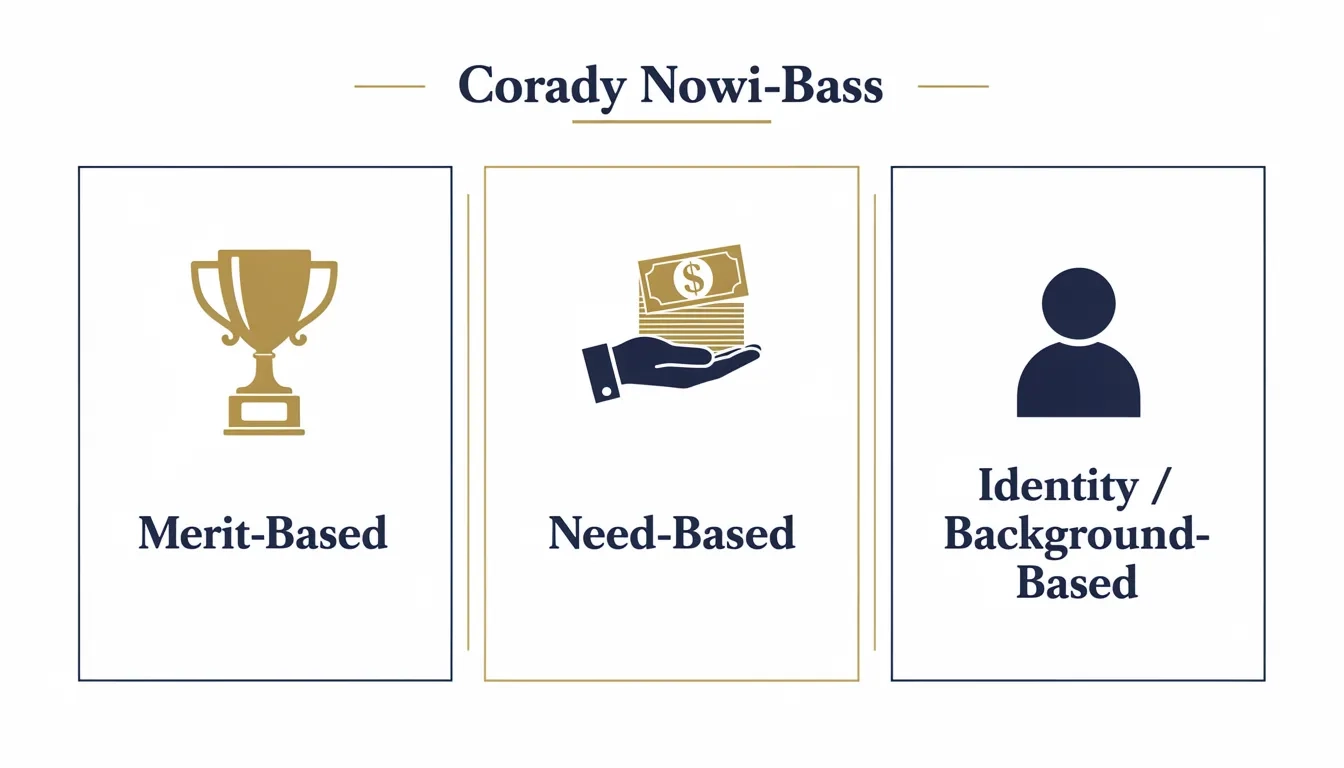
Before you build an application list, it helps to know what you're choosing between. There are three fundamentally different types of awards, and each requires a different strategy.
General merit and need-based scholarships are the most familiar. You compete on academics, essay quality, and sometimes financial need. Awards range from $1,000 to $15,000+. Most require a GPA minimum — usually 3.0 to 3.5. These attract the broadest applicant pools nationally, though local and regional versions often have surprisingly thin competition.
Identity-based scholarships target students from underrepresented groups: racial and ethnic minorities, women in medicine, first-generation college students, LGBTQ+ students, and specific heritage communities. The National Medical Fellowships (NMF) runs multiple programs in this space. When your eligibility fits, the competition pool narrows dramatically — and that changes your odds.
Service-obligation scholarships are the sleeper category most advisors skip. They offer full tuition plus a stipend in exchange for committing to work in underserved areas after graduation. If you're open to that trade, they can eliminate debt entirely. Few pre-med students hear about these until they're already in medical school with $80,000 borrowed.
| Category | Typical Award | Competition Level | Commitment Required? |
|---|---|---|---|
| Merit/Need-Based | $1,000–$15,000 | High nationally | No |
| Identity-Based | $2,000–$10,000 | Lower (targeted pool) | No |
| Service-Obligation | Full tuition + stipend | Selective, structured | Yes (2–4 years) |
Major Scholarships Worth Targeting in 2026
There are reportedly over 1,500 scholarships available to pre-medicine and medical students — but most of your time is better spent on a short list of high-value programs.
The Tylenol Future Care Scholarship is one of the most accessible high-dollar awards for healthcare students. In 2026, it distributes 35 scholarships worth $5,000 to $10,000 each, with a deadline of July 13, 2026. You need to be enrolled in medical, pharmacy, or nursing school with at least one year remaining. The essay asks about your impact in healthcare — concrete service experience helps here more than aspirational language.
The Paul & Daisy Soros Fellowships for New Americans offers $90,000 total over two years. It's available to immigrants or children of non-citizen parents born outside the United States. Deadline: October 30. Highly selective, but for eligible students, no other unrestricted award comes close.
The Dolores Zohrab Liebmann Fund covers full tuition plus an $18,000 annual stipend. It operates through designated institutions and accepts applications in January. Because applications go through specific universities rather than direct submission, thousands of eligible students never hear about it.
The Joseph Collins Foundation awards $15,000 to medical students east of the Mississippi who are in the top half of their class with genuine interest in neurology, psychiatry, or general practice. Deadline: March 1. That geographic and specialty specificity automatically disqualifies a large portion of the national applicant pool — which is exactly what makes it winnable for the right candidate.
Other programs worth researching:
- Physicians of Tomorrow Awards (AMA Foundation): $10,000 for third-year students; requires nomination from your medical school
- Leopold Schepp Foundation: Up to $10,000 for students under 40 with a 3.3+ GPA
- Pisacano Scholars Leadership Program: Up to $28,000 for fourth-year students declaring family medicine
- White Coat Investor Scholarship: ~$5,920 per award, 10 given annually to full-time professional program students
Service-Obligation Programs: The Full-Ride Option
For students open to a few post-graduation constraints, service-obligation programs are among the most powerful debt-reduction tools available.
The NHSC Scholarship Program (National Health Service Corps) covers full tuition and fees, plus a monthly living stipend. In return, recipients commit to at least two years of practice in an HRSA-designated Health Professional Shortage Area. The 2026 application deadline was April 16 at 7:30 p.m. ET. One important note: this program is for students already enrolled in medical, dental, nursing, or PA programs — pre-med undergrads aren't eligible yet. But knowing now means you can apply in your first week of medical school.
The Health Professions Scholarship Program (HPSP), run by the Army, Navy, and Air Force, covers civilian medical school tuition plus fees and a monthly stipend. You commit to military service after residency, typically one year per year of funding. Applications roll on a slot-by-slot basis — the Army recommends starting 12–18 months before you want funding to begin.
The Indian Health Service Scholarship covers full tuition, fees, and a stipend exclusively for American Indian and Alaska Native students. It's probably the least-discussed full-ride program in pre-med circles, and it operates on a service framework similar to NHSC.
The real cost of a service obligation isn't your freedom — it's your specialty flexibility. These programs steer recipients toward primary care and underserved settings. If you're already drawn to competitive specialties or major academic centers, think carefully about that tension before signing.
Scholarships for Underrepresented and Minority Students
The funding available to underrepresented pre-med students is often undersold. These aren't consolation awards. Several are among the most generous programs in the space.
ElevateMeD Scholars awards up to $10,000 per year to Black, Latinx, and Native American medical students, alongside mentorship and community programming. Attrition among underrepresented medical students is frequently tied to isolation rather than academics, so the community component is worth as much as the money.
The AAMC Herbert W. Nickens Medical Student Scholarships give $5,000 each to third-year students who have demonstrated leadership in reducing health disparities. U.S. citizens, permanent residents, and DACA recipients are eligible. Deadline: April 3.
NMF's Diverse Medical Scholars Program (funded by United Health Foundation) awards $7,000 renewable grants to second through fourth year students from underrepresented groups with documented community service hours. Applications open June 29, 2026.
The Brown Medical & Educational Society awards $5,000 to underrepresented minority students with a 2.5+ GPA — a notably lower GPA floor than most national programs. Deadline: April 30.
For LGBTQ+ students, the Point Foundation awards variable amounts to self-identified LGBTQ+ community members enrolled full-time in U.S. institutions. Deadline: January 18.
Heritage-specific programs exist for students of Armenian, Greek, Iranian, Korean, Mexican, and Polish descent, among others. These fly under the radar because they rarely appear on major aggregator platforms — which is precisely why they're worth hunting down.
Building a Scholarship Strategy That Actually Works
The students who win multiple scholarships don't apply to everything. They build a focused packet and deploy it strategically.
Start with a modular personal statement. Write 500–750 words of core narrative, then break it into discrete paragraphs: one on community service, one on financial need, one on leadership, one on future goals. Adapting combinations across applications takes 30 minutes per submission. Writing from scratch takes four hours. That difference is what separates five applications from fifteen.
Time your applications to your stage. If you're still in undergrad, junior year is when you start building materials. The post-acceptance window after medical school admission is often overlooked — several programs accept applications from enrolled students in their first semester. Once in medical school, the richest window for M1/M2 awards is the summer after first year and early second year. Specialty-specific programs (like Pisacano for family medicine) open up late M2.
The most underrated strategy: go local. County medical associations, hospital foundations, and civic organizations fund $1,000–$5,000 awards with applicant pools in the dozens. That's not a typo. A 45-minute application for a local $2,500 award often beats 40 hours on a national competition where thousands of equally qualified applicants apply. Pre-med Catalyst's 2026 guide specifically calls out local awards as the biggest missed opportunity for healthcare students.
Build your scholarship packet now:
- Core personal statement (modular, 500–750 words)
- Updated CV with research, clinical hours, leadership, and service
- Unofficial transcript copy (official copies ready to order)
- Letter of recommendation request templates
- A tracking spreadsheet listing deadline, requirements, award amount, and submission status for each target
Request recommendation letters in September for December deadlines. Ask in November and you'll get a form letter.
Red Flags and Scams Worth Knowing
Not every listed scholarship is real. A few signals that should make you walk away:
- Any application fee. No legitimate scholarship charges you to apply.
- "Guaranteed award" language. Real awards have real selection criteria.
- Requests for SSN or banking info before eligibility screening. This is identity theft infrastructure, not a scholarship.
- No verifiable organizational footprint. If you can't confirm the sponsor exists independently, be skeptical.
The FTC has published specific warnings about scholarship scams targeting college students. When something feels off, search the organization's name plus "scam" before entering any personal data.
Bottom Line
Medical school debt averaging $246,659 is not a law of physics — it's a default outcome for students who don't actively work against it.
- Map your eligibility before targeting national merit awards. Identity-based, geographic, heritage-specific, and specialty-aligned scholarships have narrower applicant pools. Start there.
- Understand service-obligation options before you need them. NHSC and HPSP are the most powerful debt-elimination tools available for students open to primary care or military service. Learn them in undergrad, apply in M1.
- Build one reusable packet. Modular personal statement, current CV, transcripts, letters. Adapt — don't rebuild — for each application.
- Go local. This is the one piece of advice that most students ignore and then regret. Smaller pools genuinely mean better odds.
Start in the fall of junior year. That timing gives you space to shape your narrative, gather materials, and apply without scrambling. Waiting until senior spring means competing with students who spent an extra year preparing.
Frequently Asked Questions
Can undergraduates apply for pre-med scholarships, or are most awards only for medical school students?
Both exist. Platforms like Bold.org and CampusReel list undergraduate pre-med scholarships that don't require medical school enrollment. Others, like the NHSC Scholarship and Tylenol Future Care, require enrollment in an accredited health professions program. Read eligibility criteria carefully before investing time in any application — the distinction between "pre-med undergraduate" and "medical school student" disqualifies applicants from many high-value awards.
Do you need a near-perfect GPA to win a medical school scholarship?
Most competitive scholarships ask for a 3.0 minimum; top awards typically want 3.3 or higher. But GPA is rarely the deciding factor. The Brown Medical & Educational Society accepts applicants with a 2.5 GPA, and many identity-based and service-oriented programs weight community engagement, narrative quality, and demonstrated commitment to underserved populations more heavily than raw academic metrics. A compelling story from a 3.4 student often beats a generic essay from a 3.9.
Is it true that service-obligation scholarships lock you into a specific medical specialty?
In practice, mostly yes. NHSC recipients must practice in HRSA-designated shortage areas, which channels graduates toward primary care. The HPSP military program offers slightly more specialty flexibility depending on branch and competitive residency matching, but military needs can shape your options. If dermatology or orthopedic surgery at a major academic center is the plan, a service-obligation scholarship creates real friction with that path.
How many scholarships should I actually apply to?
Eight to twelve well-matched applications with strong customized materials typically outperforms thirty generic submissions. Committees can tell when an essay was written for a different award and lightly edited. Focus on programs where your demographics, career goals, and background genuinely match the stated criteria — and save the broadest general awards for when your packet is already polished.
What's the biggest myth about medical school scholarships?
That they're too competitive to bother with. The elephant in the room is that most students simply don't apply — especially to local and regional awards — because they assume the competition is impossible. Many scholarship committees struggle to fill their pools every year. The National Space Club Keynote Scholars award ($20,000) and multiple heritage-community scholarships consistently receive fewer applications than their award amounts would suggest. The barrier isn't competition; it's awareness.
When exactly should I start building my pre-med scholarship list?
Spring of junior year in undergrad — roughly 12 to 14 months before most major national deadlines. That window gives you time to request recommendation letters before faculty inboxes fill up, draft and refine a personal statement, and actually research which programs you're eligible for. Scholarships typically announce their cycles three to six months before the deadline, so building your tracking list early means you're not discovering programs the week they close.
Sources
- 40+ Top Medical School Scholarships in 2026 — Shemmassian Academic Consulting
- Scholarships for Medical School: 2026 Guide — PreMed Catalyst
- Top 66 Med School Scholarships in 2026 — Scholarships360
- Apply for an NHSC Scholarship — HRSA/NHSC
- NHSC Scholarship 2026: Deadline, Benefits, and Who Should Apply — ScholarshipsandGrants.us
- Health Professions Scholarship Program (HPSP) — Medicine + the Military