Scholarships That Require Artistic Submissions: A Practical Guide
Some students leave $12,500 sitting on the table because they didn't know the scholarship existed. The Scholastic Art & Writing Awards hands out exactly that amount to Gold Medal Portfolio winners each year, and tens of thousands of high school seniors never enter. Not because their work isn't good enough. Because nobody told them.
Art scholarships that require a creative submission reward what you've actually made, not just your GPA or your ability to write a five-paragraph essay. And they span a much wider range than most people assume: photography contests, original song competitions, duct tape fashion design, greeting card art, wildlife conservation images, ceramic work tied to social activism.
What Counts as an "Artistic Submission"
Visual art is the obvious category. Drawing, painting, printmaking, ceramics, digital illustration, graphic design, photography, sculpture — all of these appear in scholarship guidelines regularly. But performing arts and interdisciplinary work are well-represented too, and students often overlook them.
The Ocean Awareness Contest (run by Bow Seat Ocean Awareness Programs) accepts visual art, creative writing, film, multimedia, performing arts, poetry, and spoken word. The only requirement is that the work addresses environmental themes. That's a genuinely wide net for a competition that awards up to $1,000 in prizes.
A few categories that tend to surprise students:
- Music composition: The John Lennon Award offers $20,000 to original songwriters ages 17–24. Eligible genres span alternative, pop, rock, indie, electronica, R&B, and experimental. This is not a cover performance contest — they want original composition.
- Fashion and product design: Duck Brand's Stuck at Prom Scholarship pays $1,000–$15,000 for prom attire constructed entirely from duct tape. It draws genuine design talent from students who treat it as a real creative challenge rather than a novelty.
- Commercial art: The Create-A-Greeting-Card Scholarship Contest pays $10,000 for the best original greeting card design from any student ages 14 and up, with the top 10 finalists determined by public vote before a panel selects the winner.
- Interior design: The ASID Foundation Legacy Scholarships award $4,000 to college juniors and seniors who submit a portfolio of 8–12 work examples alongside a personal statement and recommendation letter.
The common thread: reviewers want original thinking. Technical execution opens the door; creative voice decides the outcome.
Notable Scholarships With Artistic Submission Requirements
| Scholarship | Award | What to Submit | Who Qualifies |
|---|---|---|---|
| Scholastic Art & Writing Awards | $12,500 (Gold) / $2,000 (Silver) | Portfolio of 6 works + artist statement | High school seniors |
| John Lennon Award | $20,000 | Original song submission | Ages 17–24 |
| AIGA Worldstudio DxD | $2,500–$5,000 | Self-portrait + 5–10 art examples | U.S. college students, 3.0+ GPA, financial need |
| Create-A-Greeting-Card Contest | $10,000 | Original greeting card artwork | Students 14+ |
| Stuck at Prom Scholarship | $1,000–$15,000 | Duct tape prom attire design | High school students |
| ASID Foundation Legacy | $4,000 | Portfolio of 8–12 work examples | College juniors/seniors in interior design |
| Glenn Miller Scholarship | $1,000–$3,000 | Audition CV + two recorded audio tracks | High school seniors and college freshmen |
| Against the Grain Scholarship | $1,000 | Artistic portfolio + essay | ≥25% Asian/Pacific Islander, 3.0+ GPA |
| Mary Bowman Arts in Activism Award | Up to $5,000 | Art in any form tied to social activism | High school seniors and undergrads |
| Greater Than Gatsby Scholarship | $1,000 | 3 photography samples + essay | High school or college students in the arts |
These programs appear on Scholarships360, Bold.org, and program-specific sites. None of them are buried in obscure databases — they just require knowing where to look.
Performing Arts and Music-Specific Opportunities
Performing arts scholarships work differently from visual art ones. Instead of uploading a PDF portfolio, you're sending recorded auditions or attending live audition days at specific institutions.
Case Western Reserve University offers theater scholarships worth either full tuition or $10,000, requiring students to complete a live audition or present a portfolio of theatrical work by February 20. The Educational Theatre Association's Thespian Scholarships tie eligibility to attendance at the International Thespian Festival, which changes the planning significantly — travel logistics become part of the application process.
For music, two tracks exist. School-based scholarships typically require live auditions during a scheduled campus visit. External competitions like the Glenn Miller Scholarship ask for an audition CV with two recorded tracks of contest-level material, enabling remote competition without traveling to any campus.
A few practical notes for audio submissions:
- Record in the best acoustic space you can access. A school practice room typically beats a bedroom recording.
- Match your genre to the scholarship's context. The Glenn Miller award honors the Big Band tradition specifically — understand the aesthetic before submitting.
- For original song competitions like the John Lennon Award, a rough recording of a genuinely surprising idea beats a polished recording of a generic one. Composition matters more than production quality.
Video submissions for dance and theater follow the same logic. A clean 90-second clip with good audio outperforms a rambling five-minute reel shot on an old phone. Clarity first.
What Scholarship Reviewers Actually Look For
California College of the Arts stated it plainly on their admissions blog: a strong portfolio can increase a tuition award. Not just determine whether you receive one. That's the real insight — your creative submission is actively negotiating on your behalf.
Technical skill opens the door, but creative voice determines what's waiting on the other side. Reviewers see technically accurate work from students who seem to be imitating rather than expressing. A painting that demonstrates command of color and light while exploring a specific personal idea stands out far more than a flawless but idea-free still life. Committees want both skill and intent.
A portfolio tells reviewers who you are as an artist. Not just what skills you've practiced.
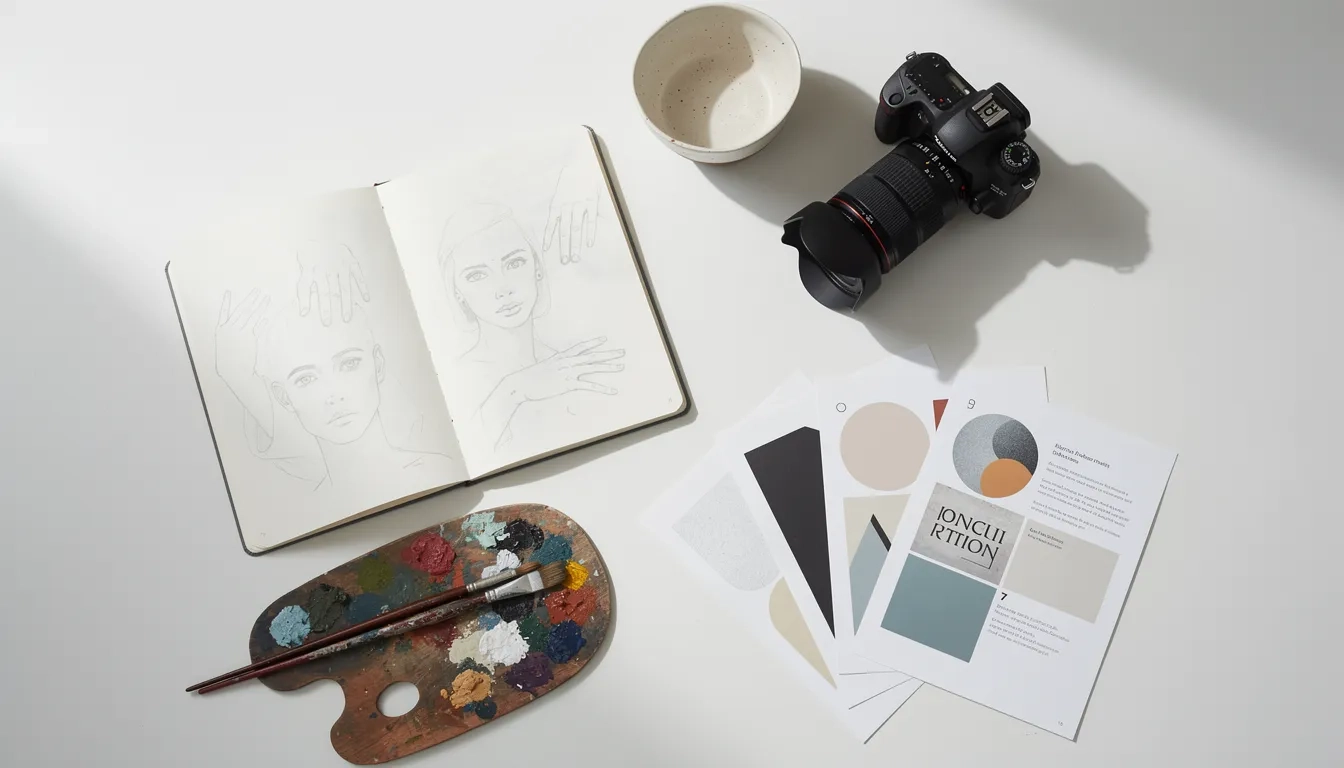
Process work carries more weight than most students realize. Sketchbooks, preliminary studies, and in-progress documentation show how you think, not just what you produce. The Scholastic Art & Writing Awards specifically allow supporting process materials because they reveal intent and development that finished pieces alone can't convey. Including a sketchbook page showing how a finished piece evolved is often more persuasive than adding a seventh finished work (especially if that seventh piece is weaker than the first six).
One tactical point: the first and last pieces in a portfolio carry disproportionate weight. It's an old editor's trick applied to visual sequencing. First impressions set the frame; final impressions are what reviewers remember when they talk about your work. Many experienced applicants front-load with a strong piece, save another strong piece for the final slot, and place experimental or developing work in the middle.
Standard guidance recommends 10 to 20 finished pieces for visual art submissions. Fewer than 10 signals limited output. More than 20 dilutes the impact of individual works.
Building a Scholarship-Ready Portfolio
Most students approach this backwards. They wait until senior year, grab whatever finished pieces survived the school year, and photograph them on a phone the night before a deadline. That approach leaves money on the floor — and it's entirely preventable.
Students who start building and documenting work in spring of 11th grade have time to identify gaps, develop new pieces deliberately, and photograph everything with proper lighting before deadlines arrive. One full semester of lead time changes the quality of what you can submit. It also gives you time to reshoot problematic pieces before the documentation becomes the problem.
Most programs require the same core materials:
- An inventory list with title, medium, dimensions, and completion date for each piece
- An artist statement (typically 100–500 words) naming specific influences and connecting submitted pieces to a larger body of thought
- Digital files in JPEG or PNG format, well-lit, minimum 1,200 pixels on the longest side
One thing that catches applicants off guard: submission platforms vary by program. The School of Visual Arts requires portfolio uploads through SlideRoom, with a December 1 deadline for freshman fall entry. Other programs accept Google Drive folders or direct file uploads. Creating an account, formatting files correctly, and navigating an unfamiliar upload interface can each eat time you won't have the night before a deadline.
For performing arts applicants, the inventory list becomes a performance resume, and the artist statement becomes a personal biography. Same underlying structure, different medium.
Common Mistakes That Sink Strong Applications
Submitting work that ignores the prompt. The Against the Grain Artistic Scholarship asks for work reflecting the experience of going against expectations within the applicant's cultural community. Submitting technically impressive pieces with no connection to that theme is a documented rejection reason. Read what the scholarship is actually asking before selecting your portfolio pieces.
Writing a generic artist statement. "I've always loved art and want to make the world a more beautiful place" tells a reviewer nothing actionable. A strong statement names specific artists who shaped your practice, describes the particular ideas your work explores, and connects submitted pieces to a larger artistic intent. Treat it as persuasive writing, not a formality.
Skipping the eligibility check. The AIGA Worldstudio DxD Scholarships require FAFSA-documented financial need alongside artistic merit. The Against the Grain scholarship requires applicants to be at least 25% Asian or Pacific Islander. The Palette & Purpose Scholarship targets first-generation BIPOC students. Applying without confirming these requirements wastes both your time and the committee's.
Poor documentation photography. Dark, grainy, or crooked images of strong work are a harder sell than clean documentation of average work. Every reviewer sees digital files, not originals. If you don't have a proper lighting setup, check whether your school's art department has equipment you can borrow. Most do.
Bottom Line
The highest-value art scholarships reward the intersection of craft, creative thinking, and preparation. Here's what to actually do:
- Check eligibility before investing time. The Against the Grain and AIGA Worldstudio scholarships have specific demographic and financial requirements. Confirm you qualify before building a portfolio for a program you can't enter.
- Start documenting work in junior year. A running photo archive and draft artist statement take minimal time weekly — and save significant hours when deadlines converge in the fall of senior year.
- Apply across tiers. A well-documented portfolio, a tight artist statement, and clean digital files travel across multiple applications without starting from scratch. Scholastic, AIGA Worldstudio, and the Glenn Miller Scholarship each accept slightly different presentations of overlapping work.
Your portfolio is a negotiation. Schools and scholarship committees use it to decide how much they want you. A strong one doesn't just get you through the door — it can change the number in the offer letter.
Frequently Asked Questions
Do I need professional photography to submit an art portfolio?
Professional photography isn't required, but clean documentation is. Reviewers evaluate digital files, not originals, so a well-lit JPEG at the correct resolution matters more than hiring a photographer. Most school art departments have lighting equipment available for students to borrow — ask before assuming you need to pay for a studio shoot.
Can I submit the same portfolio to multiple scholarships?
Yes, with targeted modifications. Core pieces and documentation transfer easily between programs. You'll typically need to customize the artist statement and select pieces that match each program's specific prompt or theme. A one-size-fits-all submission tends to underperform with programs that have distinct creative requirements — the Against the Grain scholarship and the Ocean Awareness Contest, for instance, both reward work that directly engages a stated theme.
Is it a myth that you need a high GPA for art scholarships?
Partly true. Many programs prioritize artistic merit above all else. The Scholastic Art & Writing Awards, the John Lennon Award, and the Stuck at Prom Scholarship evaluate the work itself rather than transcripts. Others, like the AIGA Worldstudio DxD, require a 3.0 GPA plus FAFSA-documented financial need. Check stated requirements for each program — GPA thresholds range from none at all to 3.0 or higher.
Should my portfolio show a consistent style or a range of techniques?
Show range within a coherent artistic identity. Portfolios with two or more distinct mediums signal versatility to reviewers. But a collection of wildly unrelated pieces with no unifying perspective tends to read as scattered. The goal is demonstrating a clear creative voice and the technical range to express it in more than one way.
What makes a performing arts audition submission stand out?
Clarity and context. A clean 90-second clip with good audio and lighting will outperform a five-minute reel shot on a phone. Pair the recording with a concise artist bio or performance resume that establishes your background. For original music competitions specifically, composition quality matters more than production polish — the John Lennon Award judges are evaluating what you wrote, not whether you had a professional mixing engineer.
Sources
- Portfolio Scholarships – Scholastic Art & Writing Awards
- The 46 Art Scholarships You Need to Know About – PrepScholar
- Scholarships for Artists – MEFA
- A Great Art Portfolio Can Help You Get Better Scholarship Money – California College of the Arts
- Top Art Scholarships – Scholarships360
- Top Art Scholarships with May 2026 Deadlines – Bold.org