Best Study Abroad Programs Under $5,000: Real Programs, Real Costs
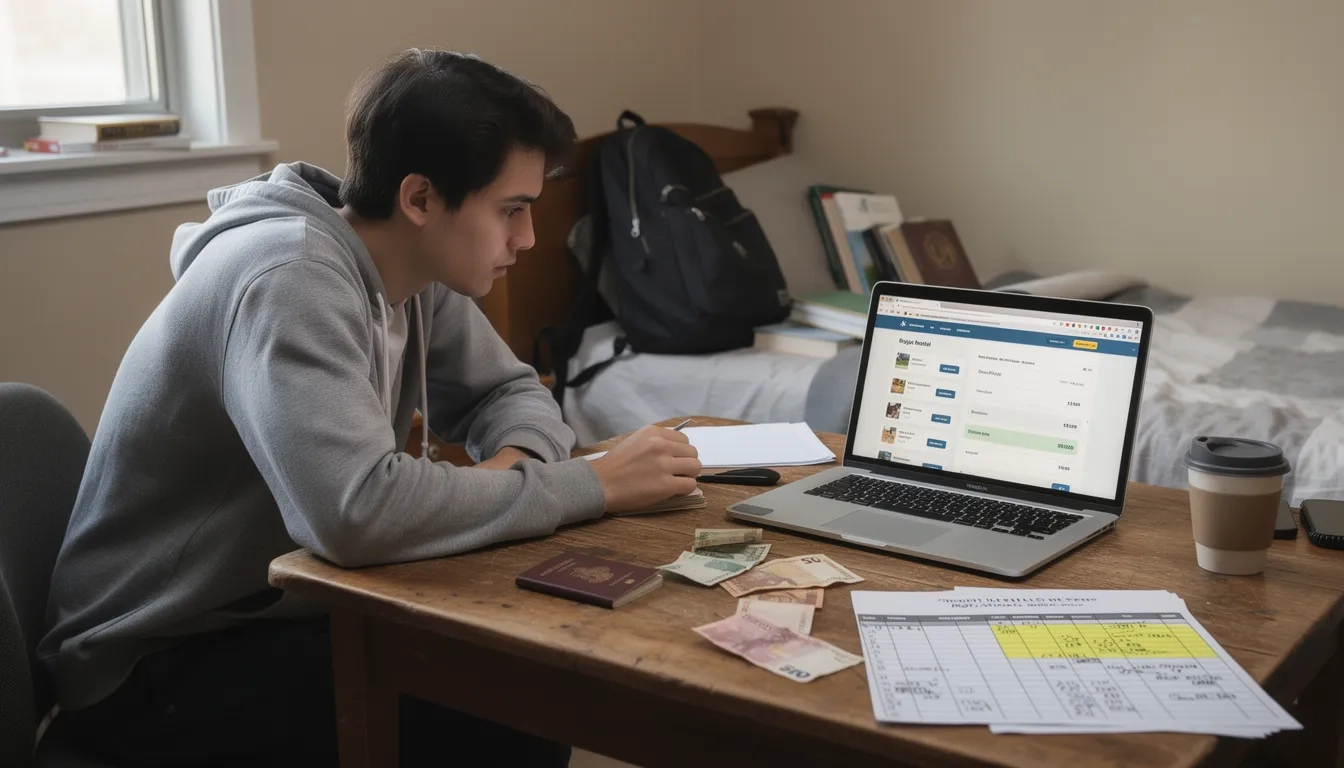
The average American study abroad semester costs somewhere between $12,000 and $25,000 all-in. That number stops most students cold before they even open a program catalog. But programs starting at $2,950 exist — legitimate, credit-bearing experiences at real universities, not sketchy online courses with a passport sticker. Summer intensives in Mexico, language immersion in Taiwan, public health fieldwork in Rome. All under five grand.
This guide covers what's actually available, what the real costs are (the program fee is never the whole story), and how to make the math work even if you don't have savings sitting around.
What "Under $5,000" Really Means
Program fee and total trip cost are two very different numbers. A $4,500 program fee sounds manageable — until you add a $900 round-trip flight, $250 in visa paperwork, and a month of meals that weren't included in that brochure price.
Most programs realistically priced under $5,000 are short-term. Think summer intensives running 4–6 weeks, or January terms running 3 weeks. Full semesters at this price are rare. When they appear, they're almost always in countries with very low costs of living: Mexico, Morocco, parts of Eastern Europe.
CIEE's Summer in Santiago, Dominican Republic runs $3,950 and covers tuition, housing, and some meals. The same organization's semester in San Juan, Puerto Rico runs $9,950. Duration does most of the work here.
The honest framing: under $5,000 is a program fee floor, not a total trip budget. Add $1,000–$2,000 for flights and incidentals, and your real out-of-pocket number before scholarships is closer to $5,500–$7,000.
The Best Programs Under $5,000
These are real, accredited programs with published fees below $5,000. All costs are program fees only; airfare is separate unless noted.
| Program | Provider | Location | Cost | Duration |
|---|---|---|---|---|
| Summer in Mérida | CIEE | Mexico | $2,950 | 4 weeks |
| January in Taipei | CIEE | Taiwan | $3,950 | 3 weeks |
| Summer in Santiago DR | CIEE | Dominican Republic | $3,950 | 4 weeks |
| French Language & History | ISEP | Normandy, France | $3,995 | Summer |
| Summer in Marburg | ISEP | Germany | $3,995 | Summer |
| Public Health in Rome | ISEP | Italy | $3,995 | Summer |
| January in Berlin | CIEE | Germany | $4,350 | 3 weeks |
| Regional Studies & Arabic | AMIDEAST | Morocco | $4,650 | Per session |
| Summer Communications | CIEE | Prague | $4,950 | 4 weeks |
| Science & Engineering | ISEP | Seoul, South Korea | $4,995 | Summer |
CIEE's Mérida program is the cheapest option I found across any major provider at $2,950 for four weeks in Mexico, covering tuition and housing. That's less than one month's rent in most U.S. cities.
ISEP (the International Student Exchange Programs consortium, a non-profit university network) deserves attention. Several of its summer programs sit at exactly $3,995 — covering Italy, France, Germany, and Hong Kong at the same flat rate. That consistency makes it easy to compare without hunting through fine print.
Destinations That Make the Budget Work
Location does more heavy lifting than any discount code.
Latin America dominates the affordable end of the market. Mexico, the Dominican Republic, and Ecuador all have low local costs of living, which lets program providers keep housing affordable without cutting academic corners. CIEE's Mérida program pulls this off best: four weeks in the Yucatán, coursework in Spanish language and culture, housing included.
Morocco is the most underrated option on this list. AMIDEAST — an American non-profit that has operated across the Middle East and North Africa since 1951 — offers a regional studies and Arabic language program at $4,650 per session including room and board. You're getting Arabic instruction and regional politics coursework that most U.S. universities simply don't offer, at a price that beats most Western European alternatives.
Here's a quick breakdown by region:
- Eastern Europe: Prague and Marburg offer a Western Europe feel at significantly lower price points than London or Paris
- East Asia: ISEP's Hong Kong program at $3,995 is a compelling deal for access to one of the world's major financial and cultural centers
- West Africa: ISEP Ghana at $4,495 places students at the University of Ghana in Accra, one of the continent's leading universities
Western Europe heavy-hitters (UK, France's major cities, Italy's tourist centers) and Japan are harder to fit under $5,000 without layering in scholarships. The exceptions exist, but they're short: three-week J-terms, not full semesters.
How Scholarships Actually Change the Math
The students who get study abroad to feel genuinely free aren't the ones with savings. They're the ones who stacked three or four smaller awards on top of each other.
The Gilman Scholarship is the most important grant to know about. Run by the U.S. State Department and named after Congressman Benjamin Gilman, it awards up to $5,000 to Pell Grant recipients studying abroad. The average award is $3,000 for summer programs. It explicitly prioritizes non-traditional destinations like Morocco, Ghana, and Latin America — which happen to be the cheapest places to go anyway. If you qualify, Gilman alone can cover your entire program fee.
CIEE's Global Access Initiative (GAIN) Travel Grant guarantees a travel award to every student receiving a Federal Pell Grant. No separate application required. That's airfare assistance built into the enrollment process.
"Studying abroad on a budget is totally doable — it just takes some planning and research." — CET Academic Programs
One student's scholarship stack (documented by CET) looked like this: $5,000 from the Fund for Education Abroad, $1,000 from a CET program scholarship, $1,000 from the Ling Learning Beyond Borders Scholarship. That's $7,000 in grants before financial aid even entered the picture.
Three scholarships worth applying to:
- Gilman Scholarship — up to $5,000, Pell Grant recipients only, strong preference for non-traditional destinations
- Fund for Education Abroad (FEA) — up to $5,000, broad eligibility, particularly strong for first-generation college students
- AIFS Abroad Grants — up to $2,500 for semester, $1,500 for summer; AIFS awards these to over half of enrolled students
Apply to all three. The total available aid routinely exceeds the program fee.
The Hidden Costs (And How to Plan for Them)
A $3,950 program fee is not a $3,950 trip.
Airfare is the biggest variable. A round-trip to Mexico City from a major U.S. airport runs $350–$600 depending on timing. Seoul or Accra? Budget $900–$1,400. For any program in Asia or West Africa, airfare alone can push a $4,000 program fee into $5,500 total-cost territory.
Visa fees depend on your destination and program length. Morocco and Mexico require little or no formal visa for American citizens staying under 90 days. Taiwan's CIEE program is 3 weeks — no visa needed. South Korea for a summer term is also visa-free. Extending past 90 days changes the calculation fast.
Costs students consistently underestimate:
- Program deposit ($300–$500, typically due before financial aid disburses)
- International health insurance if not included in the program fee ($100–$300 for a summer term)
- Local transportation within the country ($50–$150/month depending on city)
- Mandatory textbooks and course materials ($50–$200)
- A functioning international phone plan ($30–$80/month)
What's included in the program fee matters more than the number itself. A $4,650 program that bundles housing and meals (like AMIDEAST's Morocco offering) regularly beats a $3,950 program where housing is separate and the closest airport costs $1,200 to reach.
Choosing the Right Program
With dozens of providers competing for enrollment, it's easy to pick something that looks good in photos but doesn't transfer credits back to your home university.
Start with your registrar, not Google. Before you fall in love with a destination, ask your university's registrar and study abroad office which providers they have pre-approved agreements with. CIEE and ISEP have formal agreements with the vast majority of U.S. schools. Using a pre-approved provider eliminates the credit transfer headache entirely.
Match the program to your major. A four-week intensive in Mérida studying Spanish makes strong academic sense if you're a language or Latin American studies major. It makes considerably less sense if you're pre-med and need specific science coursework. Check the course list before the destination seduces you.
Students who begin the application process 9–12 months before their intended departure have time to research financial aid transfer policies, apply to multiple scholarships with October and February deadlines, and get program selection approved by an academic advisor. Starting in September for a January program is possible but stressful. Starting in spring of junior year for a senior fall program is the ideal window.
A simple decision framework:
- Confirm credit transfer with your registrar
- Check that required courses are offered in the program
- Build a full cost estimate (fee + flights + visa + personal)
- Subtract expected scholarships and transferable aid
- Apply for all three scholarships before comparing programs — your net cost changes everything
One Honest Take
Budget study abroad programs work best as deliberate academic choices, not gap year adventures that happen to earn credit.
The students who get the most out of a $3,950 program are the ones who picked it because the curriculum matched what they were studying. CIEE's Santiago DR program centers on Dominican and Caribbean history. That's specific, it's academically interesting, and it shows up on a transcript as something meaningful. The students who regret their decision usually picked the destination first and rationalized the academics second.
A four-week intensive is too short to wing it.
Bottom Line
- The cheapest legitimate option is CIEE's Summer in Mérida at $2,950 — tuition and housing included, four weeks in Mexico. That's the floor.
- Stack scholarships before deciding you can't afford it. The Gilman Scholarship ($5,000 for Pell Grant recipients) plus the Fund for Education Abroad ($5,000) can cover the full program fee and then some.
- A $4,650 all-inclusive program in Morocco often costs less than a $3,950 program with no housing and expensive flights.
- Credit transfer confirmation is your first question, not your last. Confirm before paying any deposit.
- If you're a first-generation student or Pell Grant recipient, the Gilman and FEA scholarships were built specifically for you. The Gilman averages $3,000 for summer programs — that's not a lottery, it's a real funding source with real odds.
Frequently Asked Questions
Can I use my FAFSA financial aid for study abroad?
Yes, in most cases. Federal student aid (grants and loans) can apply to credit-bearing study abroad programs approved by your home institution. The catch: the term abroad needs to align with a standard enrollment term (fall, spring) in which you normally receive aid. Work with your financial aid office 6–8 months before departure to ensure the transfer paperwork is completed on time.
Are study abroad programs under $5,000 actually accredited?
The programs listed here run through established non-profit providers — CIEE, ISEP, AMIDEAST — whose credits transfer to hundreds of U.S. universities. "Accreditation" in this context really means your home institution accepts the credits, which depends on their existing agreements with the provider. Verify with your registrar before enrolling; don't assume.
Is it cheaper to go through my own university or an outside provider?
It depends, but outside providers usually win on price and destination variety. University-sponsored programs sometimes integrate financial aid more smoothly, but they tend to cost more and offer fewer location options. Third-party providers like CIEE and ISEP have formal agreements with most U.S. schools that make credit transfer just as clean.
What's the myth about budget study abroad programs?
That you need personal savings to supplement the program cost. Students who complete the full scholarship process — FAFSA, Gilman, Fund for Education Abroad, plus provider-specific grants — often end up paying very little out of pocket. The $2,950 CIEE Mérida program minus a $3,000 Gilman summer award effectively costs less than a flight to California. The money is there; most students just don't apply.
Do these programs include housing?
Most budget programs include housing, but the type varies. CIEE's Mexico and Dominican Republic programs include homestays with local families, which are often more culturally immersive than dorm life. ISEP programs typically place students in university dormitories. Housing type matters for total cost: if a program doesn't include it, add $400–$800/month to your real budget.
How much do flights actually add to the total cost?
For Latin American and European destinations: $350–$700 round-trip from most major U.S. cities, depending on how far in advance you book. For Asia (Seoul, Hong Kong) and West Africa (Accra), expect $800–$1,400. That's why a $3,995 ISEP program in Seoul can actually be pricier than a $4,650 AMIDEAST program in Morocco — the all-in numbers flip when flights enter the picture.