Summer Research Programs for Undergrads: How to Find Them and Get In
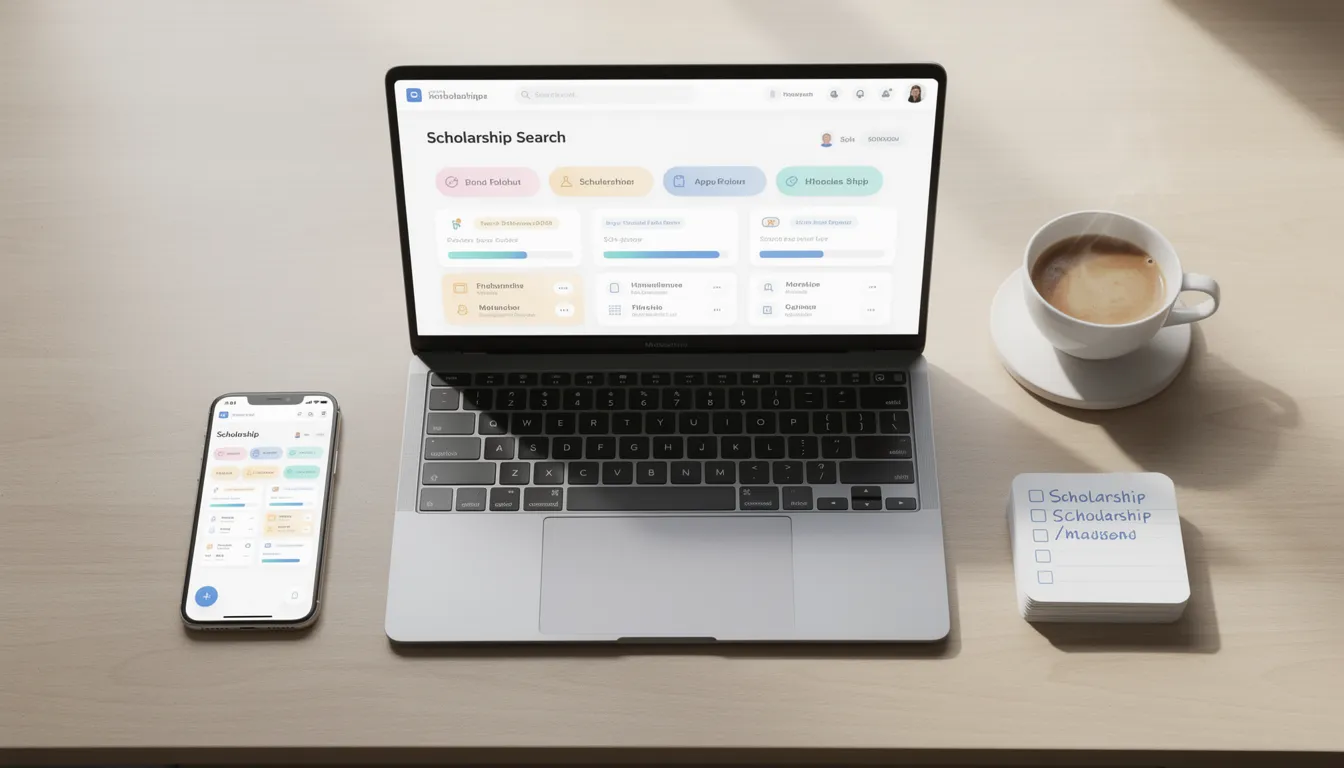
Somewhere around October of sophomore year, the smartest thing you can do for your academic future costs zero dollars, takes about two hours, and gets ignored by most of your classmates. It's building a list of summer research programs and setting application reminders. By February, the window for many of the best programs closes. If you find out about them in March, you've already missed your shot.
Summer research programs are structured 8–12 week experiences where you join a research lab, work on a real project under faculty mentorship, and get paid to do it. Not all of them are at famous universities. Not all of them require a 3.9 GPA. And despite what your pre-med classmates might say, you do not need prior research experience to land one.
Why These Programs Matter More Than a Corporate Internship
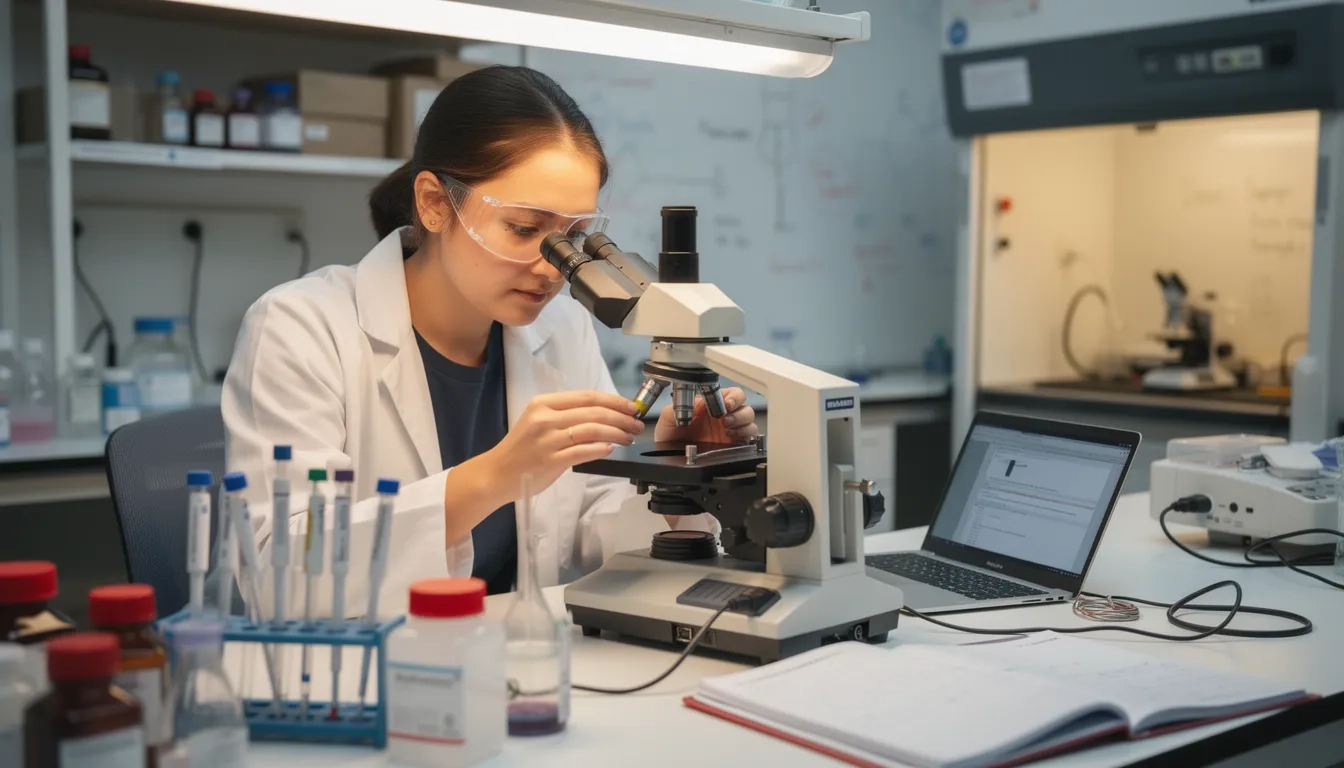
A summer research program is not a corporate internship. You're not doing data entry, sitting in on weekly syncs, or rotating through departments. You're generating original results, however small, on a question that hasn't been answered yet.
This distinction matters enormously for graduate school applications. PhD admissions committees (and increasingly, medical school committees) treat genuine research experience as table stakes. A letter from a faculty mentor who watched you design experiments, troubleshoot methods, and present findings carries weight that a manager's generic letter from a finance internship simply doesn't.
Even if you decide research isn't for you, that summer clarifies the decision. Knowing what you don't want at 20 is a genuine gift.
The Core Programs: A Field Guide
The range of undergraduate research funding is broader than most students realize. Here's how it breaks down.
NSF REU Sites are the most common entry point. The National Science Foundation funds roughly $80 million per year across hundreds of sites at research universities, each hosting 8–10 students for a summer. Topics span physics, biology, computer science, chemistry, engineering, and social sciences. Students typically receive a stipend of $5,400–$7,000, plus on-campus housing and travel reimbursement. You apply to individual sites directly, not to NSF itself.
The Amgen Scholars Program is the one your professors probably have on their radar. Amgen funds positions at Caltech, Columbia, UC Berkeley, Johns Hopkins, Howard University, and about a dozen other institutions. Columbia's program pays a $5,500 stipend (with $1,000 held until submission of a final research article, which is an interesting incentive structure). Berkeley scholars receive $5,000 plus meals and housing. These programs skew competitive and life-sciences-focused.
The DOE SULI Program (Science Undergraduate Laboratory Internship) places students in one of 16 national laboratories run by the Department of Energy, from Argonne to Lawrence Berkeley to Oak Ridge. If you want to work on nuclear physics, climate modeling, or particle accelerator science, SULI is the most direct path.
Beyond these flagship programs, pathwaystoscience.org indexes over 600 distinct opportunities across disciplines. Most students have no idea this database exists.
| Program | Stipend Range | Duration | Citizenship Requirement |
|---|---|---|---|
| NSF REU | $5,400–$7,000 | 9–10 weeks | US citizens/PR only |
| Amgen Scholars | $4,200–$5,500 | ~10 weeks | Varies by institution |
| DOE SULI | ~$600/week | 10–16 weeks | US citizens/PR only |
| altREU (online) | Varies | 10 weeks | International OK |
International students face the harshest restrictions. NSF REU programs are legally limited to US citizens and permanent residents. The altREU program (fully virtual) is one of the few that explicitly accepts international applicants regardless of immigration status.
The Application Window Is Earlier Than You Think
This is where most students stumble. The conventional wisdom is "apply in spring," but by spring, many programs have already closed.
The real timeline:
- October–November: Start building your list. Programs open applications and post deadlines.
- December–January: Most competitive programs close in this window. Carnegie Mellon's REUSE program (focused on software engineering research) closes February 2. NSF's DREU computing program closes January 31.
- February–March: Second tier of deadlines. Many REU sites stay open through March 31.
- April: Stragglers and alternatives. The altREU deadline runs to April 26.
Apply to 10–15 programs, minimum. Not because you're uncompetitive, but because acceptance rates at individual sites can run below 5%. Volume isn't a backup plan — it's the strategy.
If you're a freshman who found this in September, you have a real shot at building a strong list before the first wave of deadlines. If you're reading this in April as a junior, there are still April-deadline programs and late-opening institutional fellowships at your own university worth pursuing.
What Actually Gets You In
Here's where I'll be direct: GPA matters less than most students assume. Programs set a floor around 2.8–3.0. Past that floor, your personal statement and letters of recommendation carry more weight than any single number on your transcript.
The personal statement is not the place to describe how passionate you are about science. Everyone says that. Tell the reader what specific question keeps you up at night. If it's how CRISPR off-target effects complicate therapeutic editing, say exactly that. If it's why mathematical models of disease spread consistently fail in rural populations, say that. Specificity is the whole game.
Letters of recommendation function differently here than they do for college admissions. A letter from a faculty member who supervised even one semester of coursework research or an independent study is far more powerful than one from a professor who only knows you from lecture. If you don't have that yet, cold-emailing a professor at your own institution to ask about getting involved in their lab is worth doing starting sophomore fall — getting your foot in the door during the school year is often what makes the REU application competitive.
Two common mistakes:
- Applying only to brand-name institutions. A well-funded REU at the University of New Mexico doing serious climate modeling is more valuable than a vague placement at a prestigious university where you're largely unsupervised.
- Writing a broad personal statement. One paragraph of focused, concrete research interest beats three paragraphs of generalized enthusiasm every single time.
The 2025–2026 Funding Picture
Something worth knowing before you plan your applications: NSF began downsizing its REU program in 2025. Multiple individual REU sites posted notices that their summer 2025 programs were canceled due to federal budget uncertainties. The scale of the impact is significant for a program that has historically distributed $80 million per year to thousands of students at research-intensive universities.
What this means practically: verify program status before investing time in an application. The NSF portal at etap.nsf.gov lists active sites. Some programs that ran in 2024 may not have 2026 editions.
Non-NSF alternatives like Amgen Scholars, DOE SULI, and institutional fellowships funded through private endowments may be more stable in the near term. Spreading your applications across federal and non-federal programs is smart in any year, but especially right now.
What the Summer Actually Looks Like
You show up, probably to a campus you've never visited, meet 8–10 other undergrads from around the country, and get introduced to a PI (principal investigator) and a graduate student or postdoc who'll be your day-to-day mentor.
The first week is disorienting. You're learning protocols, reading papers you only partially understand, and figuring out which coffee machine requires a key card.
By week three, something shifts. You have a protocol that's yours, a question that's yours. You start caring about results in a way that never happens when you're doing a problem set.
The cohort experience is underrated. You're surrounded by students who are as curious and driven as you are, many of whom you'll stay in contact with through grad school and beyond. The networking happens naturally, without anyone running a forced icebreaker about it.
Most programs end with a poster session or a short research presentation. Presenting your own work to faculty and visiting researchers is genuinely useful practice for the rest of your academic career.
After the Summer: Making It Count
The experience only pays dividends if you follow through on the back end.
- Email your PI and mentor within a week of leaving. Keep it specific — mention a result, a technique you learned, or a conversation that changed your thinking.
- Ask your mentor whether they'd be willing to serve as a reference for graduate school, medical school, or future fellowships. Ask now, while the work is fresh in their mind.
- If your project produced publishable results, ask about authorship directly. It doesn't always happen, but even a junior author credit on a single paper changes the trajectory of a PhD application.
- Present the work at your home institution's undergraduate research symposium. It signals sustained engagement, not a one-time summer checkbox.
Students who get the most from these programs are the ones who treat the summer as the beginning of a longer relationship with a research community, not a credential to collect and move on from.
Bottom Line
- Start looking in October of your sophomore or junior year. The best deadlines fall in December and January, not March.
- Apply to at least 10–15 programs. Spread across NSF REU sites, Amgen Scholars, DOE SULI, and your own institution's internal programs.
- Write a specific personal statement. One real research question beats three paragraphs of generalized enthusiasm.
- Verify 2026 program status before applying. NSF budget cuts affected multiple REU sites in 2025, and some programs may not be running.
- The summer itself is worth far more than the line it adds to your CV. The students who work hardest to get in tend to walk away with a much clearer sense of what they want to do next.
Frequently Asked Questions
Do I need prior research experience to apply to an NSF REU?
No. Many REU sites and programs like Carnegie Mellon's REUSE explicitly state they welcome students with no prior research background. What programs look for is focused curiosity and the ability to write specifically about why a research question matters to you — not a list of lab techniques you already know.
When is too early to apply?
Technically, freshmen can apply to some programs. CMU's Robotics Institute Summer Scholars and the NSF DREU computing program both accept first-year students. Starting your search in sophomore fall gives you the best combination of eligibility and academic preparation, but there's no penalty for trying earlier.
Is the Amgen Scholars Program only for biology majors?
Not strictly, but it has a strong life sciences focus. Amgen funds programs at about 15 US universities, and the research projects center on biology, biochemistry, and related fields. If your interests are primarily in physics, engineering, or computing, NSF REU sites or DOE SULI are better fits for your application.
Can international students participate in NSF REU programs?
No. NSF REU funding requires US citizenship or permanent resident status by federal law. International students should look at the altREU (fully online, no citizenship requirement), institutional programs at their own university, or private foundation programs that don't carry citizenship restrictions.
How competitive are these programs, really?
Acceptance rates at prominent sites can fall below 3% when 300+ students compete for 8–10 spots. This is why applying to 10–15 programs is standard advice, not an exaggeration. Less prominent REU sites at regional universities often have better odds and equally rigorous science — and the mentorship can actually be more hands-on.
What's the difference between an REU and working in a lab at my own university?
An REU is an away program at another institution with a formal stipend, housing, and a defined 9–10 week structure. On-campus research during the year is often unpaid or hourly, less formally structured, and easier to access. Both matter. REUs tend to carry more weight in graduate school applications because of the competitive selection process and the signal that you adapted to a new research environment on your own.
Sources
- REU Finder - Resources For STEM Undergrads
- REU Finder - Programs That Accept First-Year Students
- Pathways to Science - Undergraduate Research Programs
- Amgen Scholars US Program
- Amgen Scholars Program - Columbia Biological Sciences
- NSF Downsizes Summer Research Program for Undergraduates - Science/AAAS