Top Companies Hiring New College Graduates in 2026
The class of 2026 is graduating into a job market that's meaningfully better than what the classes of 2024 and 2025 faced. NACE's Spring 2026 Job Outlook report projects a 5.6% increase in new college graduate hiring — a real shift after two years of flat-to-declining entry-level offers. If you're graduating this spring or summer, that number matters. But it doesn't tell you where to actually send your resume.
Which companies have real programs, real mentorship, and real upward mobility for someone starting fresh? That's what this breakdown covers.
What the Numbers Say About 2026 Hiring
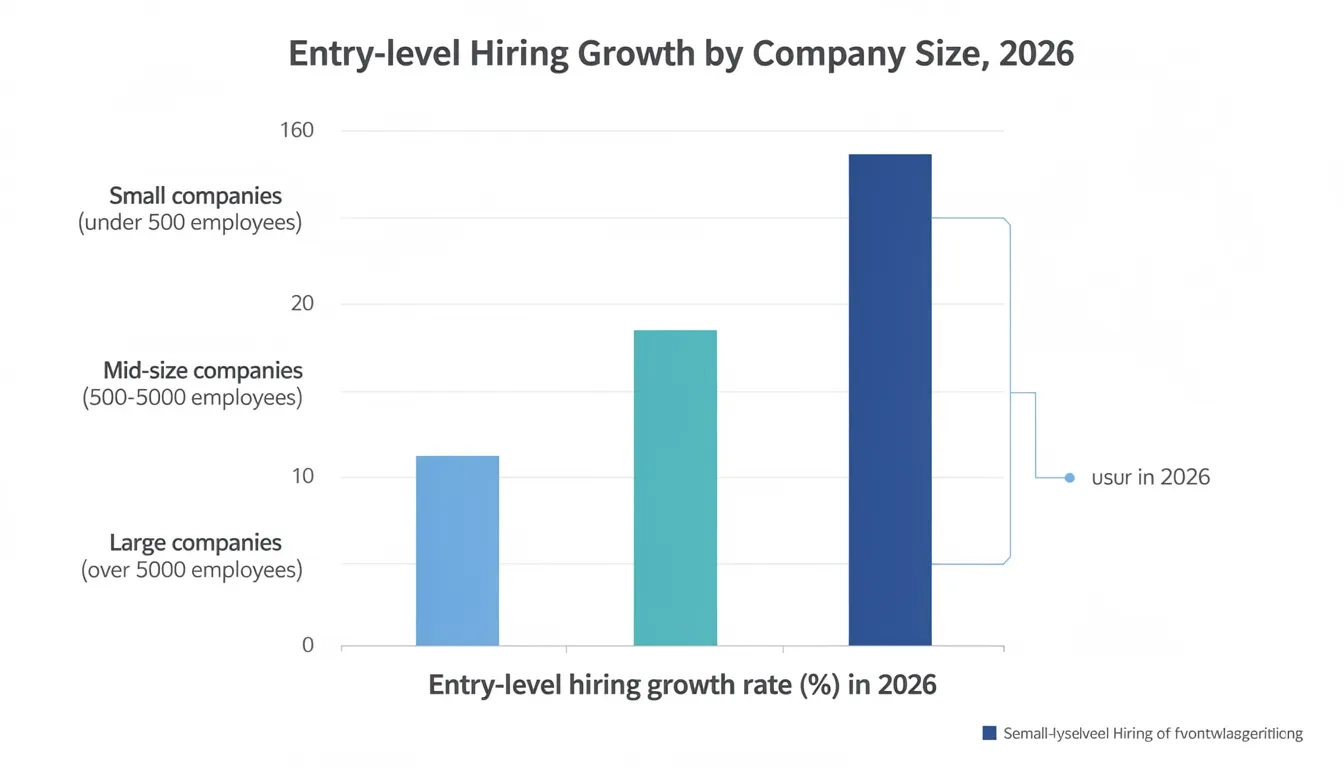
The headline 5.6% increase understates something important. The growth is concentrated at large employers. Companies with more than 5,000 employees are increasing their entry-level headcount by 8.7% this year, while smaller firms remain mostly flat. If you're targeting name-brand or enterprise-scale employers, the market genuinely shifted in your favor.
NACE's data also shows that 37% of full-time graduate hiring happens in Q2 — April, May, and June. That's a tighter window than most students expect.
A few other data points worth keeping in mind:
- 56% of employers plan to offer signing bonuses to Class of 2026 hires
- 50% of entry-level roles are hybrid; 43% are fully in-person
- Only 42% of employers now use GPA as a primary screening filter, down sharply from 73% in previous years
- Employers expect to hire 3.9% more interns in 2026 versus 2025
That GPA shift is significant. A 3.1 no longer disqualifies you at most companies the way it would have a decade ago.
"Company growth and commitment to succession planning are the primary reasons employers cited for their increased hiring." — NACE 2026 Job Outlook Spring Update
Top Companies Hiring New Graduates in 2026
These aren't just companies with open job listings. They're organizations with structured new-grad programs — rotational tracks, mentorship, cohort-style onboarding — built specifically for people starting with zero professional experience.
| Company | Industry | Program Type | Known For |
|---|---|---|---|
| Capital One | Finance/Tech | 2-year rotational | Tech + business blended roles |
| Accenture | Consulting | Analyst program | Scale — hires thousands annually |
| Oracle | Tech | Engineering rotational | Cloud infrastructure depth |
| Chevron | Energy | Leadership development | Strong compensation packages |
| Optum (UnitedHealth) | Healthcare/Tech | Rotational + LDP | Healthcare data and analytics |
| Netflix | Entertainment/Tech | New Grad Program | Mentorship + technical education |
| Liberty Mutual | Insurance | Internship conversion | Mentoring culture, multiple tracks |
| John Deere | Manufacturing/Tech | Engineering program | Ag tech and hardware roles |
| Deloitte | Consulting | Analyst training | Big 4 prestige plus client exposure |
| IMC Trading | Finance/Tech | Quant/dev tracks | Tight cohorts, competitive comp |
| Atlassian | Tech | New Grad hiring | Remote-friendly, product exposure |
| Arrive Logistics | Logistics | Entry-level sales | 80% of annual hires are recent grads |
That last entry deserves a pause. Arrive Logistics has built its entire hiring model around campus talent — 80% of its hires year over year come straight from college. If you want somewhere that genuinely treats you as a core employee rather than a filler until someone "experienced" shows up, that setup is rare.
Industries Leading the Charge
Not every sector is growing equally. Finance, healthcare tech, and construction & real estate are showing the strongest hiring sentiment for entry-level roles this year.
Finance has a 32% Net Employment Outlook — one of the highest across all sectors. Banks, asset managers, trading firms, and insurance companies are competing hard for analytical and technical talent from campus. IMC Trading, American Express, and New York Life all have active new-grad pipelines.
Health and social services saw a 5-point improvement in hiring sentiment year-over-year. The driver isn't just traditional clinical roles. Companies like Optum are hiring data analysts, product managers, and software engineers into healthcare contexts — jobs that look far more like tech positions than hospital work.
Mid-market tech is also worth targeting. The big hyperscalers — Google, Meta, Amazon — have been unpredictable on new grad headcount since the 2022 correction. Google reportedly employs more than 117,000 alumni tracked across LinkedIn, which signals enormous long-term absorption of college talent. But getting into Google's new grad program is competitive and their class sizes fluctuate with each quarterly earnings cycle. Companies in the $500M–$5B revenue range that are actively building AI-integrated products — think Dynatrace, Celonis, Samsara — are growing their early-career pipelines more steadily.
What These Companies Actually Want in 2026
Here's something that might feel counterintuitive: 61% of employers report they are not replacing entry-level roles with AI in 2026. The fear that bots will eat all the junior jobs hasn't materialized at scale. But AI is absolutely reshaping what those roles look like.
Employers aren't just asking "can you code?" or "can you write?" They're asking whether you can work alongside AI tools, evaluate their outputs, and know when to trust them. LinkedIn's Efrem Bycer summarized what he's hearing from hiring managers: employers seek candidates who can "understand how to use the technology and incorporate it into workflows."
The skills-based hiring shift is real. 70% of employers now use skills-based hiring criteria, up from 65% last year, which means demonstrated work — projects, portfolios, internships — carries more weight than your GPA or alma mater at most companies.
What employers say they're screening for:
- Problem-solving demonstrated through concrete examples (behavioral interviews with specific, situation-based stories)
- AI tool proficiency — prompt crafting, output auditing, workflow integration
- Internship or co-op experience, particularly U.S.-based programs
- Communication and adaptability for hybrid environments
The most common mistake: candidates show up able to describe what they studied but not what they built or solved. Employers have heard "I learned Python in my data science class" thousands of times. They want to hear "I built a churn prediction model for my university's retention office using three semesters of enrollment data."
How to Stand Out in a Recovering (But Still Crowded) Market
The market improving doesn't mean competition is light. Veris Insights research found that 81% of recruiting teams cite application volume as a major challenge in identifying qualified candidates. You're competing against a flood of applicants — many with AI-polished resumes that look nearly identical.
Two things genuinely differentiate candidates right now.
Targeted company research. Most firms recruit from roughly 30 universities out of 4,000. If your school isn't on a company's core list, you're going through a different, harder funnel — one that requires direct networking to crack. Find alumni at target companies on LinkedIn. Reach out with a specific question that shows you've actually read something they've worked on. Cold applications from non-target schools rarely move without that human bridge.
Demonstrable AI skills. Two-thirds of students are using AI during job applications, according to Veris Insights. Companies know this, and 62% of recruiting teams still lack fraud detection measures, but that's changing fast. The candidates who stand out are those who can talk about how they use AI in real work — not just that they use ChatGPT to polish cover letters.
And don't leave the signing bonus on the table. Nearly 56% of employers plan to offer them, but most won't volunteer the information. If you receive an offer with no bonus, it's worth asking directly — especially if you have a competing offer or a tight decision timeline.
Timing: When to Apply
The spring hiring surge is real, and the window is narrow. Here's a rough timeline for understanding when different industries move:
- August–October: Consulting, investment banking, and trading firms open full-time recruiting. Early — almost absurdly so — but standard practice for those industries.
- November–January: Major tech company pipelines launch. Google, Amazon, Microsoft, Oracle, and Atlassian run their main new-grad funnels during this stretch.
- February–April: Second wave — mid-market companies, healthcare employers, insurance, and logistics. This is when most manufacturing and non-tech firms post positions.
- April–June: Peak offer season. Signing deadlines, negotiation windows, and final internship conversions all cluster here. Most formal offers get extended and accepted in this stretch.
If you're reading this in late spring 2026 and haven't started, you're not too late for the second and third wave. But act now, not "soon."
One underappreciated fact: internship-to-full-time conversion rates remain high at most of the companies on this list. Capital One, Liberty Mutual, and Arrive Logistics all run conversion-heavy programs. Getting into an internship pipeline a year before graduation is often the most reliable path to a full-time offer — more reliable than cold-applying after the diploma arrives.
Companies Worth Watching That Aren't Household Names
The obvious names get most of the attention. Some of the best new-grad experiences are at companies most people haven't heard of.
Epsilon offers eight weeks of paid skills training before new hires begin their actual roles. That's almost unheard of outside consulting firms, and it means you're not thrown into production work on day one.
Samsara builds connected operations software for physical industries — fleets, logistics, construction — and has been quietly building an engineering new-grad program with strong compensation and real technical depth.
Toast hires across sales, support, and software engineering, with commission upside for sales roles that's meaningful for new grads willing to put in the work. They've been expanding aggressively into smaller restaurant markets, so hiring is active outside major metros.
DraftKings recruits into data science, engineering, and product with a culture that skews toward fast ownership. The company grows quickly and promotes from within, which makes early tenure genuinely count.
My honest take: for most graduates, a mid-market company with a real mentorship culture will teach you more in year one than a name-brand employer where you're one of 1,200 new hires in a cohort. The logo matters far less than what you actually get to do every day.
Bottom Line
- Apply now if you haven't started. Spring 2026 is peak hiring season — 37% of full-time offers go out in Q2. Each passing week narrows the field.
- Target large employers first for best odds. Companies with 5,000+ employees are growing entry-level headcount by 8.7% this year. That's where the volume is.
- Build a story, not just a resume. With 70% of employers using skills-based hiring, your ability to describe what you built and how you solved real problems will carry more weight than your GPA.
- Don't overlook mid-market. Companies like Epsilon, Samsara, Toast, and DraftKings offer faster learning curves and more visible career growth than you'll find buried inside giant employers.
- Ask about the signing bonus. 56% of employers plan to offer them — but most won't bring it up first.
Frequently Asked Questions
Which companies hire the most new college graduates each year?
Amazon and Google consistently rank among the largest absorbers of college talent — Google reportedly employs more than 117,000 LinkedIn-tracked alumni across its workforce. But raw headcount doesn't mean easiest to break into. Arrive Logistics, where 80% of annual hires come directly from campus, has a higher acceptance rate for candidates who target it specifically and understand the role.
Is it too late to find a job if I'm graduating in May or June 2026?
No. NACE's Spring 2026 update shows 37% of full-time hiring happens between April and June. Many mid-market and second-wave companies extend offers through the summer. Healthcare, logistics, insurance, and manufacturing firms often hire on rolling timelines that stretch into August and September.
Do I still need a high GPA to get hired at top companies in 2026?
Much less than you'd think. Only 42% of employers now use GPA as a primary screening criterion, down from 73% in previous years. Skills-based hiring dominates most pipelines. The exception: some investment banks, hedge funds, and elite consulting firms still apply GPA filters early in their process, so know your target company's specific approach before assuming.
What skills do employers most want from 2026 graduates?
AI tool proficiency is the clearest emerging differentiator — specifically the ability to work with, evaluate, and apply AI outputs in real workflows. Beyond that, employers consistently prioritize problem-solving ability shown through concrete examples, communication skills, and hands-on internship or project experience. Adaptability comes up in nearly every employer survey published this year.
Are entry-level jobs actually being replaced by AI?
Not at the scale the headlines suggest. 61% of employers explicitly report they are not replacing entry-level roles with AI in 2026. What's changing is the job's composition — more output review, more tool management, less manual data processing. The risk isn't your role disappearing; it's falling behind peers who are actively building AI competence into their daily work.
Should I negotiate a signing bonus as a new graduate?
Yes — and most graduates don't bother asking. Nearly 56% of employers plan to offer signing bonuses to Class of 2026 hires, but many companies won't volunteer the information upfront. If you receive an offer without a signing bonus mentioned, it's completely reasonable to ask, especially if you have a competing offer or a timeline that creates leverage.
Sources
- Outlook Brightens for College Class of 2026 Entry-Level Hiring — NACE
- 40 Companies Hiring New Grads — Built In
- The Key Trends Defining Early Career Recruiting in 2026 — Veris Insights
- 10 Signs the Early Career Job Market Is Heating Up in May 2026 — College Recruiter
- Best Entry-Level Jobs 2026, Data Suggests — LiveNOW from FOX
- Best Companies Hiring Students, Interns & New Grads — Gorick Ng