Transportation Careers for Students: Where to Start in 2026
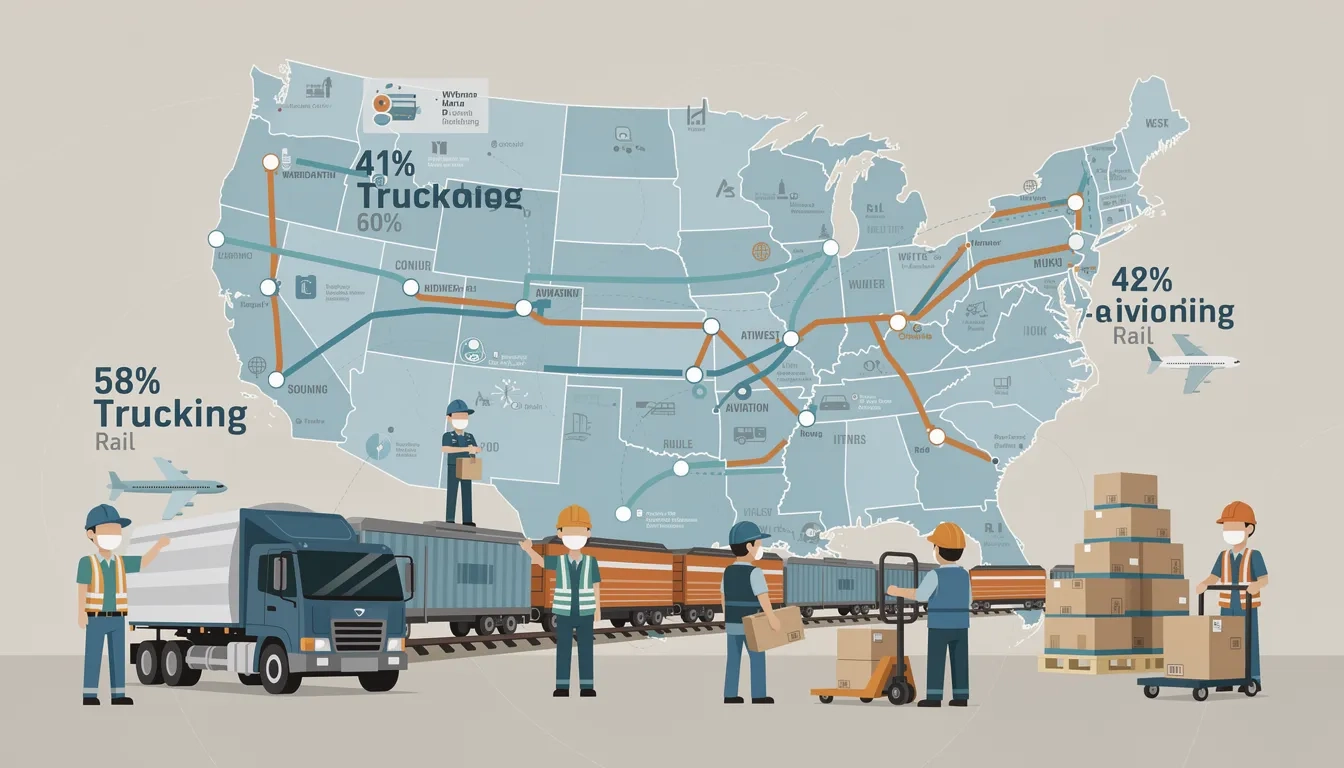
Transportation doesn't usually top students' lists of career fields — that space tends to go to tech, medicine, or finance. But the moment a package moves from a warehouse shelf to your front door, five different careers made that happen: a logistics analyst planned the route, a fleet manager coordinated the vehicles, a traffic engineer designed the intersection it crossed, and a driver — increasingly scarce — made the last mile. Right now, the industry is short on all of them.
The Numbers That Should Get Your Attention
The Transportation, Distribution, and Logistics sector employs roughly 13 million Americans today, and the Bureau of Labor Statistics projects it'll need 7.3% more workers over the next decade. That sounds modest until you realize the field is already operating with a deficit.
Logisticians alone carry a 19% projected growth rate through 2033, with 21,800 new openings expected each year during that period. Median pay sits at $81,220 annually (2025 BLS data) — well above the national median for all U.S. occupations.
The driver shortage is the starkest data point. The American Trucking Associations currently counts roughly 60,000 unfilled truck driving positions, and their revised April 2026 projection raised the 2028 shortfall estimate to 175,000. The median commercial driver in the U.S. is 46–48 years old. Only 4.5% of CDL-A holders are under 30. The writing was on the wall years ago — the industry just didn't recruit aggressively enough to get ahead of it.
For students choosing a direction, "high demand plus aging workforce" is one of the clearest signals in labor economics.
Five Pathways Worth Taking Seriously
The National Network for the Transportation Workforce (NNTW) maps 27 distinct career paths across the field. For students just orienting, they break into five readable categories.
Operations and Logistics
This is the backbone of getting things from A to B. Roles include logistics coordinator, supply chain analyst, fleet manager, and transportation manager. Entry is often possible with an associate degree or a bachelor's in business, supply chain management, or operations.
Typical salary range by experience level:
- Entry-level logistics coordinator: $54K–$67K/year
- Mid-level supply chain analyst: $60K–$94K/year
- Senior supply chain manager: $88K–$137K/year
Transportation Engineering
Civil and transportation engineers design the systems everyone else uses — roads, bridges, traffic signals, transit networks. A bachelor's in civil or transportation engineering gets you in the door. Entry salaries start around $55,800; senior-level roles routinely exceed six figures.
Traffic Engineering and Smart Systems
This one surprises most people. Traffic engineering and Intelligent Transportation Systems (ITS) roles sit at the intersection of transportation and data science. Smart city systems, adaptive signal control, connected-vehicle infrastructure — all of this needs people who understand both networks and traffic flow simultaneously.
Planning and Policy
Urban planners and transportation policy analysts help cities decide where to build rail lines, how to price highway access, and whether to fund bike-share expansion. This path typically requires a master's degree but opens doors at state DOTs, municipal agencies, and federal programs. Senior salaries can reach $120K+.
Commercial Driving
The most direct entry point. CDL-A certification takes 3–7 weeks at a licensed school (typical cost: $3,000–$8,000, though many carriers now offer tuition reimbursement or fully sponsored training). With the current shortage, signing bonuses and pay packages have become genuinely competitive for the first time in years.
Education Map: What You Actually Need
One mistake students make is assuming transportation careers require a four-year degree. Some do. Most don't — at least not to get started.
| Career Path | Minimum Entry Credential | Entry Salary Range |
|---|---|---|
| Commercial Truck Driver | CDL-A (3–7 weeks) | $50K–$70K |
| Logistics Coordinator | Associate's or Bachelor's | $54K–$67K |
| Transportation Analyst | Bachelor's in Business/Logistics | $60K–$94K |
| Civil/Transportation Engineer | BS in Civil Engineering | $72K–$115K |
| Traffic/ITS Engineer | BS in Civil or Electrical Eng. | $65K–$105K |
| Urban Planner | Master's in Urban Planning | $78K–$120K |
| Supply Chain Manager | Bachelor's + 3–5 years experience | $88K–$137K |
The NNTW structures each pathway in three tiers: entry (0–2 years), mid-level (2–8 years), and senior (5+ years). Top-end senior roles in logistics and engineering have been documented as high as $277,400 annually in large organizations. But the path there starts at tier one.
Certifications accelerate progression significantly. The APICS Certified Supply Chain Professional (CSCP) designation, state diesel technician licenses, and the Project Management Professional (PMP) all matter at the mid-level tier. A student who earns a Certified in Logistics, Transportation, and Distribution (CLTD) credential during junior year enters the job market months ahead of peers who wait until after graduation.
The Autonomous Vehicle Question
Students researching transportation careers almost always hit the same concern: will automation take these jobs?
Honest answer: some, eventually, and partially.
Aurora (the autonomous trucking company) logged commercially driverless freight hauls in Q2 of 2025. That's real progress. But even optimistic industry forecasts put Level 4 autonomous trucks at 5–10% of long-haul lanes by 2032. And that only covers line-haul interstate driving. The roughly 60% of trucking that involves dock visits, multi-stop deliveries, hazmat loads, and customer-site interaction will still require human drivers for the foreseeable future.
The autonomous transition will automate the easiest miles and leave humans to handle the complex ones — which is also where the skill premium lives.
The more interesting shift is on the technical side. As vehicles become more automated, demand rises for mechanics who can troubleshoot sensor arrays, telematics systems, and software-controlled powertrains. Diesel technicians who add electrical and software skills to their toolbox are already commanding wage premiums over peers who work only on traditional engines.
My take: students who learn both the operational and technical sides of transportation will be better positioned than those who specialize in only one. The field is changing shape — it isn't shrinking.
Programs That Give You a Real Head Start
If you're in high school or early college, a few programs are worth knowing about before you spend a dollar on tuition.
The National Summer Transportation Institute (NSTI) at the University of Oklahoma is a free two-week immersive program (funded by the U.S. Department of Transportation and Federal Highway Administration). Students visit asphalt plants, ODOT labs, engineering firms, and the Port of Catoosa. Survey data from the 2025 cohort found that 100% of participants reported learning new things about transportation careers — and several changed their college plans because of the experience.
Michigan's TRAC Program (Transportation and Civil Engineering) connects middle and high school students with hands-on engineering problems: designing bridges, analyzing highway environmental impact, modeling traffic systems. It's free, state-funded, and operates through the Michigan Department of Transportation.
State CTE Programs are the most underused resource in the country. Texas, Utah, and dozens of other states run formal Career and Technical Education pathways in Automotive, Diesel Technology, Commercial Driving, and Supply Chain Logistics. Students can earn college credit and, in some states, commercial learner's permits before graduating high school — at no personal cost.
For college students, internship supply is strong. DuPont runs a structured entry-level rotational program in supply chain and procurement that cycles new hires through logistics, operations, and sourcing in staggered rotations. Logistics hubs like Dallas, Atlanta, Chicago, and Houston have the highest concentration of posted internships for undergraduates.
Building Your Entry Strategy
Getting into transportation doesn't require a complicated plan. But it does benefit from some sequencing.
Pick a lane before building skills. Operations, engineering, driving, and planning all require different preparation. Clarity on direction matters more than keeping all options open at the entry stage.
Get exposure before committing money. Free programs like NSTI or TRAC show you what the work actually looks like before tuition is on the table. One warehouse shadow day or a ride-along with a fleet driver will tell you more than any brochure.
Build data skills regardless of path. Supply chain analysts use SAP and ERP platforms daily. Traffic engineers work in GIS and simulation software. Even CDL drivers manage telematics dashboards. Data familiarity reads well on every transportation resume.
Use geography intentionally. A logistics coordinator role in Houston pays differently and has different advancement opportunities than the same title in a market with one distribution center. If you have location flexibility early in your career, use it deliberately.
Target rotational programs over single-function entry roles. Fortune 500 companies in manufacturing, retail, and logistics run structured rotational programs for new graduates (typically 18–24 months). These compress learning that would otherwise take three to four years and leave you with cross-functional experience that's genuinely hard to replicate otherwise.
Bottom Line
- The opportunity is structural, not cyclical. Thirteen million jobs, 7.3% projected growth, and a driver shortage that won't close on its own means the field will be competing for young entrants for the next decade.
- Students don't need to wait for college to start. CTE programs, free government-funded summer institutes, and CDL paths can all begin in high school.
- Autonomous vehicles will reshape some roles. They won't eliminate the field. Students who pair operational knowledge with data or technical skills will have the strongest long-run positioning.
- Pick a specific pathway and pursue it deliberately. The breadth of transportation becomes an asset once you're inside — but at the entry stage, focused direction beats a diffuse search every time.
Frequently Asked Questions
Is a four-year college degree required to work in transportation?
No — and this is probably the most persistent misconception about the field. Commercial truck driving requires only a CDL-A, obtainable in 3–7 weeks. Diesel technician and fleet management roles regularly accept associate degrees or trade certifications. Four-year and graduate degrees are primarily required for engineering, urban planning, and senior management tracks.
What transportation career has the highest income potential?
Supply chain management consistently ranks at the top for mid-career earners, with senior roles reaching $137K+ annually. Senior logistics directors and transportation executives in large organizations have documented compensation above $277,400 at the top of the range. The highest salaries typically combine technical or operational depth with management responsibility over P&L or large teams.
How serious is the truck driver shortage for students considering a CDL career?
Serious enough to be meaningful for anyone entering now. The industry is currently short roughly 60,000 drivers, and that gap is projected to hit 175,000 by 2028. Carriers are competing hard — signing bonuses, tuition reimbursement, and better home-time policies have all increased. The real caution is early attrition: large carriers experience 90–95% annual turnover, and 35% of newly hired drivers quit within 90 days. Carrier selection matters as much as getting the credential.
Will autonomous trucks eliminate commercial driving jobs?
Not within the career horizon of a student entering the field today. The most optimistic industry forecasts place Level 4 autonomous trucks at 5–10% of long-haul lanes by 2032 — and that only covers interstate line-haul driving. Multi-stop delivery, hazmat, oversized loads, and customer-site work will require human drivers well beyond that horizon. Drivers who also understand vehicle technology and telematics systems will be the most secure in a mixed fleet environment.
What skills matter across every transportation career, not just one path?
Data literacy cuts across every path in the field — ERP and SAP in supply chain, GIS and simulation in engineering, telematics in fleet management. Communication is the other constant: transportation roles involve coordinating across vendors, regulatory agencies, and internal teams constantly. If you can add basic project management methodology exposure early (even a short PMP prep course), it pays dividends at every career level.
Are there free programs specifically for students interested in transportation?
Yes, several. The National Summer Transportation Institute runs free two-week programs at universities including the University of Oklahoma, funded by the U.S. Department of Transportation. Michigan's TRAC program is available at no cost through the state DOT for middle and high school students. Many states also fund CTE pathways that let students earn industry-recognized certifications and sometimes commercial learner's permits before graduating — at zero personal expense.
Sources
- Transportation, Storage, and Distribution Managers — BLS Occupational Outlook Handbook
- Transportation, Distribution, and Logistics — College Board BigFuture
- Transportation Career Pathways — National Network for the Transportation Workforce
- Truck Driver Shortage 2026: 60K Gap, 175K by 2028 — O Trucking
- Program Inspires Future Transportation Leaders — University of Oklahoma
- 2026 Logistics Careers: Guide to Career Paths, Options & Salary — Research.com
- Autonomous Trucks Can Help Address Transport Industry's Driver Shortage — Scania Group
- Demand for Transportation Professionals Projected to Continue in 2026 — Lincoln Educational Services